Abundance is necessary to creativity. In business, we measure abundance in financial capital. Without sufficient capital, we can’t be creative, because we can’t try anything that isn’t certain to work. Similarly, we need surplus capital — food, open space, clean air and water — if we are to help all people live rich, creative lives.
Two variables affect abundance in our world. The first is supply. We depend on the planet’s natural resources, and those resources are limited. The second variable is demand. Demand we can control.
Two primary variables also influence demand for resources. The efficiency of our usage determines how much of the world’s natural bounty each of us requires. We can improve efficiency, to some extent. The second variable affecting demand is population. No matter how much we improve efficiency, the number of people our planet can support is ultimately finite.
Once I acknowledge that limitation, I find myself thinking, well, why are we always talking about the inevitable growth of human population? Why not envision an ideal population instead?
Because in my vision I’ve already set aside 20 percent of every earthly biome for wilderness, I might set my own ideal human population at 20 percent fewer than our current population of about 7.1 billion people. That would put us at about 5.7 billion people, the world population in the early 1990s.
What the heck? While we’re idealizing, why don’t we allocate a little more room for nature and take us back 30 percent, to a total human population of 5 billion — as it was in 1988. That’s a shocker, isn’t it? Our population was 30 percent smaller when former President George H.W. Bush was elected.
When I suggest something like this in a talk, some wiseguy always asks who I’m going to kill. When I write about it, I get letters from people who ask which of their children they should eliminate. The answer, of course, is none. But if most of us choose to reproduce ourselves only once — if each couple has two children — the total human population will soon begin to decrease. We can simply agree, as a species, that 1) two parents and two children make a great family; 2) untrammeled nature is vital to our quality of life; 3) everyone’s life will be better if we eliminate the ugliness of slums and extreme poverty.
Just think: We could have wild elephants and mountain gorillas in a world of 5 billion people. We could have oceans teeming with fish, and vast grasslands where bison and wildebeest roam free, forever. We could provide clean water for every infant, food for every new mother and a warm, comfortable bed for every elderly person — always.
Why not?
If we commit ourselves to this understanding of abundance, we can halt the irreversible tide of species destruction. We can celebrate the diversity of life on this planet and set a standard of preserving it, by the mutual consent of people around the world. All of our food can be naturally wholesome and nutritious, except when we’d rather have it otherwise. We can live on farms or in cities, as we wish. We can live at the edge of the mountain wilderness or the edge of the ocean. Some of us might choose to live simply and work very little, but we can set some minimum expectations for everyone. Most of us will work hard to achieve something — new discoveries, inventions, works of art or greater personal wealth.
In a stable human population, corporate success will be determined by criteria other than the greatest number of products at the lowest price. The value of scale will be reduced; the value of quality will be enhanced. Companies and products that support our shared values of beauty, abundance and the preservation of nature will earn more. Quality will be defined, in part, by how well a company or product supports those values. Innovative, conscientious companies will succeed. Less innovative companies will try harder. Our possessions will be beautiful and durable.
As our population stabilizes, territorial conflicts will become absurd. With more land, more energy and more food available each year, military conflict will seem more wasteful and stupid than ever. We can decommission most of our armies. Rather than competing via faster jets and more powerful bombs, we’ll race to see who can preserve more natural beauty and attract more tourists. Who can print the most beautiful books? Who can build the most reliable and elegant machines? Who has the best skiing? Who has the best beach?
Is it unrealistic to believe we can agree that clean air and water are essential, limited resources that must be conserved? What’s so crazy about wanting a couple of kids and no more? Why not imagine — and build — a world of beauty and abundance?
That’s what I’m aiming for.
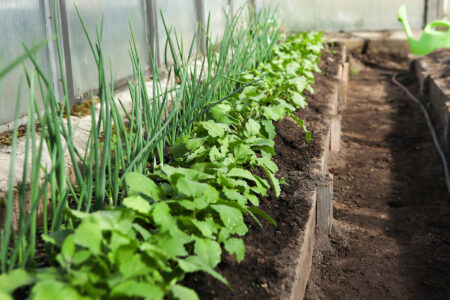
Photo By Bryan Welch: Access to the natural environment ought to be the birthright of every human being on the planet.
For more of Bryan Welch’s ideas on a beautiful and abundant future, check out A Vision for a Better World, Part 1.
Bryan Welchis the Publisher and Editorial Director of Ogden Publications, the parent company of MOTHER EARTH NEWS. Connect with him onGoogle+.