

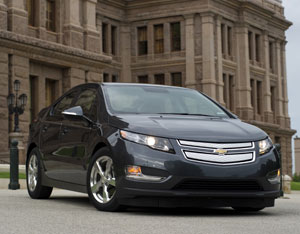
Plug-in electric cars will be available for consumers by the end of the year. This new “fueling” method can enable us to drive without exhaust emissions and reduce our oil dependence. In addition, a home solar or wind energy system can offset the pollution from power plants used to charge plug-in vehicles for truly zero-emissions travel. If enough people make the switch to electric transportation, the dire consequences of fossil fuel dependence and climate change could be avoided.
I have built more than two dozen plug-in electric cars over the last 20 years, from electric rototillers to electric Porsche Spyders. The vehicles I built had onboard chargers that could be plugged into common 110-volt or 240-volt outlets. When plugged in, no current flows until another switch or timer turns on, so there was no chance of arching or shock.
In 2002, I stopped building electric cars and purchased one of the few electric cars sold by Toyota (a RAV4 EV) that met the requirements of California’s zero-emission mandate. Although the electric cars I built were fun to drive and never left me stranded, the weight of the lead-acid batteries available at the time was a limiting factor in the cars’ practicality.
We use our electric car for all local driving. For longer trips, I have set up the RAV4 EV’s inductive wall-mounted charger so that it can be put in the back of the car and plugged into any 30- to 50-amp 240-volt outlet.
A gas-run RAV4 costs around 0.10 dollars/mile for fuel and maintenance, so we’ve saved close to $10,000 driving our electric RAV4 over the last eight years. More importantly, we have saved about 5,000 gallons of fuel and stopped 50 tons of carbon dioxide from entering the atmosphere.
Our electric Toyota RAV4 has a 27 kWh NiMH (nickel-metal hydride) battery pack with half the weight of a lead-acid pack of the same capacity. It can go 80 to 100 miles per charge and now has 120,000 trouble-free miles on the original NiMH battery. We have a 3.5 kW net-metered solar array that allows enough excess power into the grid during the day when rates are high to offset the power used to charge our EV at night when rates are low. The night rate is about 0.07 dollars/kWh, which means it costs less than 0.02 dollars/mile to drive our EV.
Up until now, EVs produced by major manufactures have required a wall-mounted charging station and each one had different types of conductive plugs or inductive paddles. Now, there is a new a standard conductive plug called the J1772 that will connect new EVs with home or public chargers. It was recently announced that 37 million tax dollars are being spent to install 4,600 EV charging stations nationwide — more than $8,000 per station. It would only cost from $100 to $300 to install a high-power 240-volt outlet in a home garage or carport and an inexpensive meter could be added for a charge at 240-volt outlets accessible to the public.
If 240-volt chargers were mounted onboard plug-in electric cars instead of on the wall, the charger could accept a J1772 plug that can communicate with the grid when that capability is available. If extension cords were made with a J1772 end and a plug to fit the most commonly available existing 240-volt outlets, this would drastically reduce the cost of charging stations because the new chargers wouldn’t have to be capable of recognizing every different type of battery.
I would suggest installing the NEMA 14-50R (receptacle), 50-amp recreational vehicle (RV) outlets in your garage and other common parking spots as there are already thousands of these high-power 240-volt receptacles throughout the country. A 14-50R has 12kW of charging capacity and is capable of giving the 16kWh battery pack in the new Chevy Volt an 80 percent charge in less than an hour. It can also give the new Nissan Leaf 24kWh pack a 100 mile charge in two hours.
Chevy just started giving out information on price and charging at the end of July. The 120-volt charger is on board and will plug into any 120-volt outlet. The 240-volt wall-mounted charger will be sold with the Volt and it will have a cord with a J1772 plug that will attach to a receptacle mounted on the car. The wall-mounted charger can be hard-wired or plugged into 30- to 50-amp, 240-volt outlet. In other words, you could do the same thing I have done with my RAV4EV wall-mount charger. I installed a 14-50R on the wall below the charger and wired a 14-50 plug to the charger. This allows me to take the charger off the wall and put it in the back of the car. Then with a 14-50 extension cord, I can plug the charger into any RV plug for a quick charge on the road. In colder parts of the United States and Canada, plugs already exist at every parking space to power heaters to keep conventional engine blocks warm enough to start in the winter.
Smart meters that can handle vehicle-to-grid communication will be important when there are a significant number of plug-in vehicles on the road, but smart metering can be done whether the charger is onboard or hard-wired to the wall.
Ask auto manufactures to put chargers onboard so that EV drivers can take advantage of the charging infrastructure that already exists. Get involved at the local government level to push for metered low cost 14-50R receptacles as a requirement for all new parking spaces. And, while you’re at it, ask for photovoltaic shades over all the parking lots baking in the sun.
MOTHER EARTH NEWS contributing editor Stephen Heckeroth has been working with renewable energy and electric cars since 1975.






