The yearly ritual begins in September. The old caulking gun
emerges from its hiding place in the shed, is cleaned off,
and does its rounds at the edges of windows and doors. An
hour later and you’re buttoned up for the winter. Well, not
exactly. As good an idea as sealing your windows and doors
is, taking aim at a few more trouble spots around the house
will make your efforts much more effective. And because
you’re not constantly opening and closing the sources of
air leaks listed below, once you get ’em, you’ve got ’em.
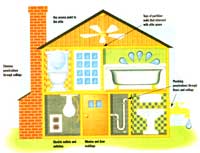
Common Sources of Air Leaks
–Plumbing penetrations through insulated floors and
ceilings
–Chimney penetrations through insulated ceilings and
exterior walls
–Gaps along the sill plate and band joist at the top
of foundation walls
–Fireplace dampers
–Attic access hatches
–The tops of interior partition walls where they
intersect with the attic space
–Recessed lights and fans in insulated ceilings
–Wiring penetrations through insulated floors,
ceilings, and walls
–Missing plaster
–Electrical outlets and switches, especially on
exterior walls
–Window, door, and basement moldings
–Dropped ceilings above bathtubs and bathroom
cabinets
— Kneewalls in finished attics, especially at access
doors and built-in cabinets and bureaus.
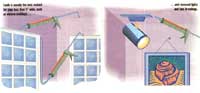
Choosing proper sealant depends on the size of the gaps and
where they are located. Caulk is best for cracks less than
1/4″ wide. Read the label carefully to make sure that the
caulk is suitable for the material to be sealed. Look for
brands which remain flexible over a 20-year lifetime. If
the joint will be visible, choose a paintable caulk.
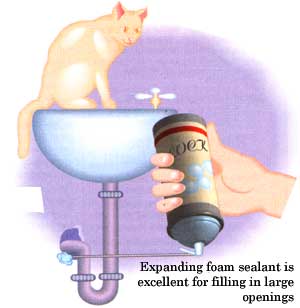
Expanding foam sealant is an excellent material to use for
larger cracks. Some brands are not effective when exposed
to sunlight or moisture, so be sure to buy the right type
for your job. If possible, buy foam sealant without ozone
depleting chlorofluorocarbons, or CFCs.
Backer rod or crack filler is a round, flexible foam
material available in diameters of 1/4″ to 1″. It is
usually sold in long coils and is great for sealing large
cracks and as a backing for deep cracks sealed with caulk
Use rigid foam insulation for sealing very large openings
such as plumbing chases and attic hatch covers. Fiberglass
insulation can also be used for sealing large holes, but it
will work better if it is stuffed in plastic bags. Don’t
use plastic in areas that reach high temperatures, and
always wear gloves and a mask when working with fiberglass.
From Consumer’s Guide to Home Energy Savings
(1991), published by the American Councilfor
an Energy Efficient Economy (ACEEE).