


Nothing feels as comforting and welcoming as a tidy, well-tended home. But a clean home isn’t necessarily a healthy one. As you peruse the cleaning aisle’s furniture polishes, air fresheners, carpet deodorizers and stain removers, you may realize that a full product arsenal could contain literally hundreds of chemicals and include dozens of safety warnings–not to mention cost a small fortune. Fortunately, you can create nontoxic, inexpensive counterparts to nearly every conventional cleaning product with items found in your pantry.
The U.S. Environmental Protection Agency notes that conventional cleaning products make a significant contribution to indoor air pollution. In one study conducted at the University of Cincinnati College of Medicine, researchers found that the chemicals in everyday household cleaners can trigger the onset or worsening of asthma. Children with asthma can experience respiratory symptoms in a newly cleaned home. At least one study also suggests a possible link between prenatal exposure to low doses of common cleaning chemicals and attention deficit disorder or even autism in children.
Exposure to these everyday products can also affect your heart. Results from the Detroit Exposure and Aerosol Research Study, which were recently presented at a scientific session of the American Heart Association, showed that people exposed to pollutants–including household cleaners and air fresheners–experienced a narrowing of blood vessels and an increase in blood pressure.
Even seemingly benign products can cause health problems. Glass cleaners often contain ammonia, an eye irritant that can cause headaches and lung irritation. Disinfectants often harbor phenol and cresol, two petroleum derivatives that can cause dizziness and fainting. The polishes that make our floors and furniture shine include nitrobenzene, a carcinogen and reproductive toxin that can also cause short-term shortness of breath and nausea.
Volatile organic compounds (VOCs) are toxic chemicals released by common cleaning products that can remain suspended in the air for days after use. Able to cross the blood-brain barrier and placenta, VOCs can depress the central nervous system; irritate the eyes, nose and throat; and reduce pulmonary function. Long-term exposure can contribute to a variety of cancers.
The good news is that you don’t need to rely on these toxic chemicals for a spotless house. You can power through most household dirt with inexpensive and effective homemade cleaners. Plus, you can customize your cleaners with bacteria-busting essential oils.
Natural Cleaning Ingredients
You can clean your house from top to bottom with just eight simple ingredients. To save time and money, buy the ingredients in bulk and make cleaners in advance.
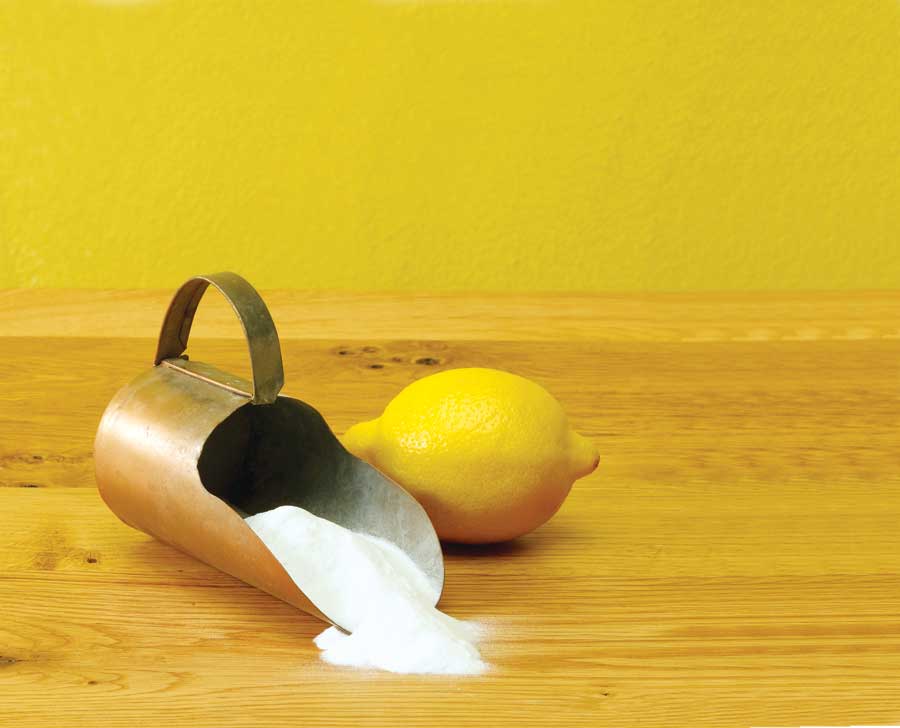
Baking Soda: A truly multitasking cleaner, baking soda is a perfect substitute for cleaning powders that scour sinks and tubs without scratching. It’s also great for wiping down and deodorizing the fridge. Combined with an equal amount of vinegar, baking soda can freshen drains and prevent them from clogging.
Borax: Combining equal amounts of white vinegar and borax will banish mold and mildew from hard surfaces. This natural mineral can also clean your toilet. Pour 1 cup of borax into the toilet bowl and let it sit for a few hours before scrubbing to eliminate stains and odor
Distilled White Vinegar: This pantry staple cuts grease, eats away lime deposits and destroys odors. Because of its neutralizing properties, white vinegar is also good for washing windows, sanitizing kitchen counters and shining bathroom fixtures. Simply dilute 1 part vinegar in 4 parts water. A natural antibacterial because of its high acid content, vinegar is an effective alternative to caustic cleaners on toilets and floors.
Hydrogen Peroxide: Typically found in the medicine cabinet, this disinfectant can also be used as an effective bleach alternative in the laundry room. Because it’s also a powerful oxidizing agent, it works especially well on food, soil, plant, blood and other organic stains. Just make sure to spot test in a discreet area because, like bleach, hydrogen peroxide may lighten fabrics. For each average-size load of whites, add 8 ounces of 3 percent hydrogen peroxide after you have filled the washer with hot water.
Salt: Perfect for cleaning grungy ovens, this natural abrasive is also great for soaking up fresh carpet stains such as red wine, coffee or ink. Pour salt on the wet stain. Let dry, then vacuum.
Vegetable Oil (Castile) Soap: This natural soap is great for floors and all-purpose cleaning when combined with vinegar, borax or even warm water. For an all-purpose cleaner, add 1?2 teaspoon of soap to either 2 cups of water or to the “All-Purpose Cleaner and Disinfectant” recipe below. For floors, combine 2 teaspoons of soap with 3 gallons of water. Make sure to rinse well to remove any dulling residue.
Washing Soda: This old-fashioned laundry booster cuts through tough grease on grills, broiler pans and ovens. Because washing soda is a strong alkaline, it’s perfect for tackling dirty linoleum floors. But because it’s caustic and strong enough to strip wax and peel paint, wear gloves when using–and use sparingly. Adding just 1?4 to 1?2 teaspoon of washing soda to 32 ounces of hot water will tackle the toughest grease.
Lemons: Lemon’s citric acid content cuts stubborn grease and makes your home smell fresh. Lemon juice is also a natural bleach, especially when combined with the sun. Freshen cutting boards by rubbing a cut lemon over the surface. This is especially effective for banishing fish odors. Undiluted lemon juice can also be used to dissolve soap scum and hard water deposits.
Homemade Cleaners
All-purpose cleaner and disinfectant
Just as effective as popular antibacterial cleansers, this formula is perfect for kitchen and bathroom surfaces.
2 cups hot water
¼ cup white vinegar
½ teaspoon washing soda (similar to, but more caustic than, baking soda)
15 drops tea tree essential oil
15 drops lavender essential oil
Combine all ingredients in a reusable spray bottle and shake well. To use, spray on surfaces, especially cutting boards, countertops and toilets. Wipe with a dry cloth.
Lemongrass dust cloths
Whether you’re using microfiber cloths or old cloth diapers, these do-it-yourself dusters offer the convenience of disposable furniture wipes without the guilt of contributing to the landfill. Make several dustcloths at a time.
1 cup water
1 cup white vinegar
¼ teaspoon lemongrass essential oil
Dustcloths or rags
Freshly cut lemon peel
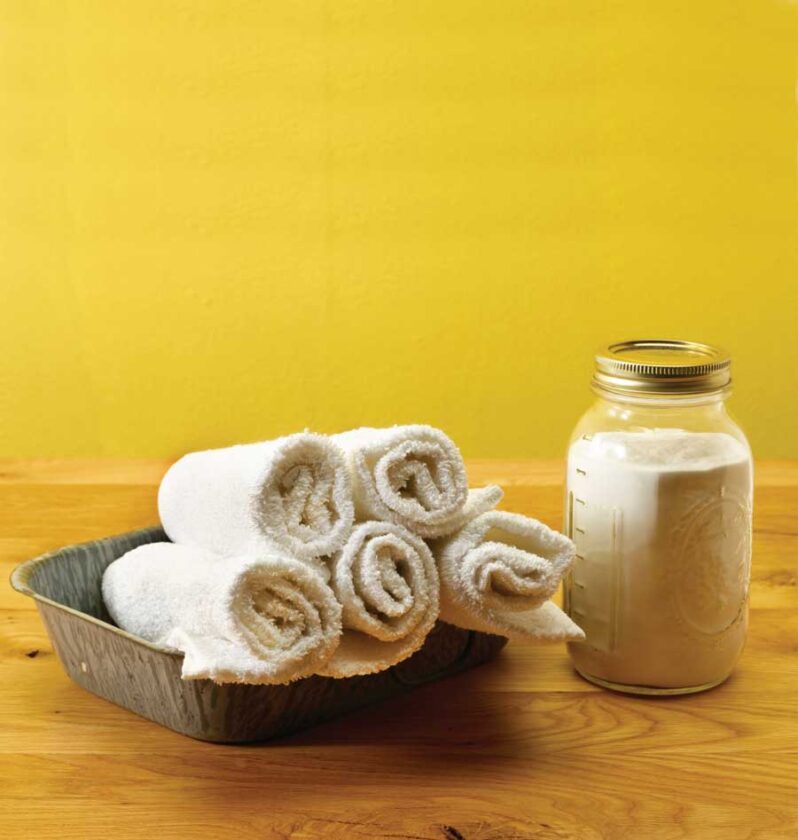
Combine water, vinegar and essential oil in large bowl. Soak dustcloths in the solution for 30 minutes. Squeeze out cloths, leaving them slightly damp. Lay cloths flat and place a couple pieces of lemon peel on each one. Fold each cloth in half or thirds and roll up. Place each cloth in a glass jar along with an extra piece of lemon peel. Cap tightly with a screw lid. To use, unfold cloth and discard peel. Dust as usual. Launder dustcloths when dirty and infuse again with essential oil and lemon peel.
Creamy nonabrasive cleaner
Perfect for acrylic and fiberglass surfaces, this smooth cleanser won’t scratch tubs, stovetops or laminate countertops.
¼ cup borax
Vegetable oil-based liquid soap (also known as castile soap)
½ teaspoon lemon essential oil
In a small bowl, combine borax with just enough liquid soap to create a thick paste. Add essential oil and blend well. To use, scoop a small amount of cleaner onto a damp sponge. Scrub surface and rinse wel
Pre-vacuum carpet freshener
This fragrant odor eliminator will leave your home smelling fresh without posing a danger to pets or children.
1 cup dried lavender flowers
2 cups baking soda
10 drops lavender essential oil
10 drops rose geranium essential oil
Crush lavender flowers and mix with baking soda, breaking up any clumps. Add essential oils and blend well. To use, sprinkle on carpets. Wait 30 minutes, then vacuum as usual. Store leftovers in a glass jar with a tight-fitting lid.






