


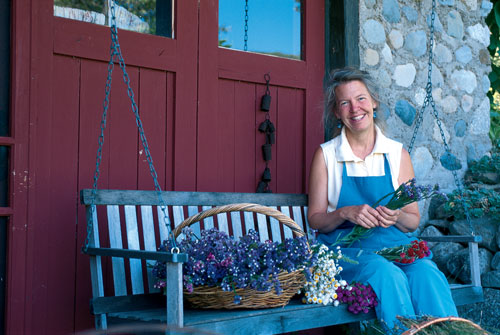
When Kate NaDeau’s former husband, Phil, suggested they leave Northern California for Maine, she had a typical West Coast reaction. “Maine!? That’s the North Pole. I couldn’t live there!'” she laughs. But Kate, Phil, and their eleven-year-old son, Justin, craved a simple farming life, and they couldn’t afford the kind of acreage they wanted in the already-escalating California market. In his campaign to move his family east, Phil introduced Kate to Scott and Helen Nearing, pioneers of the back-to-the-land movement. As Kate read the Nearings’s simple living manuals, “I was totally blown away not only by the integrity the Nearings brought to the garden, but the fact that they could garden that much in Maine,” she says.
So Kate’s family traveled to Maine’s central coast in early December, a time when Kate figured she could taste the worst of what the region might offer. “It was raw and open and stark,” she recalls. And in Monroe, Maine, the family found its paradise: twenty-six acres on a south-facing slope bordering a stream.
STONE SOUP FARM, 156 Red Barn Road in Monroe, Maine, is open to the public daily, May 1 to August 31, from 10 a.m. to 4 p.m. For information, call (207) 525-4463.
“I live a strongly seasonal lifestyle,” says Kate, “The weather is ever changing, and farm-related activities are so different.”
Hand-Built Home
Kate and Phil had been especially taken with their property’s southern exposure because they wanted to build a passive solar home. Influenced by the Nearings, they planned to build a stone house using a slip-form method of construction and, influenced by their time on the West Coast, to incorporate elements of Japanese architecture. “I wanted to build a building that was connected to the land and fit in with what was already there,” Kate says.
So they designed a simple home, bermed into the hillside to the north and open to the south, that meanders down the hill to the west. “The idea was to weave together beauty and utility,” Kate explains. “Passive solar is so wonderful– working with the climate instead of trying to fight it–bringing in some kind of harmony, working with the elements.”
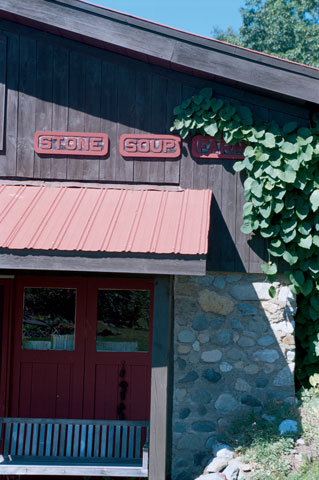
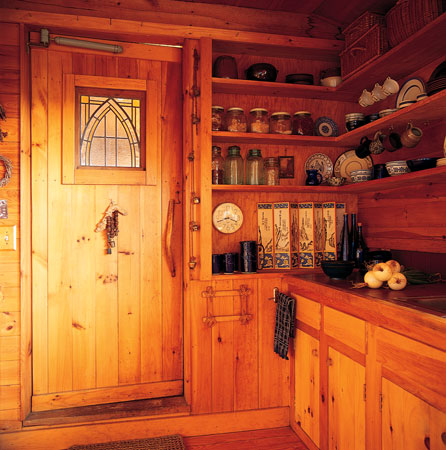
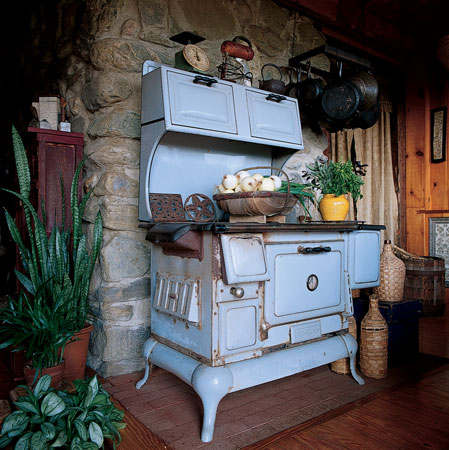
They built the 1,500-square-foot home by hand, an arduous process that took five years to complete. “If you could do it the hard way–we did it,” Kate laughs. They hand-dug four-foot-deep trenches for the foundation and gathered flat stones from the woods and fields nearby. (Some visitors to the farm, hearing they needed flat stones, hauled in loads of them.) Kate and Phil mixed cement in wheelbarrows and built wooden forms that held the cement while it set around the stones. Inside, they attached insulation, plastic vapor barriers, and pine walls to two-by-fours inserted into the six-foot-high stone walls. They trimmed out a second-story bedroom using fir two-by-fours and topped the structure with a double metal roof. Finally, after five years of living with only a cistern, hand pump, and outhouse, they drilled a well and ran water for the kitchen and the bathroom.
“The construction was spread over five years because we were paying as we went,” Kate says. “But the advantage is that you really get to know the land–where you spend time, where the sun comes up at different times of the year. There’s something to be said for going slow–which is very different from the way people in this country do things.”
“It always seems to be a good year for something or a bad year for something. When you look at the big picture, it all seems to work out okay.”
Farm Living
From the large overhead beams for drying herbs and flowers to the greenhouse attached to the west side, the home was designed to accommodate agrarian ways. “I live a strongly seasonal lifestyle,” says Kate, who now lives alone. “The weather is ever changing, and farm-related activities are so different. So my home’s areas of use are very seasonal.”
In spring and summer, Kate basks in the sun on the fifteen-by-twenty-foot wooden deck on the south side and serves tea or picnics on the covered terrace attached to her workshop. She loves to catch the sunrise on the eastern porch. “Because summer’s such an expansive time, I really use that outdoor space much more,” she says.
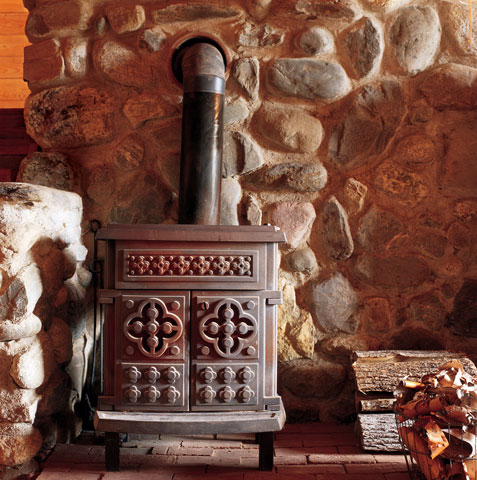
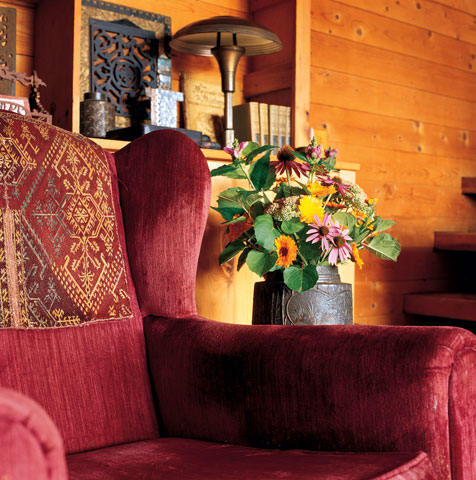
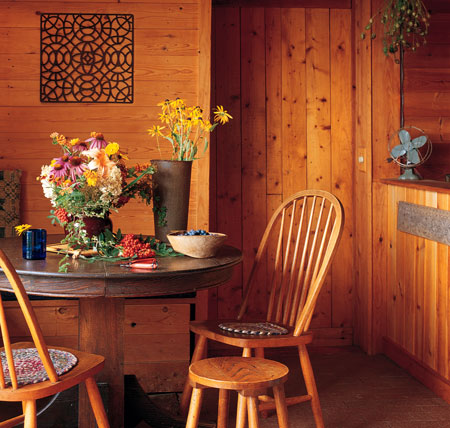
In winter, the low sun streams into Kate’s denlike dining room and living area, providing heat that she supplements with a fire in the early evening. “Burning wood is a winter activity that I love, a gentle way of keeping things going–getting a couple of armloads of wood each day, keeping ahead of the storms,” she says. Kate spends the winter months as an “armchair gardener,” adding to the knowledge she’s gained over the past twenty years.
A Hillside Garden
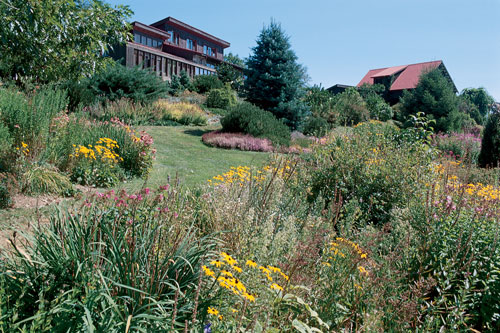
Before she moved to Maine, Kate had grown a few tomato and basil plants but had no real experience with a large-scale garden. Yet she doesn’t consider the terraced masterpiece she’s created on the steep, sunny hillside such a big deal. “This isn’t rocket science,” she says. “I read the Nearings and other books, but it’s mainly a matter of just doing it, learning from your mistakes, trying and trying and trying.
“It always seems to be a good year for something or a bad year for something,” she adds. “Some pest is eating this and this, but you get the bounty in something else. When you look at the big picture, it all seems to work out okay.”
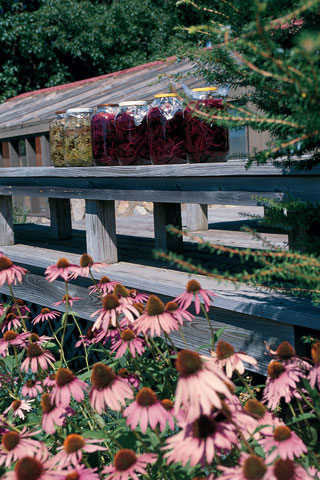
Shortly after the family moved to the site, which they dubbed Stone Soup Farm after the inspirational folktale, Kate began selling vegetables, flowers, and herb vinegars at a farmers market in nearby Belfast. She now gives workshops on the use of herbs and runs a small shop on the property that sells plants, herbal crafts, and other garden-related products. One of her personal highlights was selling a perennial to the late Helen Nearing. “Here was someone I’ve so respected, who so influenced me and the way I’ve done things,” Kate says. “It just felt like a complete circle.”






