

I’m considering installing bamboo flooring, but I’m finding conflicting claims about it. Is this type of flooring truly a sustainable selection?
Bamboo flooring is often sold as a “green” flooring option, but the truth of this claim depends on which criteria you consider.
Processing raw bamboo into flooring involves kiln drying, boiling (sometimes twice) and often steaming. All of these processes are energy-intensive. Reliable embodied energy data for bamboo flooring is lacking, making it difficult to accurately compare bamboo to alternatives. But given the need for two to four high-heat processes, the production of bamboo flooring likely uses more energy than that of wood floors. Shipping bamboo materials from Asia can add to bamboo’s total energy footprint, sometimes significantly.
Bamboo flooring is made from laminated strips of bamboo bonded with chemical glues. Surface finishes are also chemical composites. Depending on the type of binders and finishes used, some bamboo flooring can emit high levels of volatile organic compounds (VOCs) and other toxins.
Most bamboo flooring companies claim their flooring is much harder and therefore more durable than hardwood, such as oak. Some bamboo flooring does score high on the Janka hardness test. However, the Janka test protocol doesn’t necessarily predict actual wear and tear on a floor, and experience has shown that bamboo floors have real-life wear characteristics that are so similar to hardwood that bamboo can’t prove a true durability advantage.
Proponents of bamboo flooring say it has a minimal environmental impact, pointing to the crop’s fast growing cycle and rhizomatous root system that doesn’t require replanting and helps control soil erosion after harvesting. Bamboo fans also claim that growing bamboo doesn’t require chemical fertilizers, pesticides and herbicides.
Not all bamboo made into flooring can lay claim to those attributes, however. Increased demand for the flooring material has resulted in a rapid movement away from mixed forests of naturally occurring bamboo to large monoculture plantations. Plantations prompt concern over significant soil erosion, and, in reality, do often require fertilizers, pesticides and herbicides to sustain the monoculture in the absence of natural ecosystem controls. In addition, forests are being clear-cut to make way for bamboo, which results in habitat destruction and loss of biodiversity.
Chances are, the cheapest bamboo flooring is cheap for a reason: It’s more expensive to harvest, process and finish a material to high environmental standards. But you can find truly green bamboo flooring if you search for it.
Choosing bamboo flooring that meets the FloorScore standard — developed by Scientific Certification Systems and the Resilient Floor Covering Institute — will help ensure your choice is healthy in terms of indoor air quality. Buying bamboo certified by the Forest Stewardship Council (FSC) will also help you know you’re purchasing responsibly. Keep in mind, however, that FSC certifies some monoculture plantations — and in those cases, even if the plantations use sound practices, much of the environmental damage would have already occurred. Ask questions and research options to find out whether the bamboo you’re considering came from a monoculture operation or a more diverse, sustainable forest.
The Rainforest Alliance and the Sustainable Agriculture Network are both working to develop standards that will address issues with bamboo production, and, after they go into effect, these certifications will help consumers determine whether a particular brand of bamboo flooring is really green.
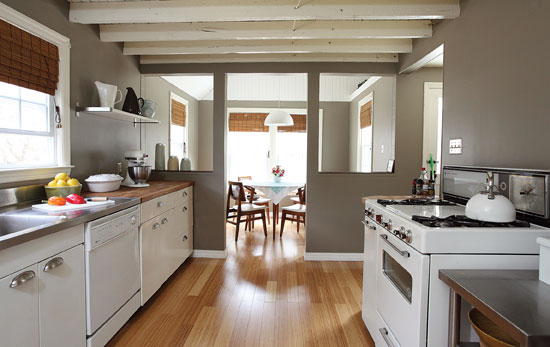
Photo by Flickr/Designbuildinhabit: Bamboo flooring may not always be as eco-friendly as dealers claim.





