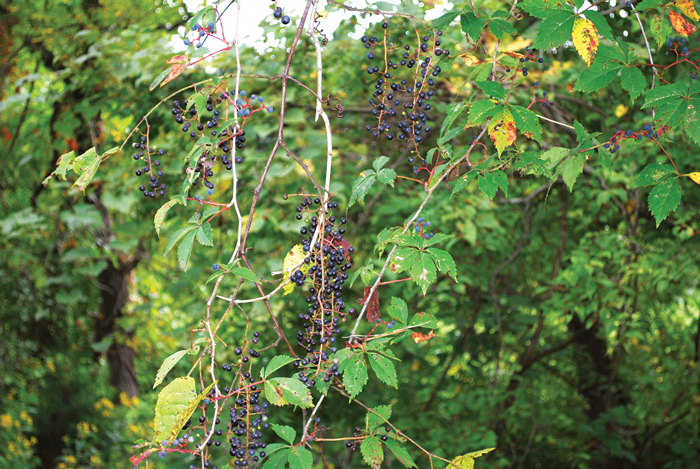
We experienced some false starts with our grape gathering. We’d been waiting for the fruits to become fully ripe, but by that time, they were mostly gone — eaten by all manner of wildlife. Pick the grapes as soon as they ripen and they’ll provide a pleasant tartness. Also, experiment with the amount of sugar added. We like our jelly a little on the tart side, for example.
Ingredients
- 2 quarts wild grapes, rinsed
- 1.75-ounce package powdered pectin
- 7 cups sugar
Directions
- The day before, place grapes in a pot and add enough water to cover them.
- Bring to a boil, reduce heat, and simmer for 15 to 20 minutes.
- Pour the contents through a strainer. Reserve the juice, and discard the skins and seeds. Chill overnight.
- Strain the juice through cheesecloth to remove any tartrate crystals.
- Place 4 cups juice in a large pot. Add pectin and stir to dissolve.
- Bring to a boil, then reduce heat and add the sugar.
- Bring to a rolling boil, cook for 1 minute, and remove from the heat.
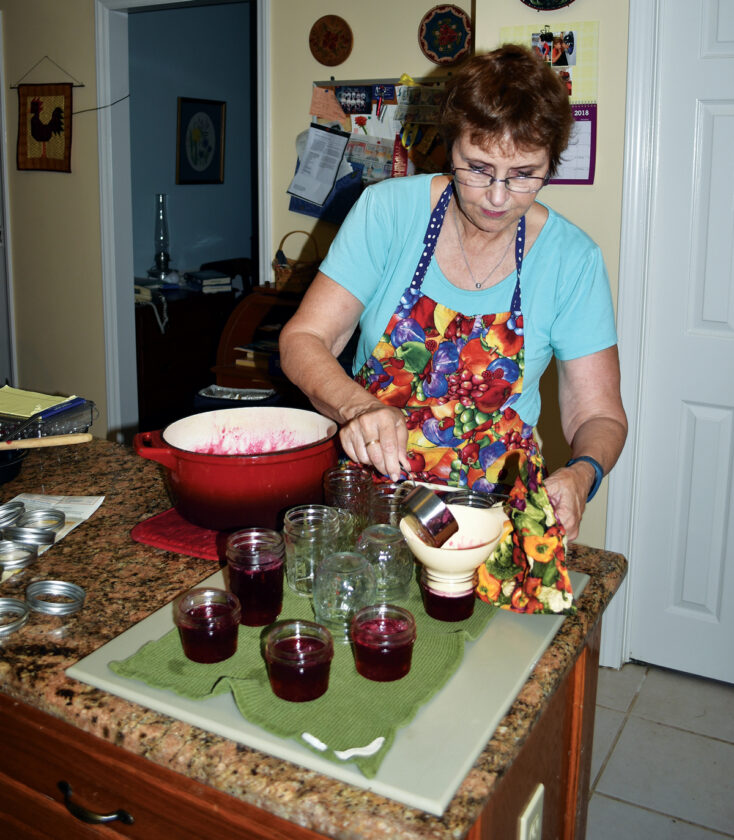
- Pour the mixture into sterile jars, and process according to safe canning instructions.
Note: Since the amount of grapes gathered may vary, you may end up with more or less than 4 cups juice, requiring you to adjust the amount of sugar and pectin used. I prefer not to water down the juice much, as it dilutes the jelly taste, so I’ll sometimes decrease the sugar and pectin amounts to keep the ratios as close as possible to the original recipe.
America’s Wild Grapes
Two wild, native grapes of the Lower 48 states live in our area: the summer and the fox. The summer grape (Vitis aestivalis) thrives across the eastern U.S., from Maine to Florida and west to Oklahoma and Texas. The fox grape (V. labrusca) is another species that’s widespread, twining up trees from southeastern Canada to Louisiana and Florida.
But the U.S. has more than just those two Vitis species. The muscadine grape (V. rotundifolia) grows from Delaware to Florida and westward to east Texas. The July or sand grape (V. rupestris) lives in Texas and Oklahoma and as far east as Pennsylvania, while the riverbank grape (V. riparia) climbs trees from Maine to Montana and south to Texas. On the West Coast, the California grape (V. californica) graces the Golden State as well as Oregon. In short, whether you forage in North Dakota or north Florida, chances are a grape species prospers near you.
Huffman explains how you can encourage wild grapes on your property: “Grapevines are growing to twine their way up trees – there’s no stopping them,” he says. “I’ve seen them 150 feet off the ground in poplars. But what you can do to help wild grapes and their host trees is remove the twining plants that compete with grapes. For example, poison ivy, Virginia creeper, the invasive honeysuckle, and bittersweet all compete with grapes and may rob nourishment from a tree.”
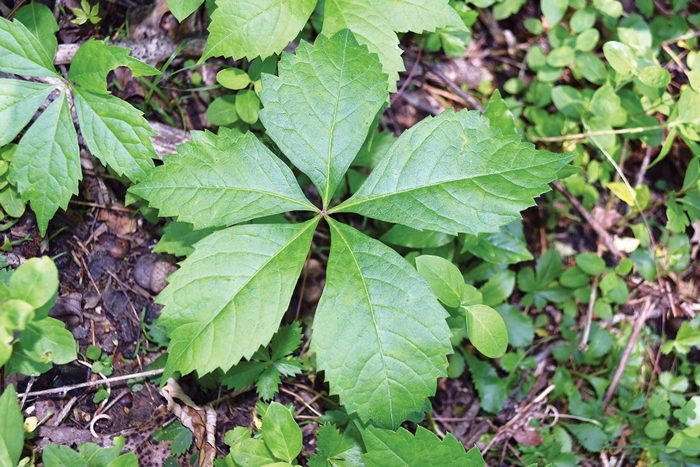
Grapes typically feature ovate, lobed leaves with purplish-black berries. Virginia creeper leaves are toothed and palmate, and the berries are light blue. Poison ivy, of course, flaunts the infamous compound three leaves and white berries. The Peterson and Audubon field guides for trees and shrubs are excellent resources, and I consult them often, not just for trees and shrubs but for all manner of flora and fauna. Always be 100 percent certain of your identification before consuming wild food.
More fall foraged fruit recipes:
Persimmon and Wild Black-Walnut Waffles
Black Walnut Muffins with PawPaw Recipe
Bruce and Elaine Ingram are the authors of Living the Locavore Lifestyle, a book covering how to fish, hunt, and gather for food. For more information, contact them at BruceIngramOutdoors@Gmail.com.
Originally published in the August/September 2025 issue of MOTHER EARTH NEWS and regularly vetted for accuracy.