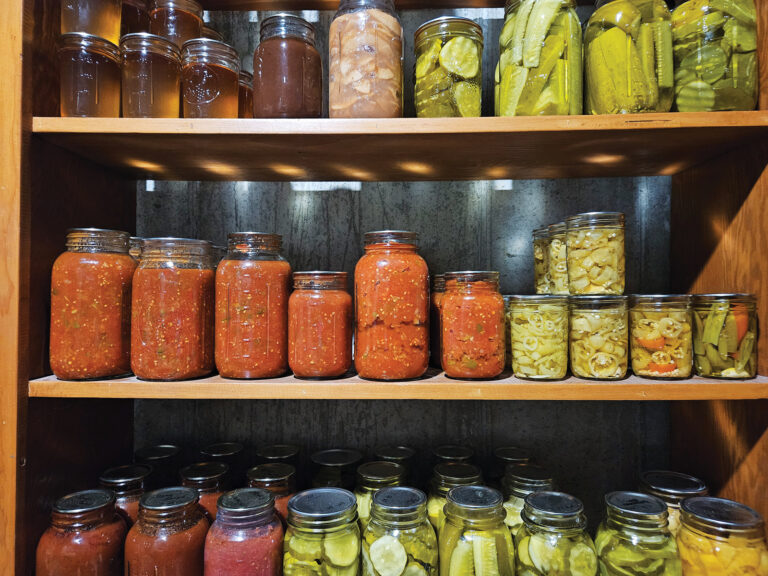
Learn how to organize a deep pantry by building, filling, and organizing it to utilize your well-stocked shelves all year long.
If we’ve learned one thing in our 30-plus years of rural living, it’s the importance of maintaining a deep pantry in the homestead house. In modern parlance, a “pantry” can refer to both a physical food-storage space as well as its contents. A “deep pantry” has a wider definition – and purpose. This dedicated food-storage area is nothing less than an in-home grocery store. It gives you some measure of control over the increased costs and decreased inventory at the grocery store, and it allows you to handle everything from supply-chain shortages to job losses with a measure of dignity.
What’s a “deep pantry”? It’s simply a collection of stored foods that allows you to create complete meals without the need to restock for a period of time. How long can you feed your family without leaving the house? The answer (a day? a week? a month?) will determine how deep your pantry is.
It’s my personal opinion that kitchens should have no food storage whatsoever (with an exception for those living in cramped spaces). Most kitchens operate best when drawers and cabinets contain only implements you use regularly, utensils, pots, pans, dishes, and other culinary paraphernalia, while the food is stored (and well-organized) in another nearby room: namely, the pantry.
Finding Space for a Pantry
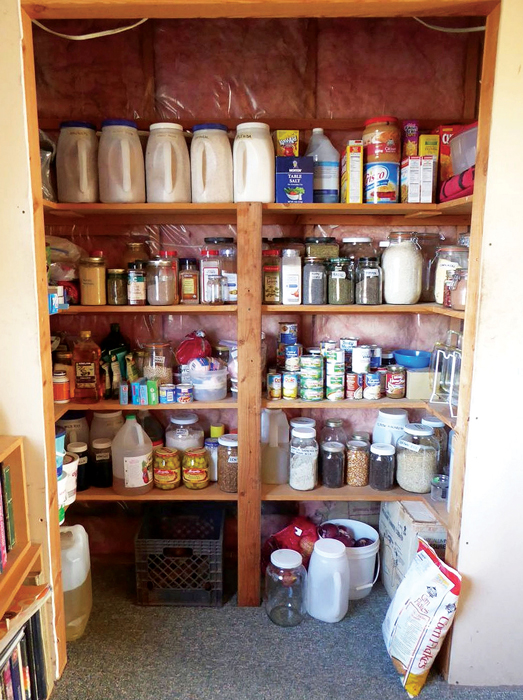
If your home wasn’t built with a dedicated food-storage room already in place, consider whether you can squeeze one or more pantries into your existing floor plan. Since everyone’s living space is different, no one-size-fits-all rule can apply. However, consider a few possibilities:
- Retrofit a closet, alcove, or the space under stairs. While it’s convenient to have a pantry near the kitchen, it’s not essential.
- Make a “flat” pantry (sometimes called a “wall-to-wall” pantry) along a stretch of blank wall. The clutter can be hidden by rolling doors, floor-length curtains, fold-out shutters, or other concealment options.
- Make a “corridor” pantry using the same principles as the flat pantry mentioned above. If you have a hallway wide enough to accommodate shelves along the the wall, you have pantry space.
- Build a freestanding island in the kitchen with a work surface on top and storage space below. You can even add lockable wheels to move the island around.
- Tuck freestanding cabinets into odd corners of various rooms, modified to blend in with your room’s décor. People have repurposed entertainment centers into pantries, for example.
- Don’t hesitate to dedicate multiple locations to food storage, squeezing in spaces as best you can in your home’s design. In our old home, we had two pantries: One (dedicated to home-canned food) was carved out of a small gutted and repurposed bathroom. Another general pantry was curtained off in an alcove off the living room. In our current home, we boxed in a 5-by-13-foot part of one room to enclose a generous pantry. Get creative!
Note: Some people store food in their garage. While this may work under some conditions, garages are subject to temperature extremes that may impact the quality of the stored food. An alternative might be to box in and insulate a dedicated room within the garage.
Whatever your solution may be, once you have space, stock it deep.
Building Tips
Whenever possible, make your pantry larger than you think you’ll need. (Trust me on this.) A few tips when constructing a pantry:
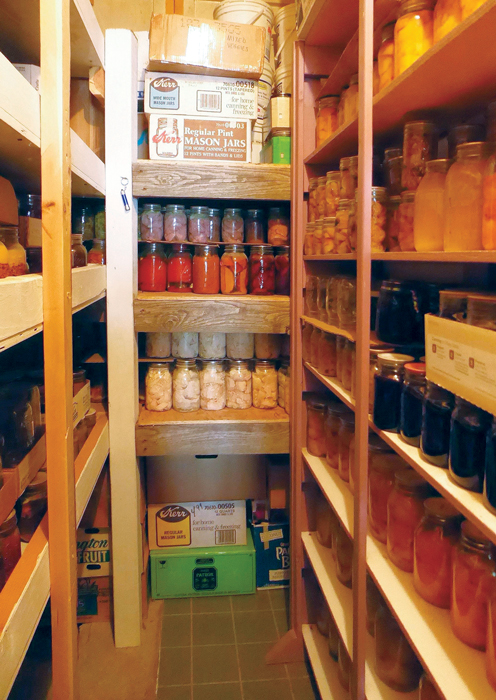
- Design it in advance. What will you store in this space? A tailored layout is preferable to a premade design, which may not suit your family’s needs. In our case, because I’m an avid canner, we designed the pantry for ease and convenience of storing jars of home-canned foods.
- Design your pantry with your visibility goals in mind. Some people don’t mind having their pantries out in the open, while others want food-storage areas to blend in or be hidden. The rule of thumb for all pantries, however, is “cool, dry, and convenient.”
- Make your shelves stronger than you think necessary. Canned food is heavy. Our preference is to make shelves 12 inches deep with about 13 inches between shelves (your needs may differ). A lip in front will help secure items from falling off in the event of an earthquake. Make sure the floor can support the weight of the pantry inventory. (We inserted jacks below our house to reinforce the floor under the pantry.)
- Keep the lowest shelves high enough off the floor to store gallon jugs of vinegar or cooking oil, buckets of staples (such as rice and pasta), and other oversized items.
- If your space has particularly deep shelves, consider pull-out options so things don’t get lost in back. There are many clever pantry-organization options on the market to help, such as slide-out shelves, tiered shelving, stackable drawers, lazy Susans, etc.
- If you’re designing a walk-in pantry, make your aisle at least 28 inches wide. A narrower aisle is too confined for easy movement. While a wider aisle may seem desirable, ask yourself if it’ll waste space.
- Some people tout the benefits of natural lighting, but I’m opposed to windows in a pantry. Foods store best in cool, dark, dry environments. Make sure there’s adequate lighting, however.
- Consider function over form. Unless your pantry is highly visible, a deep pantry need not be picture-perfect, with rigidly matching canisters and flawless placement. These arrangements seldom reflect the reality of active use. Instead, a deep pantry should be a place of practical food storage. As meals are planned and prepared, things get raided, moved around, rummaged through, restocked, de-stocked, and otherwise used.
Pantry “drift” is sure to occur, in which unrelated items get stored in a dedicated food-storage space. Once every few months, I’ll sweep through our pantry and remove things to the barn, bathroom, or laundry room where they belong. - Put heavier and bulkier items on the floor below the lowest shelf, where they’re easy to reach, and place rarely needed items at the very top.
- In even the cleanest homes, pests can be a problem. Store your items in jars or containers resistant to mice and insects. Check that this storage is doing its job, and be prepared to implement pest control as needed.
Stocking Tips
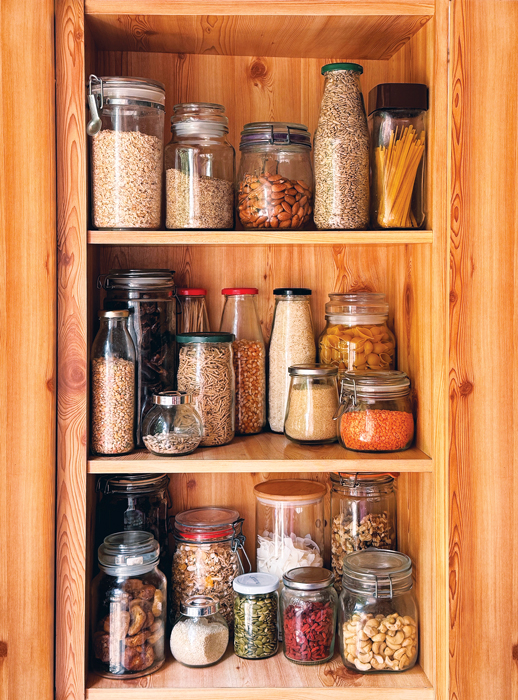
Stocking a deep pantry must factor in your family’s budget, space, dietary restrictions, tastes, and culinary skills. A deep pantry can be a combination of quick meals (canned soups or boxed meals) and components from which scratch meals can be created.
To get an idea of what should go in your deep pantry, start a log of every ingredient you use while preparing meals over the period of, say, a month. This will give insight as to whether you depend too much on prepackaged convenience foods, as well as an idea of how many staples (flour, oatmeal, pasta, etc.) you go through. The rule of thumb is to store what you eat and eat what you store (and rotate, rotate, rotate!). Break down those meals into their shelf-stable component ingredients, and make sure you have a suitable quantity of each ingredient stored.
Some of our favorite pantry meals include chicken pot pie, lentil soup, chili, cornmeal muffins, piecrust cookies, “leftover pie” (my theory is that everything tastes better in a piecrust), spaghetti, fried rice, lentil-rice casserole, and navy bean soup.
A deep pantry is most useful when the majority of your meals are prepared from basic ingredients – in other words, never underestimate the importance of scratch cooking. If your normal eating habits include endless prepackaged convenience foods or takeout meals, a deep pantry is essentially pointless.
I’m not an enthusiastic cook, but a frugal lifestyle demanded I learn; over the years, I’ve built a repertoire of meals from pantry staples the whole family enjoys. That should be your task too.
Most deep pantries focus on scratch cooking or home-preserved foods (canned, dehydrated, fermented) for two reasons. One, it’s often cheaper to purchase, grow, raise, or produce ingredients than it is to buy them; and two, most commercial premade convenience foods are less nutritious. Not only will scratch cooking allow you to create endless meals from the building blocks of staples, but also, quite frankly, stocking with staples is far less expensive than any other options.
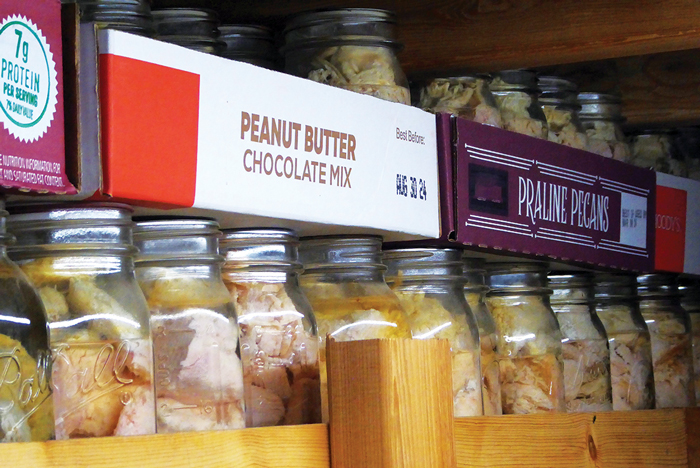
When stocking your pantry, remember all aspects of meal preparation. Aside from convenience foods (canned soups or stews, boxed meals, etc.), the majority of your pantry should consist of staples from the major food groups: fruits and vegetables, grains, meats, fats, dairy. Don’t forget sweeteners (honey, sugar, stevia, etc.), baking aids (baking soda, baking powder, etc.), and spices. Obviously, you should keep greater amounts of the staples you use frequently.
Reconsider the myth that something “must” be used up within a period of time (say, six months or a year). Most properly preserved and packaged food is good for much longer – often years longer than the label says. Just be vigilant for signs of when a food has gone “off.”
What’s in Our Pantry?
So, what do we, personally, keep in our pantry? It’s roughly 75 percent home-preserved foods (canned or dehydrated) and 25% dry staples and baking or cooking aids. We have very little commercially canned food. Our pantry is organized by categories: meats, vegetables, and sauces on one side, fruits and baking supplies on the other, with spices in their own dedicated space. On the floor under the lowest shelves are bulk containers of rice, flour, and beans.
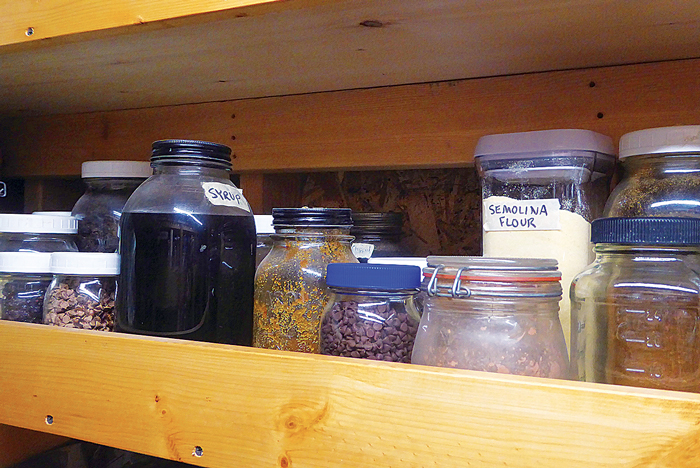
I went through our pantry and took a rough inventory of what’s currently in storage. Here’s what I came up with:
- Meats: canned chicken, ham, pork sausage, beef, and tuna. With the exception of tuna, I can my own meats, either from our own animals or from bulk local purchases.
- Sauces and condiments: barbecue sauce, beef stock, chicken stock, ketchup, mustard, pizza sauce, salsa, teriyaki sauce, tomato paste, tomato sauce, Worcestershire sauce, soy sauce.
- Vegetables: green beans, corn, carrots, peas, mixed veggies, mushrooms, broccoli (dehydrated), garlic (chopped, canned), onions (some fresh, most dehydrated), tomatoes, tomato sauce. I store potatoes and onions in separate crates in the pantry.
- Fruits: peaches (some sliced, some puréed), apples (sauce, diced, and pie filling), blueberries, raspberries, pears, strawberries (some dehydrated, some as preserves), raisins.
- Dry staples: white flour, whole-wheat flour, oatmeal, cornmeal, dry beans (several types), lentils (red and brown), rice (white and brown), popcorn, pasta (several types), granola.
- Baking or cooking aids: baking powder, baking soda, vinegar (various types), cheese powder, cocoa powder, chocolate chips, nuts, cream of tartar, cornstarch, vanilla, powdered milk, powdered eggs, peanut butter.
- Fats: olive oil, vegetable oil, lard, shortening.
- Sweeteners: honey, sugar, brown sugar, powdered sugar.
- Convenience meals: chicken in orange sauce, chicken soup, chili, curry chicken, dirty rice mix, lentil stew, navy bean soup, roast beef with gravy.
- Spices: salt, pepper, poppy seeds, cinnamon, garden herbs (basil, oregano, thyme, rosemary, sage, parsley), paprika, Berbere powder, steak seasoning, curry powder, chili powder, red pepper, powdered ginger, garlic, nutmeg.
Pantries Aren’t Built in a Day
While building a pantry like ours may seem daunting, understand it wasn’t an overnight creation, but rather the culmination of years of judicious canning, dehydrating, garden preservation, and bulk buying. Build your food storage in small, manageable amounts. Working within your budget, your space, your family considerations, and your dietary requirements, you can slowly build up your deep pantry.
Patrice Lewis is a homesteader, homeschooler, author, and speaker. An advocate of simple living and self-sufficiency, she’s practiced and written about self-reliance and preparedness for 30 years.
Originally published in the October/November 2025 issue of MOTHER EARTH NEWS and regularly vetted for accuracy.