
<p>
<div class=”sidebar”>
<h2 class=”image”>Preserving the Tradition</h2>
</p>
<p>Wisconsin cheesemaking dates back to the earliest settlers who brought their trade from Europe-mainly Switzerland, Germany and Norway. In order to preserve the Master Cheesemaker certification that’s a European tradition, the University of Wisconsin, the Wisconsin Center for Dairy Research and the Wisconsin Milk Marketing Board developed the nation’s only Master Cheesemaker Program in 1994. Applicants must have at least ten years of cheesemaking experience before participating in the rigorous threeyear curriculum that closely matches the European training. Upon graduation, the skilled artisans are awarded the Wisconsin Master Cheesemaker certificate, which certifies them in up to two of the specialty cheeses that they have studied, and permits their employer to stamp specialty cheeses with the Wisconsin Master’s Mark emblem. To date, the program has graduated 24 Master Cheesemakers</p>
<p>
</div>
</p>
<p>Growing up in “motor city” Detroit, I was indoctrinated at an early age by my father to buy American. When it comes to cheese, especially, I must agree with dear `ol dad. Wisconsin cheese is as good as, if not better than, many of the imported European cheeses I’ve tried. By supporting our local family dairy farms and specialty cheesemakers, not only do we avoid the tasteless, plastic-packaged cheeses available in supermarkets, but we also help to preserve the centuries-old artisan cheesemaking tradition.</p>
<p>With a name that is German for “good cheese,” Roth Kase is the largest cheesemaking facility in the United States to produce handmade cheeses. Of the 22 handcrafted varieties they make, Roth Kase is probably best known for their award winning, aged Grand Cru gruyere cheese, the only gruyere made in this country. A mountain cheese dating back to the 12th century, gruyere is cured slowly in cool, humid cellars where small, distinct eyes form in the cheese. As he led me to an imposing-looking copper vat, Steve McKeon, president and CEO, explained that copper is essential to the production their authentic gruyere, which, in 1995, won the Grand Master Award at the Wisconsin State Fair.</p>
<p>The starter culture -which is imported is from Switzerland, is added to the milk-filled copper vat. After curds have formed, they are cut with harps into tiny pieces and then heated gradually for one hour. Next, the curds and whey are pressed to remove air that would produce mechanical holes, like those that form in muenster cheese. The curd is then pressed into a single 1,200-pound mass, cut into 18-pound squares and transferred into stainless-steel wheel forms. From that point, the cheese goes through a series of additional steps, such as soaking in a brine tank for 24 hours, before heading to the curing rooms where the wheels sit on Swiss-imported red pine shelves to cure for at least 110 days, up to 19 months for the Grand Cru Surchoix gruyere.</p>
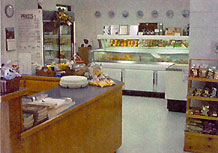
<p>My next stop in Green County was Monticello’s Prima Kase (Swiss for “excellent cheese”), which is owned and operated by the Krahenbuhl family. They are the only U.S. producer of the 180-pound wheel Swiss. The folks at Prima Kase make their Swiss the traditional way – in large copper kettles. Despite the superiority of cheeses produced in this manner, the large copper kettles have fallen out of favor in the U.S. because they’re labor-intensive and very heavy. As licensed cheesemaker Shelley Krahenbuhl told us, “We have a hard time keeping employees because they have to repeatedly turn over a 180-pound kettle [containing curds] by hand.” But the Krahenbuhls remain committed to European quality and tradition. They may experience higher staff turnover than they’d like, but Prima Kase’s methods have fetched them several awards for their outstanding cheese.<hr />
</p>
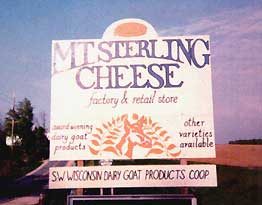
<p>In search of goat cheese, which has been popular in Europe for centuries and is recommended as an alternative to cow’s cheese for those with lactose intolerance, I headed over to Mt. Sterling, near the mighty Mississippi.</p>
<p>The Mt. Sterling Cheese Co-op is the world’s largest goat milk co-op, incorporating 37 goat farms in Wisconsin, Iowa and Minnesota. The unpasteurized goat milk for the cheddar cheese is aged 60 days according to government standards. This is the minimum length of time that raw milk cheeses must be aged to ensure that all potentially harmful bacteria have died. The U.S., however, is the only country that imposes this standard, and many cheesemakers are concerned that the U.S. Department of Agriculture (USDA) may ban the use of unpasteurized (raw) milk in cheese production. According to Mt. Sterling’s manager Kent Salmon, “pasteurization kills the enzymes that make raw milk cheese better.” He adds that homogenization – the process through which milkfat solids are evenly distributed throughout the milk (and the reason we no longer have cream at the top) – is also unnecessary because goat’s milk has smaller fat globules than cow’s milk, so the milk is homogenized “right from the goat.”</p>
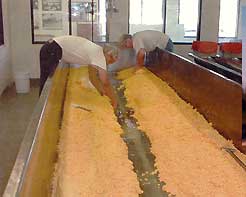
<p>Moving right along, I stopped at Cedar Grove Cheese in Plain. Bob Wills began making specialty cheeses at the Cedar Grove cheese factory when he purchased the family business from his father-in-law in 1989. The factory now produces 40 varieties of cheese, including some unusual blends such as sun-dried tomato-basil cheddar and garlic-dill cheddar.</p>
<p>Cedar Grove Cheese was one of the first companies to label its cheese “rBGH-free” on the front of the package, but that didn’t last long. Under pressure from lobbyists, the USDA declared that rBGH-free labeling must also state that there’s no significant difference between rBGH and rBGH-free products, which defeats the purpose of labeling. With or without a label, Cedar Grove, along with some organic dairies, such as the Organic Valley cooperative of family f arms, continues to use rBGH-free milk. In addition, about 40 percent of their cheese products are organic.</p>
<p>An impressive example of Cedar Grove’s progressiveness is their innovative solution to wastewater disposal, a significant environmental problem for most cheese factories. By building a green house behind the factory, Wills was able to create a low-tech “living machine” treatment plant that simulates the organic cleansing process that naturally occurs in wetlands. The water purification system, designed by Living Technologies, Inc. in Vermont, has never been used before at a cheese factory, but appears to be working out quite well at Cedar Grove.</p>
<p>By supporting our local family dairy farms and specialty cheesemakers…. we help to preserve the centuries-old, artisan cheesemaking tradition. </p>
Making Cheese in God’s Country

1 / 7
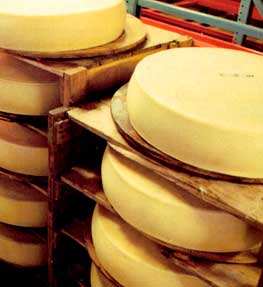
Wisconsin has a rich history in cheesemaking
Photo courtesy MOTHER EARTH NEWS editors
2 / 7
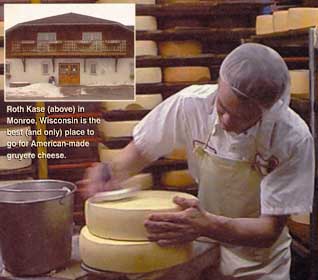
Cedar Grove factory workers up to their elbows in curds and whey.
Photo courtesy MOTHER EARTH NEWS editors
3 / 7
4 / 7
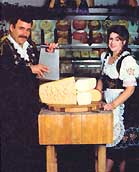
Prima Kase's 180-pound wheel Swiss - that's a lot of Reubens! Inset: Randy and Shelly Krahenbuhl
5 / 7
6 / 7
7 / 7

Need Help? Call 1-800-234-3368
Popular Now

Fire Cider Recipe by Rosemary Gladstar
Fire cider benefits are numerous, it is a traditional remedy known for strengthening the immune system. Get this fire cider recipe by Rosemary Gladstar to boost your health, including two extra recipes.

Champion Chicken Breeds
Learn about a wide variety of superlative chicken breeds ranging from the rare Ayam Cemani to the giant Black Jersey Giant.

Underground Concrete Septic Tank Root Cellar Plans
Stow your surplus with these underground root cellar plans. This modern root cellar design turns a never-used septic tank into outdoor walk-in storage.


