

I don’t think a homestead is really complete without a few
animals roaming the place, but–as you probably
know–the cost of maintaining pets or working critters
can be prohibitive … especially for folks who
live in rural areas where obtaining store-bought supplies
requires expensive travel.
However, you can feed a canine crew economically
and nutritiously just as my sister Julie and I do,
here on our isolated spread in the bush country of central
Alaska. We were inspired to make our own dog food by the
sheer expense of buying premixed dry feed for our sled team of
eight animals. Including
freight charges, a 50-pound bag of commercial dog food
costs us a whopping $22, so we decided that we’d have to
find some less expensive way of feeding dogs.
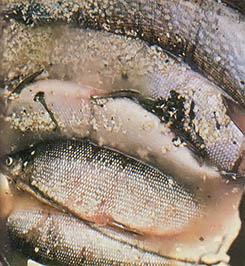
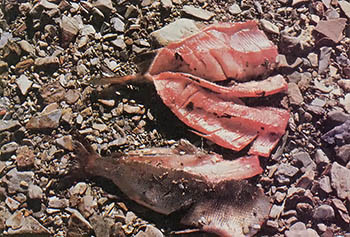
The basic ingredient of the low-cost dog dinners is fish.
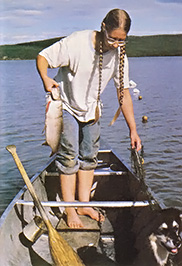
We catch plenty in the lake near our cabin, and you
can feed your kennel of hounds from a similar
source (or even, perhaps, buy large quantities of
inexpensive “trash” fish from local commercial fisherfolk
).
During the summer, we use gill nets (such seines are
illegal in many areas, so be sure to check local game laws
before netting fish) to bring up an abundant harvest of
whitefish, pike, burbot, and suckers each day. When winter
arrives, of course, we first have to chop holes in the
three-foot layer of ice that covers the lake–a
tedious, tiring job–but the nets can then be left in
the water for up to a week without any spoilage of the
catch. If our haul is larger than the dogs’ daily ration,
we dry and store the extras for use during the spring and
fall (when erratic ice movement makes netting unsafe).
A Fine Kettle of Fish
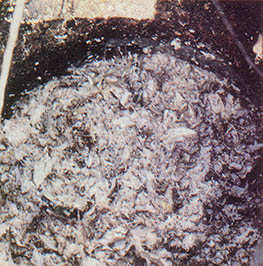
We usually cook the swimmers whole–heads, guts,
scales, and all–to provide our dogs with hearty,
wholesome meals. (We’ve noticed that the beasts do
sometimes choke while eating, but never because they have
bones caught in their throats. It’s simply a result of
their gulping the food too fast. If fish is cooked
long enough, the skeletons become soft and easy to
chew, posing little danger to canine gullets.)
A cereal supplement of rice or oatmeal can be used to fill
out a skimpy netful … and will also add extra nutrients
on those days when the animals have to work long hours and
haul particularly heavy loads, or when the temperature is
extremely cold. (Under such conditions, the huskies may
need extra calories just to maintain their body weights. Sometimes it’s necessary to mix a half-cup of lard,
per animal, into the meal.)
We also add trapped or hunted birds and other small game animals to the kettle (as well as inexpensive meat
trimmings that are sometimes available from the grocery
store). Here in Alaska’s interior, for example, the hare
population fluctuates regularly … but we find we can
usually snare several of the large rabbits a day during the
peak season, and then stew up one hare (plus a little lard
and oatmeal) for each dog.
Table scraps provide an additional wide range of possible
ingredients for our homestead canines’ dinner menu. We
throw in such leftovers as old potatoes, stale bread, cold
zucchini, moldy cheese, and carrot tops. The dogs even seem
to enjoy the chickweed and lamb’s-quarters that I
occasionally add to the pot when the fish ration is getting
scarce. (Remember, however, that dogs are not
natural vegetarians, so plant matter–much of
which the animals can’t digest–should make up only a
small part of their total diet.)
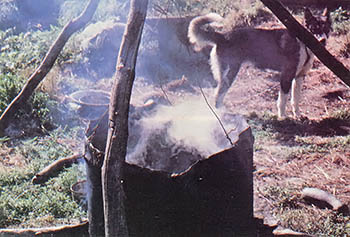
We cook our “canine fuel” in the sawed-off bottom half of a
55-gallon drum. We hang it from a wooden tripod
over an open fire in the summer and set it on top of our
wood stove during the colder months. Once the food is in the
pot, we pour in two or three gallons of water. (Whenever
oatmeal or rice is included in the mix, however, it’s a
good idea to add more water than usual and
stir the stew often, since grains tend to stick to the
kettle and as a result will burn quite easily.)
When we’re cooking outside, I build a large fire using
driftwood found on the lake shore. As the flames grow under
the pot, the home-cooked hash comes to a boil, simmers for
about half an hour, and then cools slowly while the
fire burns down. (It’s important, of course, to cook fish
and game completely, in order to kill any
parasites the critters might be carrying.) The food will
be ready when the bones are soft, the meat crumbles easily
into small chunks, and the whole mixture has a thick, mushy
consistency.
Dinner Is Served
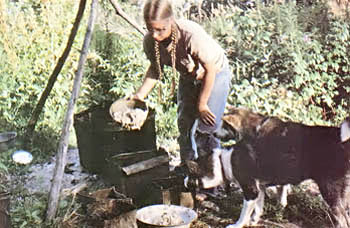
We feed our hardworking helpers once a day, and their
dinner hour always results in quite a scene! Julie gathers
the animals’ pans, and I dish out the portions according to
each eager eater’s weight. After an active day on the
trail, the dogs are always hungry. Their
individual reactions to the sight and smell of a steaming
pan of fish are highly predictable … and entertaining.
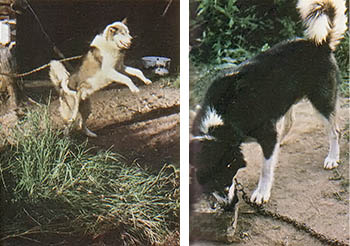
Yukon–our big 100-pound malamute–joyfully hurls
his bulk into the air when he sees dinner approaching. The
smaller wolf/husky, Loki–who’s always alert and high
strung–whines and dances impatiently at the end of
his chain, waiting with increasing anxiety until his pan is
set down in front of him. Trapper, another greedy malamute,
stands and stares intently at the pot, his eyes
growing wider and wider until he’s allowed to attack his
share.
The general chorus of yelps and barks that always greets
the arrival of loaded food dishes subsides into a steady
slurping as the dogs consume their meal. And finally,
the yard is silent except for the contented lapping of
tongues.
I’d bet that almost any dog–whether it’s a
husky, malamute, or just plain old garden-variety
mutt–would thrive on a diet of fish, meat, and
vegetable stew. The nutritious, well-balanced combination is
a great way to feed your tail-waggers economically, and the extra effort will be well rewarded as you see your
crew dig eagerly into the tasty mush. As long as you can
net or (inexpensively) buy fish in bulk quantities, you’re
in business … and so are the four-legged friends that
pull your sled, herd your sheep, or just patrol your
homestead acres!
EDITOR’S NOTE: You can learn more about the art of training
and using an Alaskan dog team by reading “Homestead Dog
Sledding.”





