

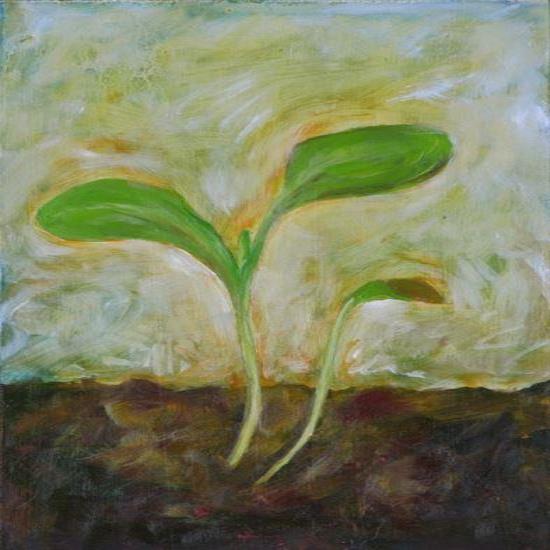
On February Second, known variously as Candlemas, Groundhog’s Day, and Imbolc, we begin the gardening year by planting the first seeds. After dinner, I light a new beeswax candle, spread newspaper, and the season begins with the scent of fresh earth.
Why Starts?
We start almost all of our seeds in pots, rather than directly in the ground. I have been doing this for eight seasons, each year expanding my range, and I am very pleased with the results. First, I have heavy hand when I plant directly in the ground, so this method really saves on seed. A package of mustard can last three or four years, until the germination rate drops off. It also creates huskier starts, because the competition from other seedlings is reduced. I do not have to thin new plants (always an emotionally difficult task) and space plants for optimum growth. My plants are much stronger all season because of this. They also have some solid growth on them when they go out, so that they withstand the munchings of the small grey slugs which can decimate a row of just sprouted greens in one damp afternoon. I plant by the moon, not by the weather, so I push the season safely. And, because I grow all of my starts in my classroom, I wander by and stroke the tomatoes when I feel a little stressed. The scent of the leaves assures me that summer days are coming. The kids like to check out the plants as well. Despite muttering about “hippy teachers growing you know what in the classroom,” they are intrigued. Every year, one exclaims, “It smells like a tomato!” when they poke at the leaves.
How to plant—if you are growing in school, not in a greenhouse.
First, I label the six-packs with masking tape, rather than using signs that could be moved around by a mischievous ninth grader. This means that I have to lift the pack out of the tray to see which tomato is losing the sprouting race, but I always know, when I take them home, which ones are the Long Keepers. Then, I fill the six packs with fresh seed starting mix. I layer several sheets of newspaper under my long seed trays, which keeps the water from leaking out. I like to sow two seeds per cell, rather than broadcasting and pricking out a larger pack. Two lettuce or kale plants will do fine in one cell until it is time to plant out, when I gently disentangle the roots. It saves space, which is at a premium on my counter. I have only one long set of lights, resting on a couple of bricks. As the plants grow, I prop the lights up higher using old literature textbooks. I set a timer for sixteen hours of light and check the plants at least three times a day. Sometimes, I find little origami peace cranes tucked in among the leaves.
Timing. Three rounds.
The first round of crops, which we sow on Candlemas, is for the early spring bed: lettuce, broccoli, cauliflower, kale, leeks, and mustard. Tomatoes are planted at the same time. These will all grow in my classroom, where the air is warm and full of carbon dioxide. Because they do not need to be warm, I plant my peas and sweet peas two weeks later, and they grow in the dining room window and move outside on sunny days. These starts come home for Spring Break, the last week in March, to be planted under the cold frame or bumped up into four inch pots for hardening off and passing on.
The second round, planted over Break, is the summer bed: chard, collards, more broccoli and cauliflower, cabbages, lettuce, and fennel, as well as flowers and basil. They will grow in my classroom for about a month, then come home to harden off before heading out. Beans and root crops will be direct seeded; pole and bush beans do well if I do not plant until the snow has melted from Mary’s Peak (our local, 4000 foot mountain) and carrots and parsnips just do not transplant well.
The third round is the vines—pumpkins, cucumbers, and squashes—and the Scarlet Runner Beans, beloved food of the mini-slug. Some years, if it is dry and bright, I might grow these at home, moving them in and out, depending on the weather. Cold damp years, they come to school for about four weeks, returning to the garden beds by Memorial Day, when they are set out and covered by gallon milk jugs for a little more protection.
Once these rounds of plants are settled in, I start small batches of greens until mid-July. They sit on the planting bench, in the shade of the plum tree, waiting for space to open up in the beds. After early July, I have not been able to sprout and grow transplants and so, I put the supplies away for another year.
Check out my blog to read more about the Twenty First Street Urban Homestead. Go to Julia Lont’s website and Blue Camas Press to see more of Julia Lont’s amazing artwork.
All MOTHER EARTH NEWS community bloggers have agreed to follow our Blogging Best Practices, and they are responsible for the accuracy of their posts. To learn more about the author of this post, click on the byline link at the top of the page.






