Starting a cut flower business can be a tough road, especially for refugees. Follow an intergenerational farm as it fulfills a dream and transforms trauma into a sense of belonging.
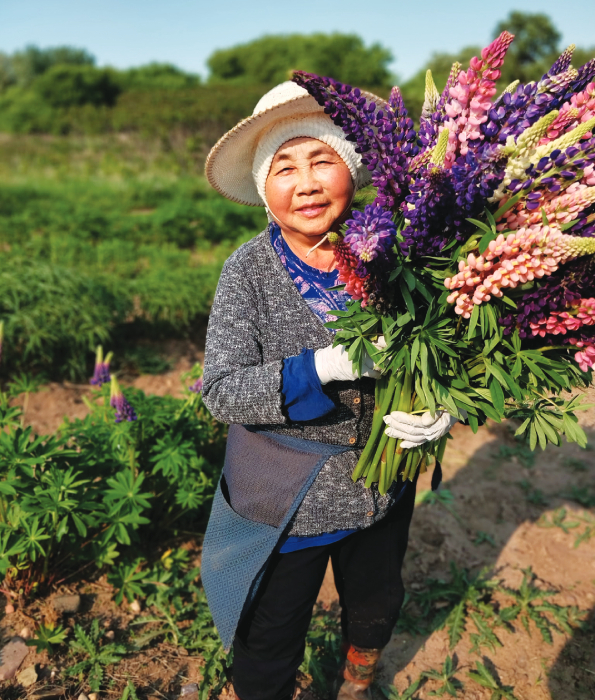
Maiv Flower Farm didn’t begin as a business idea. It began as my mom’s dream, shaped by an unfulfilled longing for land.
My family are refugees of the Secret War in Laos, a conflict that forced Hmong people from our ancestral homelands into lives defined by survival, displacement, and rebuilding. For my mom, land was never about property. It represented belonging and continuity.
When we arrived in the United States in 1994, farming became the first way my mom learned how to survive. She grew vegetables that would be used for dishes that reminded her of home. These were vegetables that couldn’t be found in grocery stores, plants whose seeds carried memory and familiarity in a place that felt unfamiliar in every other way.
As a single mother of seven children, five of us under 18, she didn’t see farming as a hobby or a choice. It was survival. Growing our own food meant fewer meals purchased and fewer dollars spent, a direct way to keep us fed when resources were scarce. Through farming, my mom provided not only physical nourishment, but also emotional grounding, anchoring our family in routine, purpose, and resilience when everything else felt unstable. Tending the land allowed her to re-create a sense of home while we learned to navigate a new country, language, and way of life.
We farmed together on borrowed land. No matter how much labor we poured into the soil, ownership remained out of reach. At 14, helping as an interpreter when my mom began selling at the local farmers market, I didn’t yet have the language to understand what this meant. I only knew that we planted, harvested, and then moved from one side of town to another, from one plot to the next. We invested deeply in land that was never quite ours, including raspberry fields we planted in the fall and left behind a few years later. What I understand now is that I was inheriting more than farming skills. I was inheriting a dream my mother carried – the dream of owning the ground beneath our feet and building a life on it.
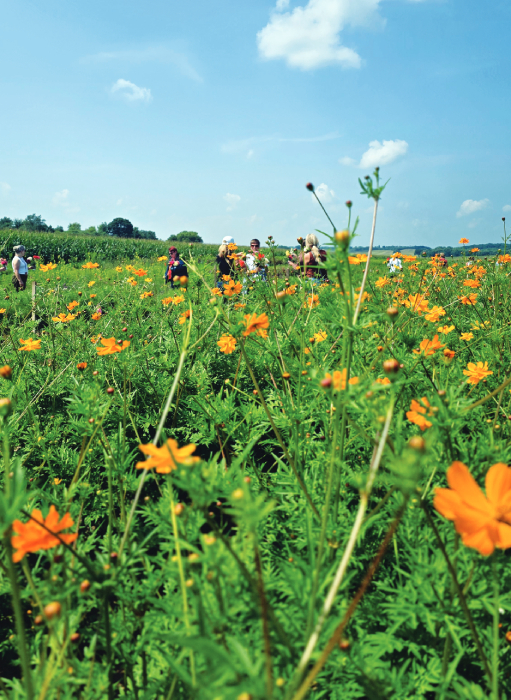
That dream was spoken into the open fields every so often by my mom in the classic Hmong expression of kho siab, a yearning for something just beyond reach.
In 2015, everything changed when my mom was diagnosed with lymphoma. Time became precious, and I wanted to spend as much of it with her as possible. But my mom is stubborn in the way only survival can teach, so even with cancer, she continued to farm. If I couldn’t persuade her to slow down, I decided I’d join her.
A Flower Farm Blooms
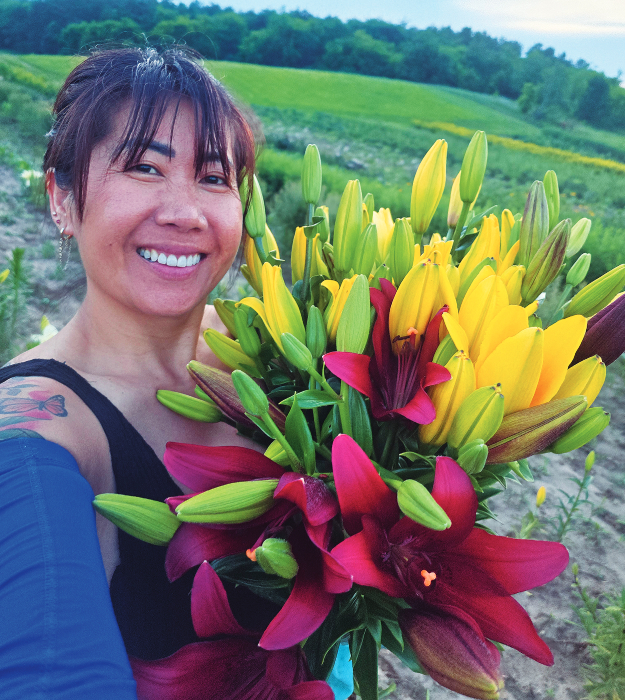
Maiv Flower Farm is named after my mom and her dream. We work the farm together as a mother-daughter duo. My mom brings a lifetime of farming as survival. I bring the desire to transform that survival into stability and into a beautiful life for my family.
Still, farming without land ownership made long-term planning difficult. Incorporating perennial plantings, soil regeneration, and infrastructure required faith that we’d be allowed to stay.
I sought out grants, such as the U.S. Department of Agriculture (USDA) Farm Ownership Loans program for beginning farmers and ranchers, but they required paperwork I didn’t have. We’d need three years of financial and crop records to even be considered. Navigating the USDA grant and other grant programs was confusing and complex. I felt hopeless. Yet, the dream persisted; it belonged to both of us, and now to my children.
Buying land was one of the hardest steps. Without traditional financial pathways, it required patience, persistence, and careful risk. We saved what we could by working multiple jobs outside of farming and making sound financial decisions. We built connections and a circle of support for our farm by intentionally nurturing relationships and staying grounded in a long-term vision for our family and our dream of land and a farm.
We were finally able to purchase land when I sold my house at the height of the real estate market in 2022. I moved my family into a small rental while I searched for land, using the net gain from the sale of my home. It didn’t happen quickly, but we kept moving forward one step at a time. When I finally purchased our land in 2023, it marked a deeply emotional turning point.
Owning land meant belonging. It was a declaration that we were here to stay. That our labor would accumulate. That what we planted could grow beyond a single season.
Grow from the Ground Up
From the beginning, we knew Maiv Flower Farm couldn’t survive by following conventional agricultural models. Small-scale farming, especially for refugee and immigrant families, comes with significant structural barriers. Access to affordable land and capital is limited. Navigating regulations and markets can be daunting when language and cultural systems are unfamiliar. Without generational wealth, established credit, or inclusion in traditional lending and agricultural networks, the path forward is far steeper. Many marginalized farmers also encounter discrimination in supply chains, limited distribution opportunities, and technical assistance that doesn’t reflect our realities. Our family didn’t have generational wealth, established credit, or easy access to land and capital. Instead of trying to fit into a system that wasn’t built for us, we focused on building something that worked with our reality.
We started small and focused on high-value crops, such as flowers and specialty vegetables, that could grow on limited acreage. Just as important, we built relationships with our community of other farmers and organizations that believed in a healthy local food system. Those relationships helped open doors to knowledge, support, and opportunities that we wouldn’t have found on our own. Our business model grew from those connections, including farmers markets and eventually our pick-your-own (U-pick) program.
For others facing similar challenges, my advice is this: Start with what you have and don’t wait for perfect conditions. Build community, seek mentors, and be willing to create your own path. The system may not always make space for you, but with persistence, creativity, and support from the community, it’s possible to build something strong and meaningful from the ground up.
Federal and state agricultural programs often prioritize larger, established operations, making it even harder for small, culturally rooted farms to compete. These inequities mean that sustainability requires far more than the ability to grow a good crop. To succeed, we needed a model that reflected how farming functions in our family: relational, communal, and adaptive. That belief led us to integrate farming with agritourism.
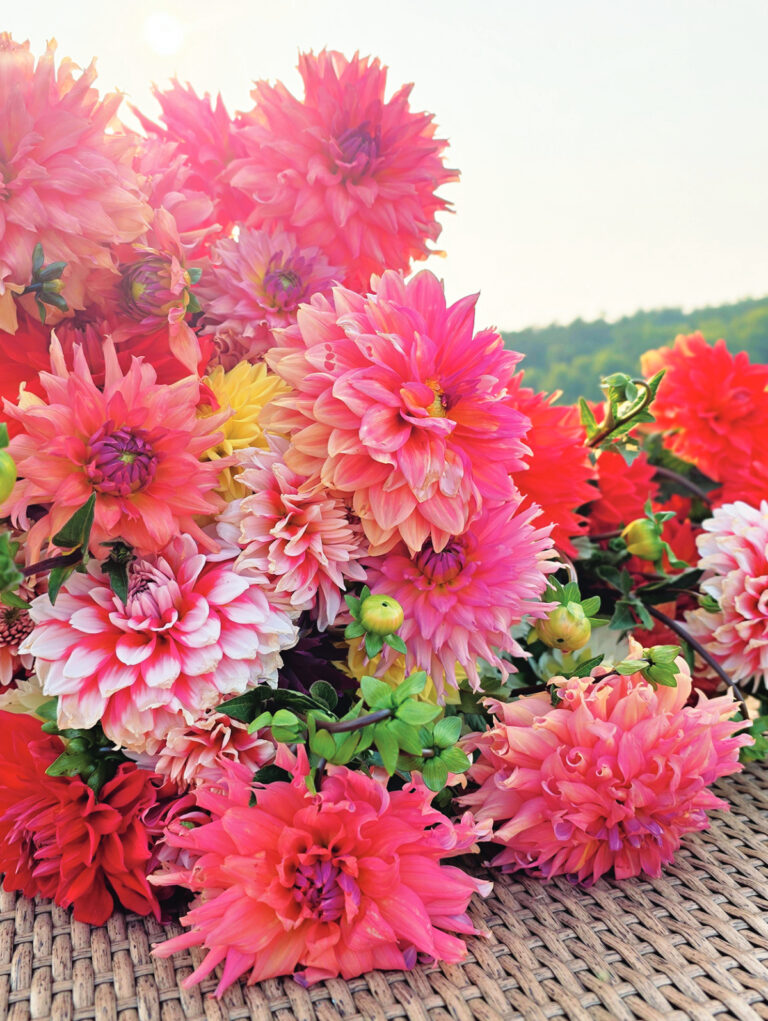
We first opened the farm to visitors late in the growing season of our first year on our own land. At that time, we began offering scheduled U-pick opportunities for flowers that were in season, including vibrant zinnias and dahlias. We realized that we also had an abundance of vegetables ready for harvest. Rather than letting that produce go to waste, we expanded our U-pick offerings to include vegetables.
Opening the farm for U-pick allowed us to approach our work in a smarter and more sustainable way. Selling flowers and vegetables at the farmers market requires a significant amount of labor behind the scenes. Typically, we harvest the day before the market, then spend the evening washing, sorting, and packing everything for the next morning. Many nights, we found ourselves working late into the evening, sometimes even into the early hours of Saturday morning, making bouquets and cleaning, bunching, and packing vegetables before finally loading the van in preparation for the market.
By offering U-pick flowers and vegetables on the farm, we were able to reduce some of that intensive preparation while also expanding our market in a meaningful way. Instead of bringing all of our products to town, we could invite the community to come directly to the farm. This created opportunities not only for people to harvest their own fresh flowers and vegetables, but also to learn more about how food is grown and the importance of caring for the land. In this way, the U-pick experience became both a practical solution for our farm and an educational opportunity for visitors to connect more closely with agriculture and the local food system.
We price our U-pick items with the local community in mind, striving to keep the items affordable. Our goal is to provide a healthy, locally grown alternative to the produce and flowers typically found in big-box grocery stores, while also allowing visitors to experience the enjoyment of harvesting fresh items directly from the farm. A 32-ounce Mason jar filled with freshly picked flowers is priced at $20, allowing guests to create their own unique bouquet from what’s currently blooming in the field. For those interested in fresh produce, we offer a small basket of seasonal vegetables for $30. Each basket is filled with a variety of vegetables picked during the visit, depending on what’s currently in season and ready for harvest.
By offering our U-pick items at these prices, we aim to support healthy food choices, encourage community engagement with local agriculture, and make farm-fresh products available to as many people as possible.
Inviting people onto the farm felt both vulnerable and hopeful. Friends, families, and new visitors walked the fields, asked questions, and lingered among the flowers. The farm felt alive in a new way. Watching my mom during those visits is something I’ll never forget. She moved through the rows with pride, gently pointing out vegetables and flowers, explaining how they were grown, and sharing stories from her years of farming. She loved showing guests the results of her labor, not just the harvest itself, but also the care behind it. For the first time in a long time, I saw true joy on her face. It was the kind of joy that comes from being seen, valued, and respected for her knowledge and hard work.
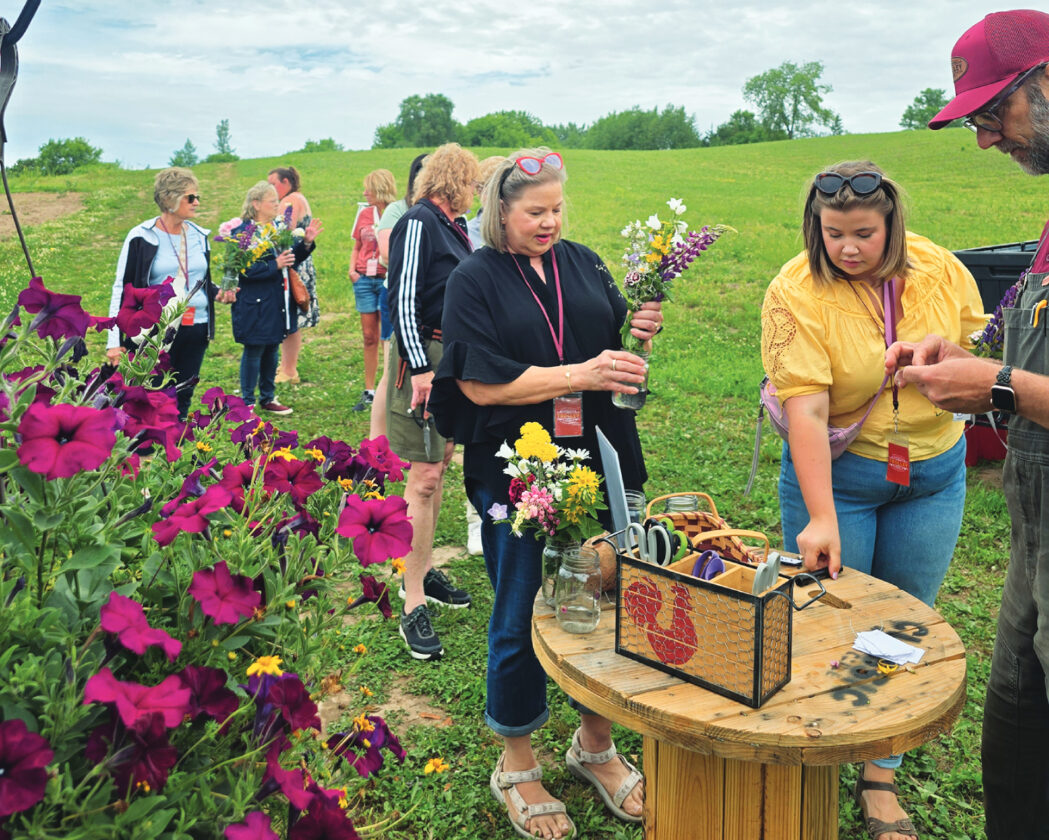
From U-picks, we expanded to hosting occasional workshops on the farm, allowing for a deeper learning experience for visitors and curated to meet specific groups’ objectives. We hosted a STEM in agriculture workshop for high school students with the Wisconsin Educational Opportunity Program; a bridal shower bouquet-making workshop; a Hmong herb and vegetable tour with members of the Wisconsin Women in Conservation; and a cozy teachers retreat spent picking flowers and making bouquets on the farm.
Agritourism has allowed us to create experiences that honor our heritage while generating income in a way that aligns with our values. It has transformed the farm from simply a production space into a gathering space while restoring dignity, building relationships, and creating a place of shared joy.
Today, Maiv Flower Farm is our family’s haven, a place where we live, gather, and build community. My mom’s cancer is in remission and she’s continuing to farm. Working alongside her honors the journey it’s taken to get here while making space for what will come next. Flowers became our shared medium, because they allow us to imagine farming beyond survival. Each bloom carries beauty and intention, speaking to both our past and our future.
Pa Thao is a nonprofit leader, community organizer, and farmer. Born in Ban Vinai, a refugee camp in northern Thailand, she resettled in Eau Claire, Wisconsin, at age 12. Her lived experience informs her work advancing equity, justice, and opportunity for underrepresented communities.
Originally published in the June/July 2026 issue of MOTHER EARTH NEWS and regularly vetted for accuracy.