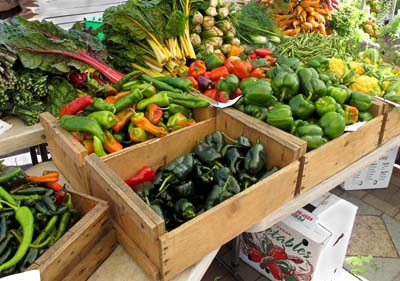
Many folks who leave the city for their country paradise take up the growing of organic vegetables, both as a way to feed themselves well and as a means of supporting themselves on the land. If you’re making such an attempt, good luck but please don’t assume that success is assured. Even know-how, experience, and well made plans don’t guarantee a happy ending to your venture. We’ve learned this the hard way, and have written the following report to give others some insight into the joys and pitfalls of the organic produce business.
Organic Farming Pros And Cons
Marsha and I left college five years ago and set out in search of our ideal: a self sufficient, ecologically sound lifestyle based on farming. We got the money together for a couple of acres with two cabins, planted our first garden, and went to look for work. The job I found was with the area’s largest grower of fresh vegetables. Although the operation’s scale was overpowering and its methods distasteful to me, my employment there did at least give me an idea of how much work went into such a business.
The following season, I worked with a friend who raised 40 acres of sweet corn, string beans, and tomatoes by organic methods and who sold his produce to a newly founded natural foods processor. My buddy was burned so badly by rubber checks and unfavorable weather, however, that he gave up the business and went into dairying.
We supported ourselves that winter by driving school buses and meanwhile, the growing frustrations of working for others made us decide to start farming for ourselves the following season. Why not? We had a great location (not far from Emmaus, Pennsylvania, the home of Rodale Press and the hub of the organic gardening movement). And, even though local sales of fresh vegetables were already monopolized by established commercial growers, this drawback was offset by our access to three major eastern cities: Philadelphia, New York, and Washington, D.C. We even had some readymade contacts with potential buyers, through friends who were members of various urban food co-ops. Marsha and I set up meetings with the organizers of some of these groups, decided that the co-op did indeed offer a potential market for our vegetables, and prepared to go into the produce business.
Because our garden space was limited, our first step was to find more ground to farm. Luckily, a commune three miles away had 25 unused acres and, since the landlord preferred that the acreage be cultivated, we secured an informal agreement that we could use all the space we wanted rent free, in exchange for fertilizing and preparing the community’s garden space. The tract hadn’t been worked for 10 years, and — although the soil was low in fertility — it had a humus content of 3 percent and plenty of potential.
We started that season with barely enough machinery and only animal manures for fertilizers, but still managed to plant four acres of various vegetables that grew very well. Although hand hoeing and picking were nearly overwhelming for just two people, the major pitfall wasn’t production but marketing. The co-ops were trying to keep all their growers happy by buying a little from each. This might have been fine in theory but, as a result of this policy, we often found ourselves driving home with a truck still half full of produce. What with the duplication of crops among producers — and a hungry raccoon family eating our corn — we didn’t make much money. We did learn a lot, however, and we did have a good time.
At the close of the season, our friends Sue and Art moved into the other cabin on our place. They had some gardening background and they also wanted to farm which meant we’d need more land and more machinery.
It was just at that point that we received some interesting news: All the 18 or so co-ops in the large city nearest us had merged into a federation which guaranteed each separate group its individual identity but centralized the buying of foodstuffs and other stocked items. The new organization, we were told, was calling a meeting of all the area’s known growers and would purchase only from those who were interested enough to show up.
The gathering took place early in February, and the results seemed too good to be true. It turned out that the co-ops of two other metropolitan areas had also merged into federated buying groups, and both of the new unions had sent their head honchos to our gathering to find a reliable source of vegetables. The four of us from Swamp Creek, and a friend and fellow organic grower named Martin, were the only farmers to attend. After much discussion of the three cities’ requirements, it was decided that by coordinating our efforts we could supply most of the produce needed (except for root crops and watermelons, which were being handled by an Amish farmer in Lancaster County).
According to the plan, our own group would grow all the sweet corn (six acres) and cherry tomatoes, since we’d had good success with those crops the previous year. We’d raise bell peppers, tomatoes, cantaloupes, zucchini, lettuce, and cucumbers — a total of four acres — in co-operation with Martin, who would produce beans and winter squash. We’d also alternate planting dates with our fellow grower on crops we both raised, to assure the co-ops a steady supply of vegetables and to offset any failures either operation might have.
It was further agreed that the nearest city’s organization would pick up our produce twice a week — as part of a regular route — if the amount was adequate. The co-op leaders then decided on a central location where trucks from the other two unions would unload various items and take on our vegetables. We talked to the federation’s organizers a few more times, and were so firmly convinced of their intentions that we went ahead and prepared for the coming gardening season.
With the help of the state extension service, we did a comprehensive soil analysis of our fields and determined what we’d need to ADD TO create a proper balance of nutrients. We then contacted our local organic fertilizer supplier and bought tons of rock phosphate (to provide phosphorus), greens and (for potassium), and ground limestone (to correct acidity) and set to work spreading it all, along with five tons of dried chicken manure from a nearby egg factory.
The fertilizers alone cost $1,200, and the outflow of cash had only begun! We were lucky enough to find another tractor which we could use indefinitely for free, but we did have to shift our implements around to make use of its larger size. We needed more flats, peat pots and pellets, potting soil, hot caps (to protect early transplants), and other items, all of which ran into money.
The next couple of months were spent fertilizing, plowing, starting seedlings, and getting machinery ready (all done while we were still driving school buses). Lettuce went into the ground in early April and everything else about a month later. The first sowing of corn (1/4 acre) was made on April 23, and was killed by three nights of late frost. Tomatoes, under hot caps, came a few days afterward, and the month of May was chock full of planting: cucumbers, zucchini, more tomatoes, cantaloupes, more corn, and peppers.
Ali, yes, those peppers! Since all the room in the hotbeds was taken up by tomatoes and cantaloupes and we couldn’t raise our own pepper seedlings, we bought thousands of bare root transplants from a Georgia outfit. The seller goofed somehow, though, and the shipment went to the wrong airport and sat for three days in 90 degree heat. When we finally got the plants — five days after they were sent — most of the seedlings were dead. The company, however, guaranteed its deliveries so we complained, renewed the order, and picked up a healthy batch the next day (for which we had to pay the shipping charges).
The weather report called for rain that afternoon, and we transplanted peppers like mad in the hope of beating the shower. No such luck! We finished the job in a downpour, got covered with mud from head to foot, and headed for our favorite swimming hole to clean off.
That was the last rainfall for six weeks, which meant watering the whole farm manually with 100 feet of hose and a 55-gallon drum full of water mounted behind the little tractor. Everything grew very well, especially the weeds, and we’ll be the first to admit that hand hoeing four acres twice is no fun at all. Still, we did it — with the help of our friends, Ruth and Joe — and kept the land clean and well cared for. (Fortunately, we were able to cultivate the six acres of corn with the tractor, which saved a lot of time and work.)
Our first harvest of lettuce was a real high point: The A+ quality pleased the federation, and the premium prices we received made us happy. After all the money we’d laid out, it was good to see some coming in.
Our optimism, however, was shadowed by a couple of clouds on the horizon. About this time, for instance, one of the three participating unions of co-ops found it too difficult to send someone to the central meeting point every week, and so it dropped out of the arrangement. Swamp Creek, too, was having transport problems, because the early harvest of cukes, zukes, and cherry tomatoes didn’t amount to enough for pickup by the co-op truck. It looked as though another month would pass before we’d have the needed, quantity, and we arranged with Martin to take turns delivering both farm’ produce to the city.
Two further problems soon developed in our relations with the co op buyers. One was that the member groups thought were charging too much. Rates — arrived at by weekly bargaining with the federation — were based on commercial market reports plus 10 percent, because we were delivering everything ourselves, and because the federation’s organizers genuinely felt that organic growers should get premium prices.
The individual groups, however, didn’t agree with this policy. In effect, they were telling the larger organization; “Look, we formed to bring people good, cheap food, so make the prices competitive with those of commercial markets, or we’ll buy elsewhere.” That left us in a strange position: We could either accept less money (a substantial reduction, with a ton of vegetables changing hands every week), or we could find and develop another market, hardly possible at that stage.
The second hassle involved containers. Our gripe was that our baskets weren’t being returned, and at 75 cents each, we couldn’t stand the loss very long. The federation didn’t like the baskets anyhow because they didn’t stack well, so its members proposed a deal: They’d supply us with containers for everything but tomatoes, if we’d use special tomato boxes (which held only two layers to reduce damage, and which stacked properly in the trucks). Again, we had little choice, and spent $130 on boxes at 41 cents apiece.
All containers were supposed to be recycled, but sometime weren’t. We sent the member co-ops a mimeographed newsletter explaining why the packing materials had to be returned, and were disappointed with the negative feedback we received.
The worst, however, was yet to come. We’d already lost on of our out of state buyers, as you’ll remember, and we soon found that the other was having interpersonal troubles. Due to these difficulties and a very unreliable truck, their pickups became sporadic. Meanwhile the co-op union nearest us had reshuffled its management, and the new leaders completely disregarded the federation’s commitment to buy only from us. Drought was reducing the quantity (though not the quality) of our vegetables week by week, yet we still had more than we could sell because our only customer was dealing with other growers. We were, in fact, stuck with a huge amount of perishable produce.
After much thought, a few phone calls, and a bit of building, we implemented the only solutions we could think of: we set up a vegetable stand at the gas station where Sue worked in the mornings (it did quite well!), auctioned tomatoes and peppers at the farmers’ market nearby, and bartered and sold locally as much as we could. We canned, froze, and dried twice the amount of produce we needed. In a desperate effort to offset some of our losses, we even located an additional 25 acres (rent free from the bus company) and planted them to buckwheat. Finally, I’m sorry to say, we built one of the biggest compost piles you’ve ever seen.
The crash came the third week in August. We decided to go canoeing (for our first weekend away from the farm), began the routine harvest a day earlier than usual, and were halfway through when the phone rang. It was Martin, and the message was, “Stop picking!” What? “Yeah, that’s right, stop!”
Martin, it seemed, had just talked to the federation and learned that its organizers intended to go on vacation for a month, the first we’d heard of such a plan. Since the managers wouldn’t be back until school opened at the end of September, and since their coolers were already full, they wouldn’t need much for the next four weeks (which just happened to be our garden’s period of heaviest production!).
Well, we threw up our hands in disgust and went canoeing, only to encounter the first rain we’d seen in six weeks. On our return we found the plants soaking up water and all the vegetables ripening like crazy. We held “clearance sales” at the stand, called every market we could think of, sold everywhere and to everyone we could. Even when we’d taken loads to the cannery and offered produce to orphanages, we still had plenty left over. Meanwhile — not surprisingly — the weeds grew best of all, until they’d completely devoured the cucumbers, one section of tomatoes, and half the cantaloupes. We concentrated on picking in central areas to save what we could … why, I don’t really know.
The final blow was a killing frost that hit us a month early. Luckily, we had one day’s warning and threw every available person into the harvest, even Marsha’s mother, who was vacationing with us at the time. We hauled a ton and a half of tomatoes to the cannery, gave a lot away, and then took time out to mourn the premature death of our buckwheat.
Obviously, it was time to sit down and think seriously about what was going on. We’d given the produce business thousands of man hours, over $2,000, and every ounce of ingenuity at our disposal, and we hadn’t even recovered our investment. The only logical alternative was to quit growing vegetables commercially and perhaps try another type of farming. Once we’d reached that momentous decision, we no longer felt so defeated.
The sense that a great burden had been taken from us made the next steps easy. We decided to plant our organic fields to small grains and beans (for drying). Accordingly, we traded the little tractor and cultivator for a larger machine and bought a combine. The buckwheat finally did get harvested, and — although it made only half a crop — it improved the tilth of the soil quite a bit. We planted winter barley, wheat, and rye, and made plans to get the oats and mung beans in come spring. We’re really looking forward to working with field crops and involving ourselves more with animal husbandry.
The change has been a tremendous relief. We have time to tend our own garden, to put up the barn, to do some woodworking, to go camping and bicycling, to do all the things we couldn’t do when we were growing vegetables commercially. Time, unfortunately, is one commodity the truck farmer never has enough of. Crops have to be planted on time, cultivated on time, irrigated at just the right time, and produce is so perishable that there’s not an hour to lose between picking and delivery. The whole experience was just too frantic from beginning to end and we’re all glad it’s over.
We still feel, however, that organic vegetables can be gown successfully on a commercial basis. One possibility would be to contract with a natural foods processor (although they’re hard to find). Another would be to deal directly with the public, either through a roadside stand or on a “pick yet own” basis, but be warned that location is important and that you’ll probably need time to become established. Although it’s possible to sell vegetables to health food stores, it’s not very profitable because such outlets handle a limited volume and delivery is costly and time consuming. If you plan to enter the produce business, we hope our experiences can help you avoid some of the hassles we encountered. Anyhow, happy picking!
Even though our vegetable endeavor didn’t work out as planned, we’re glad we tried it, because the effort made us acutely aware of just how drastically people’s thinking must change if we’re all to survive on this planet. Over and over we were told, “Organically grown? So what, who cares? I just want cheap food.” Most consumers aren’t interested in such matters as freshness or chemical adulteration or nutrition, only in saving money. Often, too, folks care more for their own convenience than for any larger issues. As far as many co-ops are concerned, “Recycling takes too much space and time. It’s just easier to throw everything away.” True, some individuals see the situation realistically and are already rearranging their own lives, but the world’s future, we believe, is in danger as long as the masses think only about “progress” and the almighty dollar.