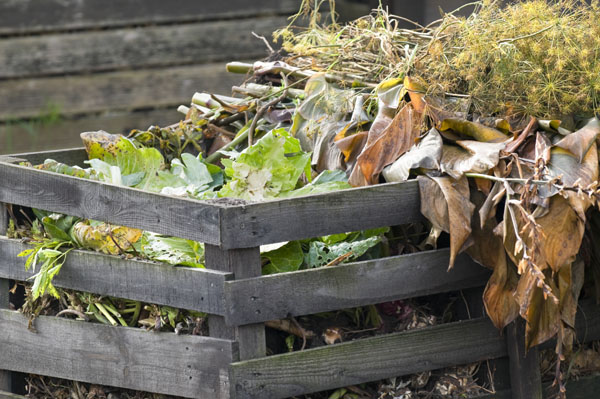
There seems to be almost as many ways of making compost as
there are gardeners. Jeanie Darlington gave us her recipe
for a compost pile in MOTHER EARTH NEWS Issue No. 3 and briefly described
a method of composting in the ground in No. Four. Still, we
find that some folks (new to organic gardening) continue to
worry about the seemingly magical transformation of garbage
into rich, black soil. So here, one more time (A HEAP Of
Help For The Gardener), is a more-or-less standard set of
directions for making compost. Then–just in case you
start worrying about what to put in and what to put out of
your compost, how long to let the pile set before turning
it, whether or not to add “activators”, etc.–we’ll
direct your attention to the other two articles on composting in this issue Creating Compost Potting Soil from Garbage and How the Compost Pile Turned into a Thriving Rock Garden. Get the idea? Dump your garbage
together and stand back. It’s almost impossible to
fail!
How to Compost
The compost pile or “heap”–a mixture of decayed
vegetable matter sometimes combined with manure–is an
invaluable, yet inexpensive, device for providing the
gardener with top-grade soil. Through the work of harmless
bacteria, raw organic matter is converted–or
“composted”–into humus. This humus is excellent plant
food and improves the soil in many ways. A compost pile is
built of substances such as dead leaves, lawn cuttings,
left-over vegetables from the kitchen, manure, fertilizer,
straw, rich topsoil and soft clippings from trees and
shrubs. Grass, weeds and kitchen waste may be used in great
quantity, as they decay very rapidly. Leaves, hay, sawdust,
cornstalks and straw are slower and require a longer
decomposition period.
Materials that resist decay or should
otherwise not be used are diseased plants (which should be
burned), bones, meat, grease, animal fat, grapefruit or
orange skins, woody plants, twigs, branches, weeds with
ripe seeds and leaves from the oak, beech or pine tree.
The
restrictions upon leaves and fruit skins are not mandatory
to anyone but the serious gardener. These materials will
not ruin the compost pile but may lower its value somewhat.
They also require a longer period of time for total decay.
Many people feel that it’s easier and safer to compost
leaves than to burn them. The trade of fire, smoke and
worthless ashes for valuable humus certainly makes good
ecological sense. Leaves decompose at a slower rate than
other compost, however, and can retard the natural
processing of a mixed heap. The solution is to segregate
them into a separate pile where–at the end of two
years–they’ll yield excellent leaf mold.
Vegetable
cuttings from the kitchen are one of the easiest substances
to compost. Cooked or uncooked, they contribute greatly to
the process.
Preparation and Construction of the Compost Pile
The compost pile should be built in a shaded area to lessen
its chance of drying out. Remember though, that
wood-rotting fungi in wet compost makes it impractical to
stack the heap right against trees or any wooden structure.
Form the pile into a compact, regular shape
(indiscriminate, strung-out dumping can produce poor humus,
insects and other problems), with the top indented to catch
and hold rainwater. The sides will naturally slope inward
but the degree of slope should be as little as possible,
otherwise water will run down the sides and be lost.
Bacteria that thrive on both oxygen and moist (but not
damp) conditions are the fastest working composters and
both air and water must penetrate the layers of a heap to
keep them happy. For this reason a compost pile should not
exceed five feet in height.
Best results are obtained by
alternating layers of vegetable matter with layers of soil,
sod and manure. To hasten decomposition and improve the
quality of the compost, add to each layer a sprinkling of
ground limestone, phosphate rock, bone meal, blood meal,
tankage or sewer sludge. Some folks add special
“activators” also but a controlled test at Michigan State
University has shown that such activators do not improve
composting action at all as long as a pile has plenty of
nitrogen in the form of manure, sewer sludge, bone meal,
blood meal or other materials rich in this element.
By varying the ratio of soil, rock powder, vegetable and
animal matter a compost pile can be given a highly
individualistic character and you can use this flexibility
to “tailor make” humus for a particular crop. In the
beginning, however, any compost is better than no compost
at all: Layer whatever you have available into a heap and
let nature take its course.
When your pile has reached the
desired height (remember the indentation in the top!),
cover it with a layer of top soil. Sir Albert Howard, the
original developer of today’s refined composting
techniques, recommends 1/8 inch of urine soaked soil for this
covering. If your heap is on a small city lot, you may want
to substitute a heavier layer of plain top soil to control
moisture and odor.
While your first pile decomposes, you
may start another. By having two–or several–at
various stages of decay, you’ll be assured of a constant
supply of humus.
Compost Maintenance
As the materials decompose, the silt will grow smaller. It
should be kept moist by occasional watering but this may
not be necessary if the indentation on top catches enough
rainwater.
After about three months, your compost pile
should be “turned” to thoroughly mix the layers, put the
outside materials into the middle and allow a fresh supply
of air into the center for the aerobic, or
oxygen-hungry bacteria. Every time new compost is exposed,
it should be covered with soil or, if an alkali humus is
preferred, lime. The materials will then decay uniformly.
As a substitute for turning the pile even once, try this:
After the three month period, cover your heap with a sheet
of black polyethylene and weight the plastic on all sides
to prevent it from blowing away. This polyethylene
eliminates the necessity of turning and watering the pile
and–by holding moisture in and absorbing heat from
the sun–encourages anaerobic (air-less)
decomposition.
If no new material is added, the compost
will be ready for use in about nine months to a year from
the time it was “finished”.
How to Use Compost in the Garden
The compost can be used when it is crumbly in your hand and
has the appearance of dark, rich soil. It is ideal as
potting soil for house plants and for starting young
seedlings. A small amount added each year to flower beds
will help keep them in good condition. In sufficient
quantity, it makes an excellent lawn dressing.
For garden use, compost may be applied just as it is taken
from the well-rotted heap. In making potting soil or
filling greenhouse benches, it’s best to screen compost
through 1/2 inch mesh wire to remove any stones, sticks, or
coarse material. The latter may be used as mulch or as the
bottom layer of a new pile.
Decayed compost improves the quality of any soil to which
it is added. With compost, sandy soil retains more moisture
and heavy clay mellows and becomes easier to handle. The
compost helps retain moisture, increases humus content,
supplies plant food, allows air to enter the soil, prevents
crusting, reduces erosion, controls soil temperatures,
lessens evaporation and discourages weeds. It’s a heap of
help for the gardener.