This guide to organic growing and shopping helps farmers understand the ins and outs of organic farming certification.
Guide to Organic Growing and Shopping
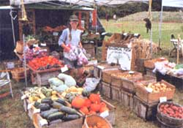
When my husband and I began selling produce at farmer’s markets 15 years ago, we hung up a big green-and-yellow banner that proclaimed “Organic Produce.” Then we, spent the rest of the summer explaining to curious customers what organic means.
A lot has changed since then. The non-fanning public is now well acquainted with the concept of organic: According to a recent study, 63 percent of Americans buy organic foods and beverages at least some of the time. Eight out of every 10 adults realize organic products must be grown without the use of synthetic pesticides, fertilizers or added hormones. Sales of organic products increased by more than 20 percent every year during the 1990s, passing $9 billion last year. Organic has achieved star status.
So when beginning farmers ask our advice about how to succeed in market gardening, we always say, “Go organic.” New growers need every advantage they can get, and the organic label provides higher prices for food and a marketing edge that can mean the difference between selling produce and composting it. For us, organic certification has opened the doors to the finest restaurants in town and to the local natural food stores. Our “organic” banner at farmer’s markets set us apart from other growers and eventually created a following of loyal customers, which in turn allowed us to start a community supported agriculture (CSA) program, now in its ninth year.
But even more important is the fact that organic production is safe for people and the environment. Like most market gardeners, we live where we farm: We want our home to be a place of beauty and wellness. We don’t want to have to keep our kids and pets indoors during the re-entry interval – the safety time required after pesticide use. We don’t want to contaminate our ponds and groundwater with synthetic fertilizers. Our goal has always been to grow wholesome food in a system that respects our natural environment, and organic farming has been the way to do that.
Organic Farming: That was Then, This is Now
Although organic certification has been good to us in the past, the entire organic farming business is in the midst of sweeping change, and the future isn’t entirely clear. Beginning in October, organic no longer will be just a system of beliefs and practices, but instead will be a federally regulated food label. The Organic Food Production Act, passed by Congress in 1990, will finally take effect, and it will become a federal offense to sell food as organic if it doesn’t meet the federal organic standards.
Most organic farmers must be certified by an agency that has been accredited by the U.S. Department of Agriculture (USDA). Certification is a big expense for organic farmers: We expect to pay more than $600 this year for our four acres of organic vegetables and flowers. Once the farm has been certified, its products can be labeled with the new USDA Organic label.
Smaller growers — those who sell less than $5,000 a year in organic products don’t have to be certified to call their food organic (although they can’t use the USDA label without being certified). They do, however, have to comply with the same rules as certified growers. Cheating carries penalties for those who get caught, up to $10,000 per violation.
Organic Produce: Labeling Choices
The involvement of the federal government in organic farming has created a backlash among some growers who think the new requirements are designed to industrialize an agricultural system that historically was a grassroots, idealistic movement. As a result, many growers are giving up their certification and calling their produce by some other name. Winter-gardening expert Eliot Coleman proposes “Authentic” as an alternative to “Organic” (See “Finding Truly Good Food.” December/January 2002) a British group suggests “Wholesome;” Jan Dawson and Andy Reinhart, Ohio market gardeners, came up with the name “Ecological.”
Growers who don’t want to get certified can still benefit from the new organic standards. Everyone, even backyard gardeners, can turn to the federal rules for guidance about growing food in a way that respects the Earth. The USDA standards were written by people with a deep understanding of ecological food production, and although some details are disputed, they still provide a sound blueprint for growing healthy food.
The regulations are very detailed. I encourage interested growers to read them on the USDA’s website. Click on the “National Organic Program” to find summaries and the full text of the regulations. Another valuable tool for organic growers is a list of brand-name materials that have been approved for organic production by the Organic Materials Review Institute (OMRI), an independent organization under contract to the USDA to evaluate whether products meet the organic standards. Visit OMRI’s website.
How to Get Organically Certified
If you decide you want to get your farm certified organic, your first step is to find a certification agency. Because the USDA has to accredit the certification agencies, you should first go to the USDA’s Web site to find out which agencies operate in your state. Then, if you know of other organic growers in your area, you should get together to choose an agency. A big chunk of the cost of certification is the inspection fee, so working with others near you is important. If an agency has to send an inspector to visit just one farm, it’s going to cost more than it would if the inspector’s travel costs are shared by several farms.
Inspection costs are just one of the factors that make it difficult to predict how much my given farm will pay for certification. Some certification agencies charge a User fee, in which farms pay a percentage of their sales, so that larger farms pay more. Others charge a flat fee. Once You know which agencies will certify in your area, compare costs carefully: The differences can be significant.
Once you’ve chosen an agency, call or write for an application. There will probably be a fee, as the initial information packet you’ll receive is voluminous. It contains the all-important “Organic Farm Plan Questionnaire,” about 20 pages filled with hundreds of questions about your farm practices. Once you’ve filled out this questionnaire, send it in with the application fee. The certifying agency reviews your application and decides whether you appear to be eligible for certification. if your application passes this first examination, the agency will schedule an inspection.
An inspector hired by the agency will visit you at your farm at an agreed-upon time and will review your records. The inspector will inspect your fields, greenhouses, barns, buffer zones and other facilities to determine whether every facet of your farm complies with the organic standards. The inspector will fill out a report and make a recommendation about whether your farm should be certified.
Back at the agency, a technical committee or specialist will review the application, your records and the inspector’s report, and issue a final decision. If you get the thumbs up, an official certificate will be mailed to you and you can start using the USDA Organic label. If you’re rejected, you have the right to appeal and plead your case.
Plenty of paperwork lines this path, but if you persist, you’ll reap your reward in higher prices for your produce and a better income for Your Certified Organic operation.
Lynn Byczynski and her husband, Dan Magentas, grow four acres of vegetables and cut flowers near Lawrence, Kansas. She is the founder and editor of Growing for Market newsletter.
Read more about USDA organic standards here:
The Rules for Obtaining a USDA Organic Certification