
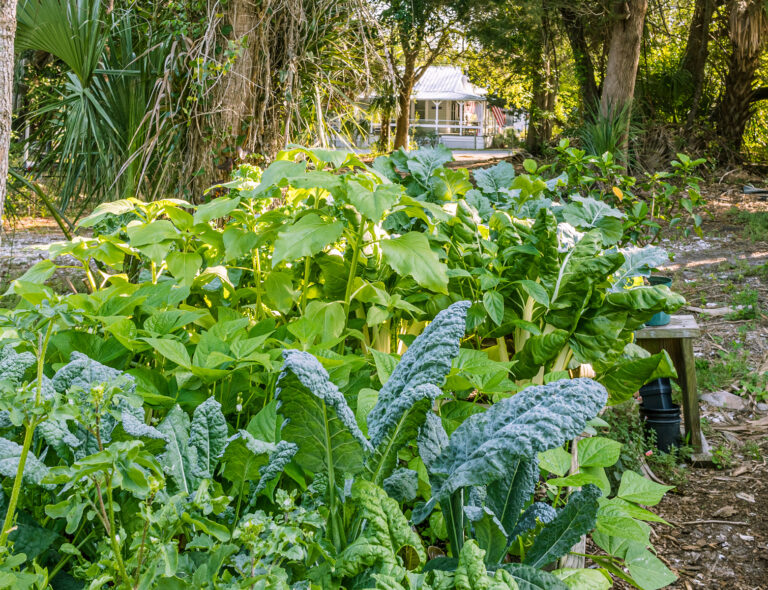
While shade presents a challenge, it needn’t stop you from growing your own fruit and vegetables. In this video, you’ll learn a few tricks to maximize the light your garden does receive for fruit and vegetable plants that grow in shade.
Tips for Vegetable Plants That Grow in Shade
- Unless your climate is very hot, you should use the sunniest areas of the garden to start seeds, and then transplant them once they are bigger and better able to cope with shade. Use grow lights indoors to give early-sown seedlings a boost.
- Paint walls and fences white, or use mirrors and other reflective surfaces, such as shiny metal or foil, to reflect any available light into shadier parts of the garden.
- Shady areas are often colder and damper, so use cold frames or row covers to warm up the soil earlier and extend the growing season later. Use beer traps and delay laying mulches until the weather warms up to help deter slugs.
- Space plants widely to help maximize light penetration.
Examples of Vegetable Plants That Grow in Shade
- 3 to 4 hours of sunshine a day: lettuce, arugula, chard, kale
- Morning sun and afternoon shade: celery, carrots, bush beans
- Morning shade and afternoon sun: climbing vegetables such as beans, climbing peas, and outdoor cucumbers
- Fruits: sour cherries, currants, gooseberries, blackberries, raspberries
Our Garden Planner makes it simple to choose shade-loving vegetables. Click on the Custom Filter button, select the ‘Partial Shade Tolerant’ option and click OK. The selection bar will then display only plants that are suitable for growing in these conditions.
Learn more about growing shade-tolerant fruits and vegetables in this video.

More Gardening Resources
Our popular Vegetable Garden Planner can help you map out your garden design, space crops, know when to plant which crops in your exact location, and much more.
Need crop-specific growing information? Browse our Crops at a Glance Guide for advice on planting and caring for dozens of garden crops.
You can also check out our sister publication, Grit, for some garden-planning guidance.
More Videos
Watch more videos on gardening techniques and other self-reliance, DIY topics on our Wiser Living Videos page.
Benedict Vanheems is the author of GrowVeg and a lifelong gardener with a BSc and an RHS General Certificate in horticulture. Find all of his MOTHER EARTH NEWS videos and articles here.





