

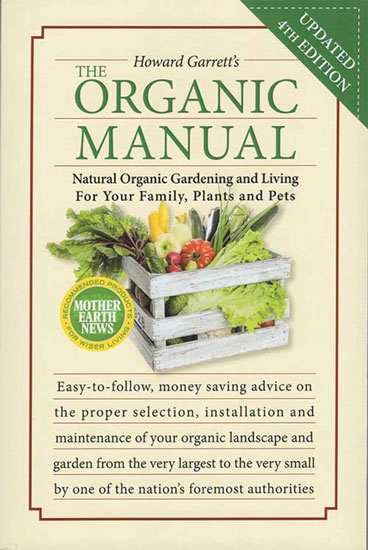
The Organic Manual: Natural Organic Gardening and Living for Your Family, Plants and Pets (Ogden Publications, 2016), by Howard Garrett explains in detail what the organic method is and how to do it. The book offers natural living advice and describes why the organic program is better in every way. The following excerpt is from Chapter 4, “Plant Decisions.”
You can purchase this book from the MOTHER EARTH NEWS STORE: The Organic Manual
Selecting Ornamentals
Books exist in most any region of the country that recommend and explain the best plants to use. Using the native plants of a particular region is becoming more popular and this practice fits well with an organic program. There are also adapted plants that have been introduced from other parts of the world. I prefer native plants when possible, but the key is to use varieties that will like their new home, making them easy to grow and economical to maintain. In most cases, natives are well adapted and have developed resistance to most harmful insects. Centuries of natural selection have given native plants the ability to survive without pesticides or high levels of fertilization, particularly if they are grown in healthy soil.
Nature doesn’t allow monocultures. Neither should landscape architects or gardeners. When choosing plants (native or introduced), select a variety so that insects and harmful microorganisms will not have one target group. Look at what has happened to millions of American elm trees all over the United States to understand why a diversity of plants is best in the long run. Large monoculture plantings have been devastated.
Another reason to use well-adapted plants in the landscape is water usage and conservation. Water conservation becomes a more serious issue each year and the careful selection of plant materials can make a significant impact on irrigation needs since water requirements vary greatly from plant to plant.
Of course I recommend Plants for Texas, Texas Organic Vegetable Gardening and Texas Gardening-The Natural Way for Texas, but similar books exist in other parts of the country. Do yourself a big favor by spending some time at your local bookstore, nursery, library, county agent, urban forester’s office or local college or university, learning about the best plants for your area. Then select a variety of plants that will meet your aesthetic and horticultural needs. In conjunction with the organic practices discussed in this book, you should then have the basics for creating a beautiful landscape, requiring only a minimal amount of maintenance. Note the recommended reading list in the appendix of this book. My best advice for the selection of trees, shrubs, vines, ground covers, and flowers is to invest in all the local reference books and get the free literature from the botanical gardens, zoos, park departments and civic garden clubs. Talk to several nurseries and look at the plants you are considering in different landscape situations. Don’t be afraid to try some experiments, but build the framework of the landscape with tough, pest-resistant, adapted varieties.
Landscaping with Herbs
They have been planted for years for their culinary and medicinal uses, but now there’s growing interest in another use. Herbs make wonderful landscape plants. Many are drought tolerant and grow in almost any well-drained soil. They provide color, texture, and wonderful fragrances. Herbs also give us help with insect control and make excellent companion plants for our vegetable and ornamental plant materials. They fit perfectly into an organic program because they should only be fertilized with natural fertilizers and they should never be sprayed with pesticides.
There are bush-type herbs such as salvia and rosemary. There are excellent groundcovers like creeping thyme and pennyroyal mint. There are many beautiful flowering varieties such as yarrow and sweet marigold. Herbs also have effective insect controlling qualities. Here are some of my favorite herbs to use as landscape plants. I’m not pooh-poohing the medicinal and culinary uses – quite the contrary – I just like for you to have something else to think about.
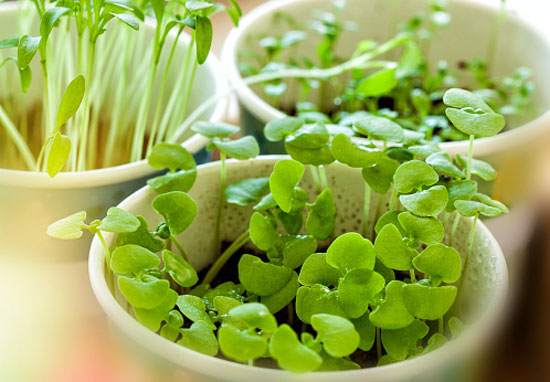
Basil(Ocimum spp.) is available in many types of purple and green basil, and they all make excellent annual plants to use as borders or low masses. Plant from seed or transplants in sun or partial shade. They will usually return from seed each year, but if they don’t, buy some more.
Borage(Borago officinalis) is a beautiful, soft herb that grows to about three feet tall. The leaves are gray-green and have whitish bristles. The flowers are star shaped and peacock blue and bloom throughout the summer. Plant in sun or partial shade.
Catnip(Nepeta cataria) is a tall ground cover or shrubby perennial with gray-green, oval leaves. It will reach about three feet in height. It has small, white or lavender flowers and is excellent for attracting bees and butterflies – and cats, unfortunately. Sun or partial shade.
Chives(Allium schoenoprasum) grow in clumps and look a little bit like monkey grass. Onion chives have lavender flowers and round leaves. Garlic chives (A. tuberosum) have white flowers and flat leaves. Sun or partial shade.
Comfrey(Symphytum officinale): The “healing herb” has large, hairy, ten-to-fifteen-inch-long leaves. The plant will spread to three feet high by three feet wide and has lovely, bell-shaped flowers in pink and purple shades that hang gracefully from the stems and last throughout most of the summer. It can grow in sun or shade and should be used as an accent plant or in a large massing. Comfrey will stay evergreen during mild winters but always comes back and establishes into a hardy perennial.
Dittany of Crete(Origanum dictamnus) An excellent herb for hanging baskets or patio containers. It has small, soft, round, gray leaves and tiny purple flowers summer through fall. Best in full sun.
Garlic(Allium sativum): Of course, we have to have garlic to eat and to ward off the “evil eye” and the bulbs to make the garlic tea, but it is also a good-looking landscape plant. The foliage of garlic is dark green and the flowers are very interesting as they curve around and finally burst open in the early summer. Best in full sun but can take some shade.
Scented Geraniums(Pelargonium spp.) are excellent landscape plants because of the lovely texture and the delicate flowers, but, more importantly, the fragrance when rubbed against or crushed. They come in all sizes and all leaf shapes including deeply cut leaves and those that are soft and velvety. Use in sun to partial shade.
Elderberry(Sambucus canadensis) is a large-growing, beautiful perennial that is often grown for its edible purple-black berries in August through September. It can grow to a height of ten to twelve feet in most soils and has lovely white flower clusters in the summer. It is also noted for its ability to produce very fine humus soil in the root zone and is a wonderful plant for attracting birds. Sun to part shade. Can be a little messy.
Garden Sage(Salvia officinalis) is a very tough, evergreen perennial with grayish-green leaves. The only negative is that it will develop woody growth after a while and need to be replaced. There are several different selections including some that have variegated foliage. Plant in sun or part shade, don’t overwater and cut back once in the later winter or early spring.
Lamb’s Ear(Stachys byzantina) is a tough, fuzzy-leafed, gray herb that makes an excellent ground cover to contrast with darker green plants. It can take full sun up to some fairly heavy shade. Lamb’s ear’s velvet-like foliage and lavender blossoms are delightful to see and to touch. Needs full sun.
Lemon Balm(Melissa officinalis) is an easy-to-grow, fragrant herb with leaves that are light green and oval with scalloped edges. It has a lemony fragrance and is excellent to interplant among vegetable and landscape plants to look good, help repel pests, and attract bees. Be careful – it can be invasive. Sun or part shade.
Lemongrass(Cybopogon citratus): is an herb that looks like pampas grass. It grows to a height of about three feet, has a wonderful lemon scent, and is excellent for making tea. Although it rarely flowers, it has a pleasant texture for a specimen landscape plant. It freezes above zone 8 so just plant a new one each year. Best in full sun, but can take some shade.
Lemon Verbena(Aloysia triphylla) is a wonderfully fragrant addition to the landscape garden as well as the herb garden. It is sensitive to cold so it’s best treated as an annual although it can be used in a pot and brought indoors during the cold months. Best in full sun.
Mexican Mint Marigold(Tagetes lucida) See Sweet marigold.
Mint(Mentha spp.) Mints of all kinds make good landscape ground covers, but be careful – they all spread aggressively. Mentha pulegium is pennyroyal and is a good landscape ground cover reported to repel fleas. Sun or partial shade.
Mullein(Verbascum thapsus): Common mullein is a wildflower that looks like a large version of lamb’s ear, but is more upright and has larger foliage. It also has yellow, white, or purple flowers depending on the variety. Also called flannel leaf or old man’s flannel, mullein is a distinctive specimen plant to use in the garden. Full sun to partial shade.
Perilla(Perilla frutescens) is an easy-to-grow annual with dark burgundy or green leaves. Growth habits are similar to that of coleus or basil. In fact, it looks a great deal like opal basil. However, it can spread aggressively. It can be planted from seed or from transplants and will reseed easily each year. It looks beautiful in contract with gray plants such as dusty miller, wormwood, or southernwood. Sun or partial shade.
Pineapple Sage(Salvia elegans) has beautiful red flowers in the late summer or fall. It perennializes in mild winters, but should be considered an annual for most of the country in sun or shade.
Rosemary (Rosmarinus officinalis) is a beautiful dark green shrub that can grow to a height of four feet. It will freeze in hard winters, but it is worth replanting every year if necessary. Rosemary has a marvelous pinelike fragrance and beautiful light blue flowers. The low-growing groundcover type is Rosemary prostratus.
Saffron(Crocus sativus): The true saffron is an autumn-blooming crocus that resembles ordinary crocus. It has lavender flowers that show in the fall. The saffron food flavor is made from the red-orange stigmas of the plant. It’s easy to grow, but very labor intensive to harvest.
Salad Burnet(Poterium sanguisorba) is a compact evergreen herb that will reach two feet tall with a rosette shape. The plant provides a pleasant cucumber fragrance and has flowers that form on long stems growing out of the center of the plant. Its lacy, symmetrical shape and nice texture make it a good accent plant. Sun or part shade is best.
Southernwood(Artemisia abrotanum) has delicate-looking, dusty- gray foliage that emits a lemon scent even when uncrushed but stronger when crushed. Full sun is best.
Sweet Marigold or Mexican Mint Marigold(Tagetes lucida) is a substitute for French tarragon and much easier to grow. It has a strong fragrance in the garden and produces a terrific display of yellow-orange blossoms in the late summer and early fall.
Tansy(Tanacetum vulgare) is an easy-to-grow, ferny-leafed herb that blooms with yellow, button-like flowers in the late summer to early fall. Crushed or chopped tansy leaves emit a very bitter taste and are an excellent repellant for ants. Sun or part shade, but best in sun.
Thyme(Thymus vulgaris) makes an excellent landscape plant, especially the creeping thyme, which makes a beautiful and extremely fragrant groundcover that is particularly effective between stepping stones and on borders. Creeping thyme also works well on retaining walls to flow down over the wall. Full sun is best.
Wormwood (Artemisia spp.) is another gray-leafed plant that is extremely drought tolerant and is a nice contrast with darker plants. Best in full sun.
Yarrow(Achillea millifolum) is a very lacy, fern-like evergreen perennial with colorful flowers on tall stalks that bloom in the early summer in white, pinks and reds. Best in full sun. Top dies back completely in northern climates.
Most herbs will do best in well-drained beds made from a mix of com- post, rock minerals, and native soil. The best location is full sun in morning and at least some protection from the hot afternoon sun.
It’s amazing how so-called old-fashioned things like organics and herbs have come back so strongly. The reason is simple – they work so well.
There is a lot of opinions and theories about companion planting. I certainly think there is something valid about the concept but my lazy gardener’s approach is to use strong biodiversity (lots of different plants) and the over net benefit of the plants to each other will be quite good.
Herbs also have effective insecticidal qualities. Here are some of my favorites that can be planted among the other vegetable and ornamental plants to help ward off the listed pests.
Vegetables, Fruits, Nuts
To make the best selection, check with the local extension service, local growers, nurseries, and especially local gardeners. Plant a diverse mix of varieties, but try to stick with the toughest and most adapted. An excellent source of information will usually be local organic growers and experienced home gardeners. No matter what vegetables you plant, be sure to prepare well-drained and highly organic beds, plant in the proper season and put a thick mulch layer over all bare soil.
No matter what food crops you decide to try, remember that, in most cases, these plants are probably not native to your area. For that reason, it’s imperative to loosen the soil to provide plenty of oxygen and add lots of compost for additional humus.
Use natural organic fertilizers liberally if the soil is not biologically active. Also add liberal amounts of rock powders and molasses. Supplement the soil treatments by spraying regularly with Garrett Juice. Effective rock powders include rock phosphate, greensand, granite, lava sand and glacial rock dust. Micronized (fine textured) products are fast acting and very effective.
Keep all bare soil mulched at all times, except when new seeds are coming up. Alfalfa hay is often the best mulch for vegetable gardens and should be applied eight inches thick to allow for settling. Bermuda should be used very carefully. Much of it contains broadleaf herbicides that can damage or kill crops. Partially composted native tree trimmings are excellent mulches for all kinds of plantings.
The most common recommendation is to water by drip irrigation and avoid wetting the foliage too often. Water infrequently but deeply when needed. I admit to still watering by sprinkling. I like to see where the water is going. Drip systems can cause dry spots and spots that are supersaturated.
Control insect pests by releasing beneficial insects and by hand removal. Problem infestations can be controlled with various organic pest control products.
Wildflowers
Wildflowers have always been popular in the wild, at least for those people taking the time to stop for a moment and look at them. On the other hand, many people have become frustrated over trying to establish wildflowers on their own properties. Growing wildflowers can be fairly easy, but it isn’t as simple as throwing seed on the ground and waiting for the spring show. Once again, we need to watch what works in nature and try to use those techniques and even improve on them where possible.
Here are some tips to help give you a better chance of a beautiful display of wildflower color next spring.
1. Timing: The time to plant is late spring through summer. Sowing the seed in late spring best duplicates when nature scatters seed on the earth. The seed probably need the heat and ultraviolet rays for proper germination. Fall is the second best time except for flowers that bloom in the spring.
2. Soil Preparation: Begin by raking bare soil to a depth of no more than one inch. Deep tilling is not only a waste of money, but can actually damage the soil and encourage weeds. If grass or weeds exist in the planting site you’ve chosen, set the mower on its lowest setting and scalp the area down to bare soil.
3. Planting: Mist or soak the seed in liquid humate or compost tea. I use Garrett Juice. Next, distribute the seed uniformly over the area at the recommended rate and rake lightly into the soil to assure good soil/seed contact. It’s not essential but is ideal to broadcast a thin (one-quarter inch) layer of compost over the seeded area. Water the seeded area thoroughly, but be careful to avoid overwatering, which will erode the loose soil and displace the seed. Many of the wildflower varieties will germinate in the fall, and the small plants will be visible all winter. Others will only start to be visible the next spring. On timing, most publications and advisors recommend plant most wild flowers in the fall. I have experimented with planting in the summer with excellent results. The idea came from the fact that in nature the seeds are thrown to the ground just after flowers mature to lie on the ground through the hot summer weather.
4. Maintenance: The most critical step in wildflower planting is to help Mother Nature with the watering if needed. Be sure to provide irrigation (it can be temporary irrigation) the first fall if it is a dry season and again in March and April if it’s an unusually dry spring. This is a critical step. The tiny plants need moisture as they germinate and start to grow. They will survive in low water settings once established, but they need moisture to get started. The only fertilization I recommend is a light application of earthworm castings, compost, humate, or other 100% organic fertilizer after the seeds germinate and begin to grow in the early spring. Or, just depend on Mother Nature to take care of things.
5. Selection:Some wildflowers are easier to grow than others. On the following page are the ones I would recommend for the beginner. This list will provide a long display and a wide variety of colors.
| Wildflower | Scientific Name | Colors |
| Black-eyed Susan | Rudbeckia hirta | Yellow |
| Bluebonnet | Lupinus texensis | Blue |
| Butterfly weed | Asclepia tuberosa | Orange |
| Coreopsis | C. lanceolata | Yellow |
| Coreopsis | C. tinctoria | Red & yellow |
| Cosmos | C. bipinatus & C. sulphureus | Multicolors |
| Engelmann daisy | Engelmannia pinnatifida | Yellow |
| Evening primrose | Oenothera spp. | Multicolors |
| Gayfeather | Liatris spp. | Purple |
| Horsemint | Mondarda citriodora | Lavender |
| Indian blanket | Gaillardia pulchella | Red & yellow |
| Indian paintbrush | Castilleja indivisa | Orange |
| Indian paintbrush | Castilleja purpurea | Purple |
| Lemon mint | Monarda citriodora | Purple |
| Maximillian sunflower | Helianthus maximiliani | Yellow |
| Mexican hat | Ratibida columnaris | Red & yellow |
| Ox-eyed daisy | Chrysanthemum leucanthemum | White |
| Purple coneflower | Echinacea purpurea | Purple |
| Snow on the mountain | Euphorbia marginata | White |
| Tahoka daisy | Achillea millifolum | Purple |
| White yarrow | Achillea millifolum | White |
| Gold yarrow | Achillea filipendulina | Yellow |
More from The Organic Manual:
• Benefits of the Natural-Organic Program
Reprinted with permission fromThe Organic Manualby Howard Garrett and published by Ogden Publications, © 2016.





