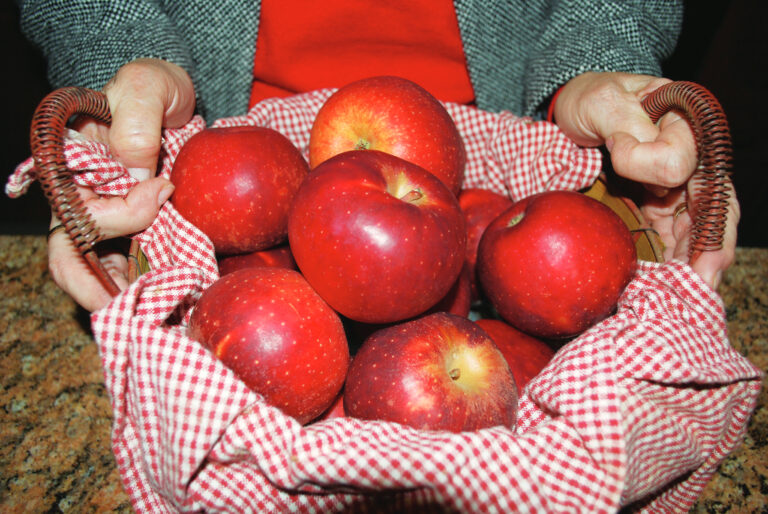
When do winesap apples ripen? Learn about growing winesap apples and how to make apple pie from scratch for a spectacular dessert made with a diverse apple.
Farmers in the 1800s raised numerous heritage apple varieties for many reasons. Heritage apples also held an important place on many rural homesteads – and can again. For example, the ‘Yellow Transparent’ ripens in July and August and makes the best applesauce I’ve ever eaten. However, if you made a pie out of this variety, it would be more custardy and soft than the apple pie you’ve come to know. The ‘Yellow Horse’ apple (also called “horse apple”), is another heritage variety that ripens in summer. It’s often dried or used for cider. I believe this is the apple my Grandma Maude sliced and placed on her tin roof when I was a kid in the 1950s. Long before dehydrators, Grandma and other rural folks employed their roofs to remove moisture from fruit. Few apples lend themselves to drying like the ‘Yellow Horse.’ Generations ago, a typical farm family might grow a dozen or more varieties that ripened at different times from midsummer to late fall that filled different dietary niches.
Winesap apples and the cultivars that arose from them, including ‘Black Twig,’ ‘Arkansas Black,’ and ‘Stayman,’ were popular choices because they’re superb for pies, cobblers, general baking, and eating out of hand. They kept well through winter and into spring. I take the first ‘Arkansas Black’ or ‘Black Twig’ apples I get my hands on in any given fall and make a spectacular pie. Let’s take a closer look at each member of this quartet.

Winesap Apple Varieties
Black Twig
‘Black Twig.’ I’ll never forget the first time I saw a ‘Black Twig.’ It was late November, and Elaine and I were at an orchard not far from our southwest Virginia home. The orchardist said he’d just harvested the last of his ‘Black Twigs,’ which he described as the best apple he’d ever eaten. He then bounced a ‘Black Twig’ off his concrete packing-room floor and quipped: “It won’t hurt it … not one bit. ‘Black Twigs’ are a little hard when picked, but taste better and better as the months go by.”
The orchardist was correct; the ‘Black Twig’ is fairly tart when picked, but as time passes, the yellow flesh becomes firm and juicy and develops a perfect blend of sweetness and mild acidity. They’re the most sublime apple I’ve ever eaten.
The apples themselves are roundish, medium to large, and have color variation. One side will often be dark red while the other is yellowish-green with dark-red stripes. Interestingly, the longer a ‘Black Twig’ is stored, the waxier its skin will become – giving it the nickname “greasy apple.”
Arkansas Black
‘Arkansas Black.’ This is my second-favorite variety, and, like the ‘Black Twig,’ it ranks supreme as a baking and eating-out-of-hand fruit, ripens in late fall, and has a similar appearance to the ‘Black Twig.’ It also develops a waxy sheen the longer it’s stored. The ‘Arkansas Black’ is just as hard as the ‘Black Twig’ when picked, and it has that same appealing mixture of sweetness and acidity. Unsurprisingly, the two varieties have been confused from time to time.
Stayman
‘Stayman.’ Elaine’s favorite apple is the ‘Stayman,’ which is sometimes called the ‘Stayman Winesap.’ My wife raves about the wine-like smell and flavor this variety exhibits. The firm, white flesh features just a tiny bit of yellow, and the flavor is superb. Elaine describes it as “juicy sweetness with just the right amount of tanginess.” A ‘Stayman’ apple is roundish and medium to medium-large in size with a light-red hue, russet overtones, and tiny grayish-white dots.
A ‘Stayman’ ripens a full month or so earlier than a ‘Black Twig’ or an ‘Arkansas Black,’ so our first pies and cobblers of autumn typically come from it. Another virtue of the ‘Stayman’ is that it’s often found at country stores, and occasionally even in supermarkets. I’ve never found ‘Black Twigs’ or ‘Arkansas Blacks’ at chain stores and rarely at rural mom-and-pop ones, which is all the more reason to grow them yourselves.
Winesap
‘Winesap.’ The three apples described here came from the original ‘Winesap’ variety, first documented in 1804 in Philadelphia. This apple soon became popular in both commercial and rural orchards. But, like many other heritage varieties, it fell from grace after World War II when “pretty on supermarket shelf” varieties, such as the ‘Red Delicious,’ began their reign. As one heritage apple enthusiast told me: “A ‘Red Delicious’ tastes like moist cardboard, but it sure is great to look at.”
‘Winesap’ apples are noticeably smaller than the other three cultivars, but they have the same round shape. The skin is a deep red with a yellow hue on the shaded side. The yellow flesh has a little bit of a wine flavor and is sweet and crisp. This cultivar typically ripens sometime in October.

Growing Winesap Apples
All members of this quartet will benefit from a pollinator nearby. In my backyard, a ‘Dolgo’ crab apple and a ‘Grimes Golden’ apple serve that purpose, as both are prodigious pollinators.
I’ve heard of people picking ‘Black Twigs’ in December and animals eating on them through the snow. We’ve had all four varieties keep into early April, which is when we’re more likely to use them in applesauce.
Heritage apple trees are often hard to find at big-box stores. Look for locally owned orchards that are dedicated to preserving our traditional varieties. Some of the places I’ve ordered from are Big Horse Creek Farm and Albermarle Ciderworks and Vintage Virginia Apples.
If you’d like to learn more, I’d recommend two books: Old Southern Apples by Creighton Lee Calhoun Jr. and Apples of North America by Tom Burford. Consider planting Winesap family members in your backyard or back-40 orchard. You’ll help keep this country’s heritage-apple tradition alive and provide you and yours with some delicious desserts.
How to Make Apple Pie from Scratch
All four Winesap family members will excel in this recipe, and, really, in any kind of baked good, such as cobblers, cakes, and the muffin recipe. Yield: 1 pie.

Ingredients
- 8 cups peeled and sliced apples
- 3/4 cup sugar
- 1/2 teaspoon cinnamon
- 1/4 teaspoon salt
- 1 teaspoon vanilla
- 1/3 cup King Arthur Pie Filling Enhancer (2 tablespoons of tapioca flour will also work)
- 2 prepared pie crusts
- 2 tablespoons butter
- Preheat oven to 425 F.
- Place half the apples in a saucepan along with sugar and cook over a low temperature until they begin to soften, approximately 7 to 10 minutes.
- Remove from heat. Add remaining uncooked apples to pot and stir to combine. Stir in cinnamon, salt, vanilla, and Pie Filling Enhancer. If using tapioca, let sit for 15 minutes.
- Pour the apple mixture into the first prepared pie crust. Dot the apple mixture with butter cut into pea-sized pieces.
- Top with the second crust, sealing the edges and making slits or openings in the top crust to allow steam to escape. Bake for 15 minutes. Then, reduce the heat to 350 F and bake for another 35 to 40 minutes.
- Cool 10 to 15 minutes before cutting to allow the pie to finish setting up. Vanilla ice cream is optional, but recommended.
More recipes: Autumn Spice Apple Muffin Recipes
Bruce and Elaine Ingram are the authors of Living the Locavore Lifestyle, now in its second edition, which explains how to live off the land by hunting, fishing, gathering wild edibles, and raising chickens. You can reach them at BruceIngramOutdoors@Gmail.com.
Originally published in the October/November 2026 issue of MOTHER EARTH NEWS and regularly vetted for accuracy.