Learn about growing the wild plum bush, wild plum tree identification, how to plant plum seeds, create a wildlife habitat, enjoy fresh fruit, and preserve the harvest.
Many things are essential summer experiences for me: fishing on the river on a hot day, picking boatloads of zucchini, and smelling the heady odor of ripe plums on a summer breeze.
My mom worked at a grocery store for her entire career. Sometimes, during summer, trying to get more fruit into our diet, she’d bring home a plastic bag of plums. Those dark, sweet plums were ‘Black Ruby,’ a variety of Japanese plum. Like most cultivated plants, they require lots of care and management to grow. Where I live in North Dakota, they’d winter-kill during our frigid weather. Rather than try to grow something that would bring only frustration for my orchard, I decided to work with nature and plant wild plums.
Plum Species and Habitat
Several wild plums grow in North America. The most common is the American plum (Prunus americana). American plums are found from New England to North Dakota, down through Kansas and Missouri, and into northern Alabama and Georgia.
The Chickasaw plum (P. angustifolia), also known as the “sand plum,” has a long history of being cultivated by Indigenous peoples. It can be found throughout the southeast U.S. and Texas, and it will readily hybridize with the American plum.
The Canadian plum (P. nigra) is found throughout the northern tier of the eastern U.S. and into southern Canada. It’s similar to the American plum.
Wild Plum Tree Identification
Wild plums can adapt to a wide range of soil types and conditions, making them an excellent choice for windbreaks, wildlife habitat, and fruit production. Wild plums are often found in the damper soils of riparian areas, as well as in prairies and grasslands.
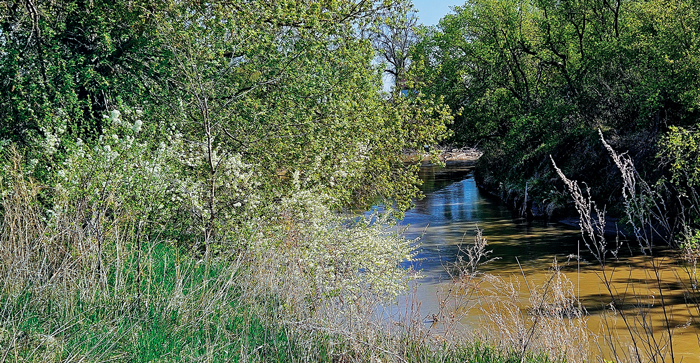
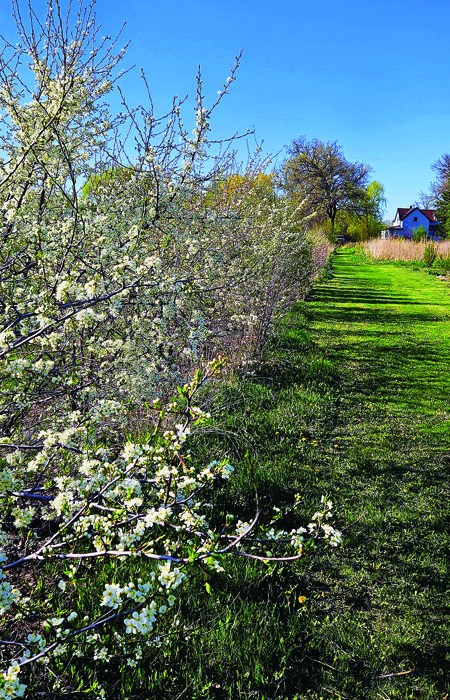
A prairie river runs the length of my driveway. In the early days of spring, the wild plums that thrive in the sandy soil make for a delightful drive home. Heavy, fine-grained soils of silt and clay are among the only soils where American plums will struggle.
Cold temperatures pose little threat to the shrubs, and they’ll survive temperatures down to minus 40 degrees F. While they’ll grow in some shade and tend to spread into thickets, they prefer full sun. Fire and droughts will knock back plums more than any other factor.
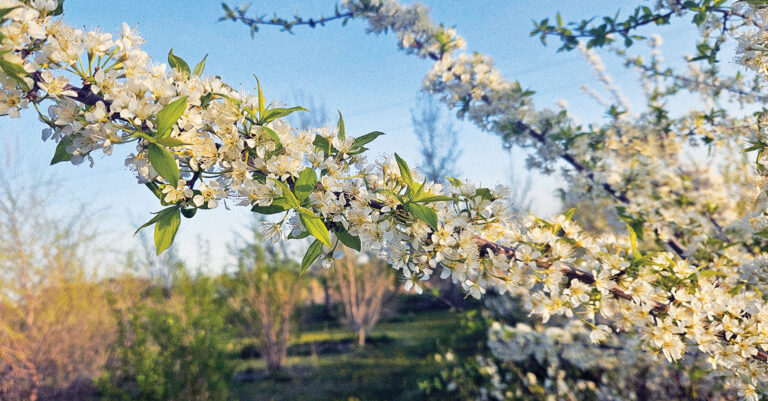
Depending on the area, soil, and moisture, plums (other than dwarfs) can grow from 10 to 20 feet tall, with a crown nearly as large. In early spring, branches will be covered in delicate, five-petaled white flowers. A flowering plum tree is stunning to behold, catching the light and brightening the otherwise dreary days of early spring.
How to Plant Plum Seeds
Plums can be started from seed. Remove the big pits from the tender fruit when the plums are ripe. Dry them on a windowsill for 3 to 4 days, or until they’re dry to the touch. Next, use a small hammer to crack the pits and reveal the seed. The small seed, shaped like an almond, will grow into a tree. Be aware that plum trees grown from hybrid seeds may not produce fruit at all; wild plums are a better choice.
Once you’ve gathered enough seeds, drop them into a glass of cool water. Any seed that floats isn’t viable and can be tossed. Seeds that sink are viable and have the best chance to germinate. Cover your viable seeds with a damp, but not soaking wet, paper towel. Place the paper-towel-wrapped seeds in a zippered gallon freezer bag and put it in the refrigerator.
In as little as three weeks, the seeds will begin to grow roots. Place these germinating seeds about 2 inches deep in pots filled with potting soil. Put them in the sun for at least six hours a day and keep them decently moist, but not soggy. Soon enough, a tiny plum seedling will emerge.
Growing Plums From Bare-Root Seedlings
Alternatively, I find it much easier to purchase bare-root seedlings. Growing quickly, plums planted from bare-root stock obtained from conservation programs will normally start to fruit in 3 to 5 years.
Bare-root American plum seedlings are usually available from local soil and water conservation district offices. My local office sells seedlings for $2 each, making it economical to plant many shrubs with little more than sweat equity. I’d rather have the nursery germinate and grow the seedling than try to do it myself. You can find your local office here: USDA Service Center Locator.
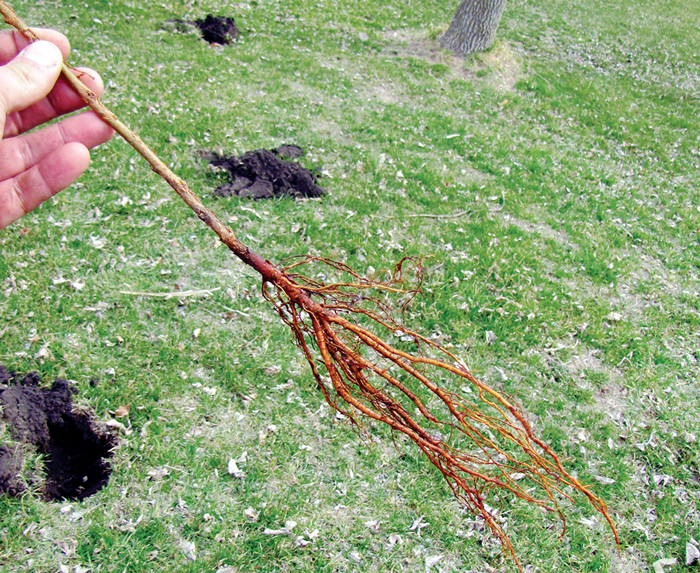
When planting plums, be aware that they have shallow roots that will sucker quickly. I have American plum in landscape fabric, and even then, I get suckers that pop up around the parental shrub. Some argue against landscape fabric because it can hinder air, water, and nutrients from getting to the plants. Those who want a more maintained look can simply mow or clip suckers periodically.
Planting without weed barrier fabric may result in a slower-growing shrub, as there’s more competition from the surrounding grass. Another option is to add a layer of mulch.
Once they take off, plums will sucker more readily and form a colony. If a living hedge is the goal, plant directly into the ground.
Seedlings should be planted around 6 feet apart in rows and 12 feet apart between rows. The trees will quickly grow together and provide wonderful nesting habitat for songbirds, hiding cover for mammals, and windbreaks and harvestable fruit for wildlife and humans.
Wild Plum Pests
Several pests affect plums, including spider and rust mites, thrips, aphids, and leafhoppers. In my orchard, the biggest pests have been tent caterpillars. They’ll make matted webs and slowly defoliate the tree. Not wanting to introduce chemicals to my fruit, I simply remove the branch with the web, place it on the ground, and grind the offenders with my foot. Plum curculio, a native North American beetle, can infest the fruit, causing drop and reduced yields. Cleaning up any fallen fruit in fall helps reduce the populations.
Deer and other ungulates will eat plum leaves, buds, shoots, and even bark, particularly on young trees in winter. Caging the trees can limit damage. When the trees are older, their sharp thorns will deter wildlife from causing as much damage. A bigger issue is amorous bucks rubbing on them during rut. Small trees can be damaged, but they’ll grow back the next year. More mature trees will sustain little damage, unless the buck is really frustrated!
Harvest
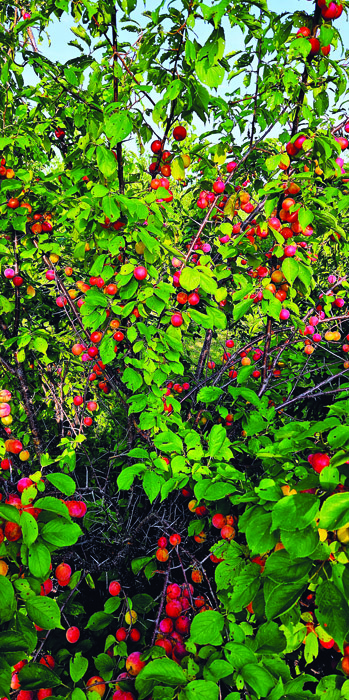
In the early part of summer, after the flower petals fall away, the fruit will begin to set. Starting as small green ovals, the fruit gradually increases in size as summer wears on. Reaching an average size of 1-1/2 inches, the fruit will begin to turn color as it ripens. The green shade will gradually turn a deep red, yellow, or dark purple. Though the fruit is smaller than cultivated plums, it makes up for size with an incredible taste.
I love walking in my orchard as the plums are ripening. On a calm day, the air is filled with the rich, heady smell of fruit. I’ll pluck each fruit; the ripe plums hardly need any pressure to come off the stem. If a tussle is required, the fruit isn’t ripe.
Popping a perfectly ripe plum into my mouth, with the warm summer sun on my face, is one of life’s simple pleasures. The mixture of sweet and tart explode, and I simply spit out the pit and grab another.
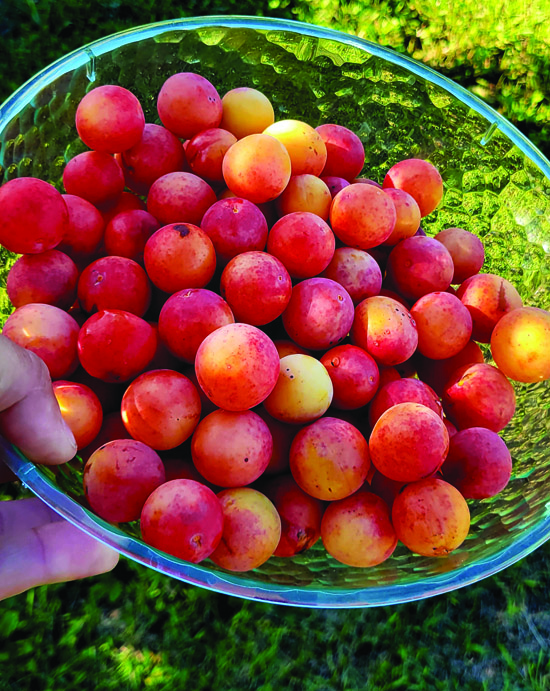
The fruits don’t ripen at the same time, and I’ll harvest on the same row of shrubs for a couple of weeks. There are perfectly ripe plums and some that have barely started to turn on the same branch. Though this makes for an extended harvest, it also guarantees some ripe plums for the plucking. A strong wind can blow through and knock all the ripe fruit to the ground, but the unripe plums will stay affixed. If they were all ripe at once, here in North Dakota, I’d probably never harvest one, as odds are a 50-mph wind would blow the day I wanted to pick!
Preserving Wild Plums
After experiencing an upset stomach as a result of eating nearly my weight in fresh plums, I knew I needed to come up with a way to preserve the harvest. Fortunately, there are myriad ways to enjoy plums all year.
Ripe plums freeze well, and I fill gallon freezer bags and toss them in the deep freeze to deal with later. The only time I won’t freeze them is if I want to can some quarts. I simply fill quart jars with washed plums. I don’t remove the pits and I don’t blanch the fruit, though poking the skin is recommended. I’ll make a simple syrup of 1 cup of sugar to 6 cups of water and fill the quart jars to the appropriate level. A steam or boiling-water canner makes it easy to can them, and after 25 minutes, they’re ready to be stored. In the dead of winter, it’s hard to beat a plum torte made from canned plums!
My family always enjoys plum juice. A steam juicer makes easy work of the process, and the resulting juice is tart and refreshing. Some sugar or honey can be added, to taste, to ease the bite. The resulting juice can be used to make jelly as well.
You might enjoy plums in either wine or liqueur. A couple of local wineries make fantastic plum wine. Tart without being cloyingly sweet, it’s a fruit wine that even wine snobs can appreciate.
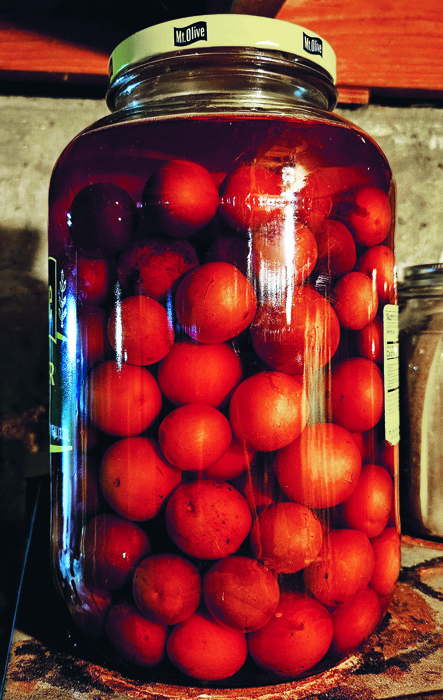
Alas, I’m not a winemaker. Instead, I make liqueur. I take a 1-gallon glass jar, fill it full of plums, and pour a mid-tier vodka or gin over them until full. I place the jars in a cool, dark spot for 4 to 6 weeks, shaking every few days. I then strain the plums through a colander and strain the resulting liquid through cheesecloth, which results in a rosy-red liqueur. A touch of simple syrup completes the process, and poured over ice with a dash of tonic water, it’s a great balm in both summer and winter.
An Easy Orchard
Growing fruit-producing trees and shrubs can be complicated and time-consuming. Battling insects and weather can frustrate even the most dedicated orchardist. However, wild plums are easy to grow, beautiful to behold, and delicious to eat. This year, plant some bare-root plum trees and grow an easy orchard!
Jeffrey Miller is a freelance writer. He’s written for over 20 magazines and newspapers and authored three books on hunting, fishing, fur trapping, gardening, and modern homesteading. He lives with his family on the banks of the Sheyenne River in rural southeastern North Dakota.
Originally published in the June/July 2026 issue of MOTHER EARTH NEWS and regularly vetted for accuracy.