

Time-proven garden seed varieties such as Provider bush
beans, Green Mountain potatoes, and Cut-&-Come Again
zinnias predominate in our gardens. But we always leave a
few rows to experiment with, like the year purple
vegetables were all the rage and we grew purple potatoes,
purple bush beans, purple-kerneled corn, and purple-head
broccoli. They go along with the eggplant, blue kale, and
those Arancuna chicken eggs that were supposed to be
low-cholesterol and blue shelled but turned out to be few,
tiny, and olive drab.
This year, we’re trying traditional Golden Bantam sweet
corn again and will strive to get it picked before it turns
too chewy for anything but corn relish. We usually
transplant especially vigorous volunteer tomatoes or squash
plants from the compost bins to the trial garden, and we
always try a few of the new varieties that look so
dew-bedecked and mouth watering in the seed catalogs.
Of course, not every experiment succeeds in our ornery
Yankee climate. Only Royalty “Purple-Pod” Bush Beans remain
from the “purple” experiment, and most volunteer plants
prove to be all vine and no fruit. But only by
experimenting did we discover fast-growing top-quality
Green Comet broccoli and the great tomato Celebrity that
have become staples of our summer’s bounty. And we only
heard of them because they were recommended in years past
by All-America Selections (AAS).
All-America Selections was founded in 1933 by North
American seed growers to establish a degree of uniformity
in home garden seed identification and promotion–voluntary
“truth in labeling” 60 years before other industries had it
forced on them. Each year, AAS enlists a panel of unpaid,
volunteer experts–academics, horticulturists,
gardeners, and seed growers from 50-plus locations across
the United States and Canada–to try the new garden
vegetables and new cut- and bedding-flower varieties
submitted by member organizations.
In blind trials, where identity of seed developers is
concealed, each panelist germinates upwards of 1,000 trial
plants, grows them to maturity, then evaluates each on the
basis of growth habit, disease resistance, yield, and
appearance–and, for eating quality in vegetables.
All-America Selections collects and tabulates the findings
and superior varieties are determined. Periodically, medals
are awarded for truly exceptional quality or originality:
the last gold-medal winner was fast-flowering coreopsis
“Early Sunrise” in 1989. Winners are used to promote the
seed industry. Of course, not all the selected varieties
become popular, but those that do will sport the “AAS
Winner” or “AAS Gold Medal Winner” designation in their
catalog descriptions and you will see AAS on seed packets.
Time was, we home gardeners couldn’t avoid
Sunday-supplement and magazine articles on the new
All-America Selections each late winter/early spring. But
these days the garden press seems to be neglecting AAS in
favor of their own panels of experts …following what one
of our seasoned contributors calls “The Emma Mudd School of
Gardening”; the idea being that the personal experience of
a few amateur gardeners is more valid than the informed
judgment of USDA and aggie school professionals. A shame to
waste all that brainpower whose sole purpose is to make
things easier for the rest of us.
Because we can’t help but feel that the recommendations of
a score of horticulture pros is at least as credible as the
opinions of Emma Mudd, here are the AAS for the 1994
growing season. Each new seed variety–especially if a
hand-pollinated hybrid–has taken its developer many
years and a considerable investment to produce. Prices will
be higher than for older varieties but should be uniform
between sellers unless you patronize the growing number of
seed folks selling “minipacks” containing a few seeds at a
big price break.
But, as the packet will tell you, all the seed is freshly
packed for this year, yearning to sprout and awaiting only
your green thumb. So, go down to the seed displays at your
local nursery or get out your mail-order catalogs and order
some of the All-America Selections. If a new variety
performs exceptionally well for you in speed and
reliability of germination, hardiness, and disease
resistance, drought or wet tolerance, or especially in
ornamental or eating quality–let MOTHER EARTH NEWSknow? If enough
readers feel they’ve discovered another Green Comet or
Celebrity, we’ll pass the word.
AAS Winners 1994
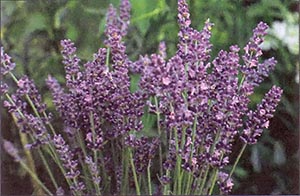
1994 AAS Flower Award Winner: Lavender “Lady” English Lavender
This is the old-fashioned aromatic herb with sweet-scented,
lavender flowers that your grandmother dried and sewed into
little sachet pillows to keep in her underwear drawer. In
grandmother’s day, it was a low perennial that was
“blind”–nonflowering the first year after planting from
seed. It is not frost hardy either, so could be grown as a
perennial only to zone five.
“Lady” is the first lavender that can be grown as an
annual. It will bloom the first year–if planted
inside four to six months before setting out. “Lady” grows
to two feet in height and is covered with bloom.
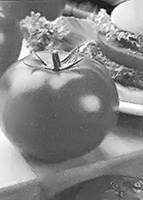
1994 AAS Vegetable Award Winner: Tomato F1 “Big Beef”
A greatly improved beefsteak-type giant tomato. The
original “one slice fills a sandwich” tomato was pink,
grainy, and bland. “Big Beef” was cited by judges as
“meaty, not mealy,” having “firm flesh with a sweet flavor”
and a “good sugar-to-acid ratio.” Fruits as early as 73
days from setting out–extremely early for such large
fruit. Multiple tolerance to disease, which means less
stress, which means wider adaptation and greater
production. A rank-growing indeterminate plant, so should
be staked, pruned, or grown in a wire cage. Will flower all
summer and leave plenty of green fruit at frost. Don’t grow
for canning, as it is liable to be too subacid in most
soils.
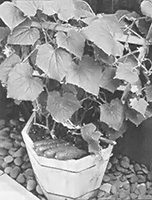
1994 AAS Vegetable Award Winner: Cucumber F1 “Fanfare”
Here is a cucumber that produces high-quality, 8 to 9 inch,
smooth-skinned, slicing-type fruit on plants that only need
two feet of space. “Monoecious,” with both male and female
flowers on each plant, so no separate pollinator plants are
needed. Good for patio containers as well as small-garden
culture. High yields of less-bitter fruit, and experiences
less stress due to its multiple disease tolerance. Begins
producing just 63 days from planting seeds into warm soil.
Recent AAS Winners
— 1993 —
Pumpkin “Baby Bear” A 1 1/2- to 2 1/2-pound
pumpkin in a perfect jack-o’-lantern shape. Both the flesh
and hulless seeds make good eating. Stores well, too.
Tomato F1 “Husky
Gold” How about a tomato of pure gold?
Semi-determinate; if grown unpruned in a cage, produces 7-
to 8-ounce fruit all summer. Produces after 70 days.
1992Carrot
“Thumbelina” A good-quality miniature
carrot. Two inches long and good for container or garden.
Dill “Fernleaf” A dill that only
reaches 18 to 24 inches in height, and won’t “lodge” or
fall over when ripe with seed heads. All of the plant but
the root can be used in cooking and making pickles.
— 1991—
Pole Bean “Kentucky Blue” Not a hybrid, but
a genetically engineered combination of old favorites Blue
Lake and Kentucky Wonder. Grow 7foot-tall vines on long
poles for high production of a fine-flavored green bean.
Squash F1 “Tivoli” A vegetable
squash from a bush rather than a rangy vine that wants to
take over the garden.
Watermelon F1“Golden
Crown” Gold rind, red
flesh in fruit of “icebox size” of 6 to 8 pounds, about two
months from seed.
— 1990 —
Bean “Derby” A bush bean maturing in
only 57 days. Higher yield, better quality, more tender.
Pepper F1 “SuperCayenne” If you like hot peppers, you’ll
love this decorative, 24-inch-tall plant with improved
yield.
Squash F1 “Cream of the Crop”
A bush acorn plant producing creamy white, 2-pound to
3-pound, hard-shelled, “winter-keeping” type fruit on bushy
plants.
Squash F1 “Sun Drops” An oval,
golden-yellow summer squash harvestable from “baby” sized
to 4 inches in diameter.






