

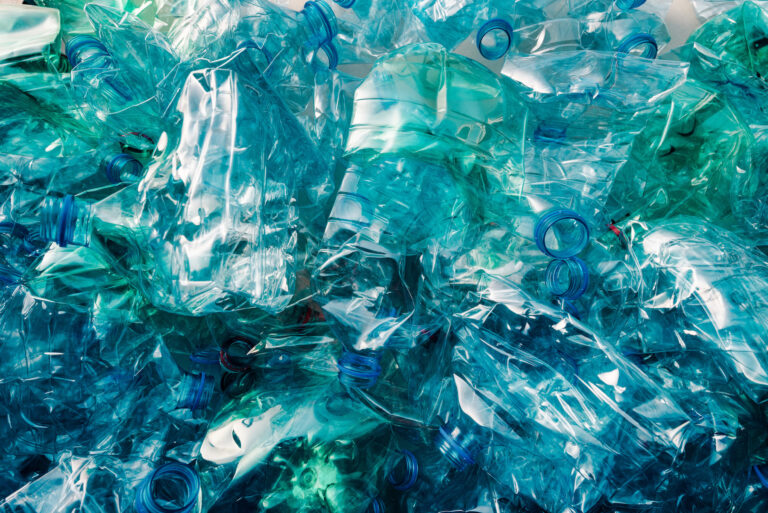
Is plastic really recyclable? Learn more about plastic downcycling and how recycling plastics can still wreak havoc on the environment.
Trash is a big, dirty problem. The average American tosses out nearly 2,000 pounds of garbage every year. The Zero-Waste Lifestyle (Ten Speed Press, 2012) is a guide to a healthier, happier and more sustainable life by way of creating less trash. Author Amy Korst used lessons from her yearlong experiment in zero-waste living to offer hundreds of simple ideas and low-impact tips. Eliminate the unnecessary from life and help preserve the planet’s future. The following excerpt from Chapter 2 discusses everything you need to know about recycling plastics.
In the recycling world, starting a discussion about plastics is like waltzing through a minefield. The issues surrounding this material are laden with emotion, misunderstandings, and sensationalism. At some point in your zero-waste journey, you will encounter some of these issues.

Is Plastic Truly Recyclable?
The truest definition of recycling involves taking a material, melting it down, and turning it back into itself over and over. This can be done with glass and metal, which can both be remelted and remolded into jars or cans forever. This is a closed-loop system, and it’s very desirable in the world of recycling. On the other hand, some materials slowly degrade over time, meaning they can be reformed maybe once or twice, but after awhile the chemical composition of the original substance has changed and it can no longer be turned back into what it once was. This is called downcycling.
Plastic is similar to paper in that it downcycles, though it has a much shorter life in the recycling stream — sometimes it’s not even recycled once before it is turned into a less-valuable material. Plastic water or soda bottles, for example, are rarely turned back into bottles. Instead, the plastic is used for something secondary like fleece fabric or plastic lumber. This means that virgin plastic (made from fossil fuels) is still needed for the manufacture of new plastic bottles.
The downcycling of plastic is just one of the serious issues surrounding this material. The other is the fact that plastic never, ever biodegrades.
Many materials, newspaper included, will biodegrade at the end of their lives. This means they mineralize, or turn back into their respective chemical components. When paper enters the environment, given exposure to the air, it disintegrates, leaving the world no worse for wear. Plastic, on the other hand, photodegrades, and this is very concerning.
As discussed earlier in the book, in the process of photodegrading, wind, sun, and water break plastic down into smaller and smaller parts that don’t lose their chemical composition as plastic. Eventually these particles get so small they are microscopic. Scientists and environmentalists are very concerned about the impact of these microplastics on the environment, especially the role they might play in the ocean ecosystem.
If there wasn’t so much plastic in our oceans, this wouldn’t be such an issue. The problem is, it is estimated that the volume of plastic in our oceans is six times that of plankton, according to the website TreeHugger.
Finally, there is valid concern about heating food in plastic containers–evidence suggests that some chemicals in plastics can leach into our food and cause health problems. While the jury is still out on many of these studies, some precaution seems to be in order. Avoid reheating food in plastic containers in the microwave, and stop covering food with plastic wrap. Avoid products like TV dinners and microwave popcorn. Storing cool food in plastic containers isn’t as big a concern, but avoid heating food and plastic together to eliminate the possibility of plastic leaching into your food.
So the downsides to plastic are that it can’t really be recycled in the true meaning of the term, it will never disappear from our environment because it can’t biodegrade, and it is a vehicle to deliver dangerous chemicals into our food chains.

What about Positives?
Well, there are a few. It’s hard to make the blanket statement that all plastics are bad, because the issue is more complicated than that. For one thing, plastic is a tremendous asset to the medical community–think syringes and IV tubing. It is durable, so for things like the plastic grocery carts used in my rainy and windy coastal community, it can be a better choice than a material like metal. It is also lightweight, meaning goods can be shipped farther and less fuel is used during transport.
Plastic may be a beneficial material for long-term applications like playground equipment and benches, but it is not a good choice as a single-use material for things like candy bar wrappers and shopping bags. Ultimately we all need to decrease our reliance on plastic to lessen its impact on the environment. And it’s important to be aware that, even if you are recycling your empty shampoo bottles, they may not be as recyclable as you think.
How to Recycle Plastics
Plastics are easily the most confusing category of recyclables today, because (1) “plastic” is a broad category covering a variety of material compositions, (2) all communities have differing recycling systems, and (3) much of the information widely available to the public is inaccurate.
Most of us are familiar with the chasing arrows recycling symbol on the bottom of plastic containers. The chasing arrows contain a number, 1 through 7. Each number stands for a particular type of plastic resin–and each resin has a different chemical makeup. Technically all plastic is recyclable–as long as it is melted down with other plastic with the same chemical makeup.
It is important to note that the presence of a recycling symbol with a number inside it does not mean the plastic container is recyclable in your community. The numbers correspond with the resin identification coding system, which allows recyclers to separate plastics according to resin types. Many communities recycle resin types 1 and 2, others recycle only bottles, and still more recycle only containers with necks that are narrower than container bases. Check with your local recycling center for your community’s particular rules.
The following is a guide to the seven types of plastic.
Type of Plastic: # 1 Polyethylene Terephthalate (PET, PETE)
Nickname: None
Common Uses: Water and soda bottles, salad dressing bottles, peanut butter jars, mouthwash bottles, beer bottles.
Recycled Into: Carpet fibers, fleece jackets, new containers.
Type of Plastic: # 2 High Density Polyethylene (HDPE)
Nickname: None
Common Uses: Milk jugs, laundry detergent bottles, shampoo and conditioner bottles, juice bottles. HDPE is also used to create plastic film for grocery bags and cereal box liners.
Recycled Into: Decking, fencing, plastic flower pots.
Type of Plastic: # 3 Polyvinyl Chloride (PVC)
Nickname: Vinyl
Common Uses: Children’s toys (“rubber” duckies are often made from PVC); blister packs, disposable battery wrap, vinyl shower curtains, construction materials like pipe and window framing, IV bags.
Recycled Into: Pipe, gutters, packaging. Note: The dangers of PVC are well documented. PVC has an easily identifiable odor often associated with “new car smell,” new carpet smell, and new construction in general. This smell is the PVC “off-gassing”–the dangerous chemicals used in PVC production leaching into our environment, the air we breathe, and our bodies.
Type of Plastic: #4 Low Density Polyethylene (LDPE)
Nickname: None
Common Uses: Plastic film for bread bags, dry cleaning bags, garden soil bags, and plastic wrap.
Recycled Into: Shipping envelopes, trash bags, compost bins.
Type of Plastic: # 5 Polypropylene (PP)
Nickname: None
Common Uses: Yogurt and margarine tubs; coat hangers; plastic cutlery, plates, bowls, and cups; medicine bottles; toothbrush handles; rakes; storage bins; shipping pallets. Note: The natural grocery store chain Whole Foods participates in the Preserve Gimme 5 program (see page 76); shoppers can drop off their PP plastic, which is usually not recyclable curbside, at many Whole Foods outlets.
Recycled Into: Ice scrapers, brooms, brushes, rakes, storage bins, shipping pallets, trays.
Type of Plastic: # 6 Polystyrene (PS)
Nickname: Styrofoam
Common Uses: Grocery store meat trays, egg cartons, disposable cups, packing peanuts, protective packaging.
Recycled Into: Light switch and outlet plates, protective packaging, desk trays.
Type of Plastic: # 7 Other
Nickname: None
Common Uses: Cheese packaging, oven baking bags, headlight lenses, safety glasses.
Recycled Into: Sometimes recycled into plastic lumber. Note: This code indicates that a piece of plastic is made with a resin other than 1 through 6 or a combination of resins. Because resins are impossible to separate, recycling of number 7 plastic is extremely difficult.
The Zero-Waste Lifestyle has more to offer: Learn how to Create a Zero-Waste Bedroom in a few simple steps.
Reprinted with permission from The Zero-Waste Lifestyle: Live Well by Throwing Away Less by Amy Korst (Ten Speed Press, © 2012).






