No matter how carefully you are to look after your family’s and your own well-being, there’s simply no way to avoid all of the environmental health hazards (such as air and water pollution) that are present in today’s world. The best you can hope to do, then, is to make yourself aware of the sources and effects of such dangers and take appropriate steps to protect yourself and your loved ones against them.
One such environmental hazard is radiation. You’ve probably heard quite a bit about it, but let’s be honest, much of the info in circulation is contradictory and confusing. To bring some clarity to the subject, here are the radiation facts.
For our purposes, it can be divided into two classifications: low-frequency non-ionizing (such as microwaves, radio waves, radar, ultrasound, and visible light) and high-frequency ionizing (such as X-rays, gamma rays, alpha and beta particles, and neutrons). And although the former is likely a health risk, the latter is probably the more dangerous of the two.
You see, high-frequency radiation has the ability to displace electrons from molecules in the body, thereby creating ionized molecules that undergo chemical changes, and ultimately promote biochemical changes. If these transformations take place in the chromosomes, the result may be cancer. If they occur in the germ cells, which produce ova and sperm, the result may be sterility or birth defects.
How Radiation Is Measured
Exposure to ionizing radiation is expressed in rads and rems. Small doses are stated in thousandths thereof, or millirads and millirems.
Rad stands for “radiation absorbed dose” and is a measure of energy per gram of body tissue. Rems equal rads multiplied by the relative mutagenic potential — or in other words, the ability to do biological harm to the genes — of the particular kind of radiation involved. For example, each of us receives (on the average) about 84 millirems of background radiation from natural sources each year. A nonfluoroscopic chest X-ray, by comparison, delivers 20 to 60 millirems. A single dose of 600 rems or more produces acute radiation sickness, like that which killed thousands of Japanese in the two weeks following the bombings of Hiroshima and Nagasaki.
It’s especially important to remember, though, that the effects of ionizing radiation are cumulative. That is, the first X-ray you ever received is still with you today, and its effect is compounded by each subsequent “zap.” That’s why established standards are stated in terms of allowable levels over a given period of time. The maximum exposure level for nuclear workers, for instance, is currently five rems (5,000 millirems) per year. It’s interesting to note that this figure has changed drastically as we’ve learned more about the actual effects of low-level radiation. In 1900, for instance, ten rems per day was considered permissible exposure; these days some experts say that there may be no safe level of exposure.
Medical Uses of Radiation
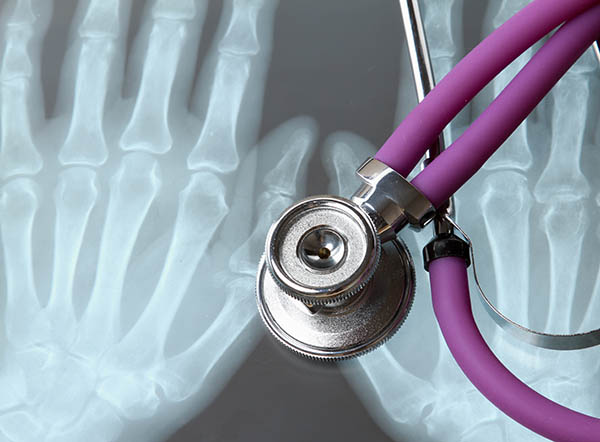
Radiation does perform an important role in modern medicine, however, in several ways: [1] X-rays are used to take diagnostic “photos”; [2] radioactive “tracers” (either ingested by or injected into patients) are employed to help analyze internal body functions; and [3] ionizing radiation is focused on specific areas to inhibit the growth or activity of tumors and the like.
X-rays, though, are the most commonly used form of radiation, and are in fact the largest single man-made source of radiation exposure for the U. S. population.
Many knowledgeable people find this fact highly disturbing. In the introduction to Medical and Dental X-Rays: A Consumer’s Guide to Avoiding Unnecessary Radiation Exposure by Priscilla Laws, Dr. Sidney Wolfe (Director of the Health Research Group, an arm of Ralph Nader’s Public Citizen organization) estimates that “more than half of the diagnostic X-ray doses currently received by residents of the United States are unnecessary.” Such exposures are the result of needless X-rays, faulty equipment, inadequate shielding of the patient, and treatment with more than the minimum dose required. “Cancer and genetic damage alone,” Dr. Wolfe says, “among the many adverse consequences of radiation exposure, may account for as many as a thousand deaths each year from medical and dental X-rays.”
Unfortunately, not much is being done to remedy the situation. The Environmental Protection Agency does recommend safe levels of exposure for health workers and patients, but the guidelines aren’t enforced. Monitoring of X-ray machines is sporadic and unregulated, and there’s little standardization of training and licensing procedures for X-ray technicians. Furthermore, any physician can order any radiological procedure, even though he or she may have no training in the principles of radiological protection. The Public Health Service does set standards for radiology labs. However, compliance with its recommendations is voluntary.
How to Avoid Unnecessary X-Rays
Obviously, there are many cases where the use of X-rays is well-advised and quite legitimate. But they should never be undertaken lightly, or accepted as “routine.” In her book, Priscilla Laws suggests that you follow several basic guidelines to minimize exposure to diagnostic X-rays:
[1] Ask any doctor or health worker who advises an X-ray to explain exactly what will be gained from the procedure (this is especially important if a high dose of radiation will be involved). Many X-rays are given not for the patient’s benefit, but for the doctor’s. One recent study concluded that “approximately 30% of the total X-rays ordered are related to the physician’s concern for potential malpractice threats and are not primarily designed to assist the patient.”
[2] Ask the practitioner if it is possible to use the results of previous X-ray studies instead of taking new ones. (It’s a good idea to keep a permanent record of all X-rays taken of you and other members of your family. Note the date, the doctor or dentist who ordered the procedure, the type and purpose of the exam, and if possible the dosages.)
[3] Because x-ray risk is greater for juveniles than adults, express special concern when it’s suggested that your children receive X-rays.
[4] If there’s any possibility that you’re pregnant, tell your physician or dentist. Don’t wait to be asked. If you know you’re pregnant, avoid all X-ray examinations of the abdomen or lower back unless there’s a strong indication of a serious condition.
[5] If you’re planning a pregnancy, have a physical examination and a dental checkup first, so that any necessary X-rays can be taken prior to conception.
[6] Try to avoid using mobile X-ray units.
[7] Don’t agree to fluoroscopy if your physician acknowledges that ordinary films will provide adequate information.
[8] Question the need for routine pre-employment X-ray exams.
[9] Refuse to submit to dental X-rays as part of every routine checkup unless you have special problems, or unless your dentist can justify the need for the exam.
[10] If you change dentists or are referred to a specialist, request that your new doctor obtain any available records rather than take new X-rays.