

Though some may find it hard to believe, I know where there
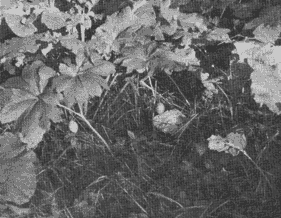
is a patch of May apples that covers a quarter-acre.
Normally I see the plant growing in bunches only a few feet
square and I was really amazed when I walked onto this
patch while wild food foraging hunting Ginseng one day.
That year (1968) was the best I have ever seen for May
apples and there were bushels of fruit in the quarter-acre
“field”. I visited the area again this late summer
and while wild food foraging–even though it was a very dry year here–I
easily found enough May apples lying on the ground among
the brown, wilted plants to fill a large cooking kettle.
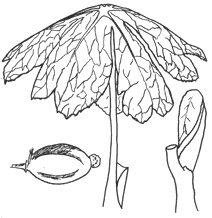
I love these golden apples that are softly skinned and
sweeter than they have any right to be. They taste like
tropical mangoes to me and the first one I eat every year
brings back memories of a year spent on the island of
Trinidad with its beautiful beaches, exotic plants and
friendly, fun loving people.
May Apple Recipes
Some foods made from May apples are applesauce, drinking or
jelly juice, marmalade and pie. The first step for
marmalade–and many other recipes–is to make May
apple puree. Wash the fruit very well and cut off the black
tip and navel. Slice into small pieces and strain through a
colander to separate the seeds and peels from the pulp. The
pulp or puree, of course, is what you’re after.
Make May apple marmalade by boiling four cups of puree and
one box of commercial pectin together for one minute. Add
two tablespoons lemon juice and five cups sugar. Bring to a
high rolling boil. Pour into sterilized jars and cover with
melted paraffin.
This puree also makes good applesauce if it is cooked over
low heat for half an hour and sugar and cinnamon is then
added to taste.
Juice for jelly and drinking can be obtained by simmering
sliced and washed May apples for 45 minutes. Be sure to
stir the apples as they simmer or they’ll stick and burn.
When the mixture is cooked, pour it into a jelly bag and
let it drip into a pan for a few hours. If you don’t have a
jelly bag, you can easily make one by folding four
thicknesses of cheesecloth into a foot-square and sewing it
on three sides to form a bag.
The juice that drips from the bag should be clear and
pulp-free. To make jelly, add one box of commercial pectin
to four cups of juice and two tablespoons of lemon. Boil
hard for one minute. Add five cups of sugar, boil again for
two minutes and pour into sterilized jars. Seal with
paraffin.
A good drink is made by combining half May apple and half
grape juice. Sweeten to taste, chill and serve. May apples
freeze very well and they, no doubt, could be canned if you
want to keep some over winter.
Wild Grape Recipes
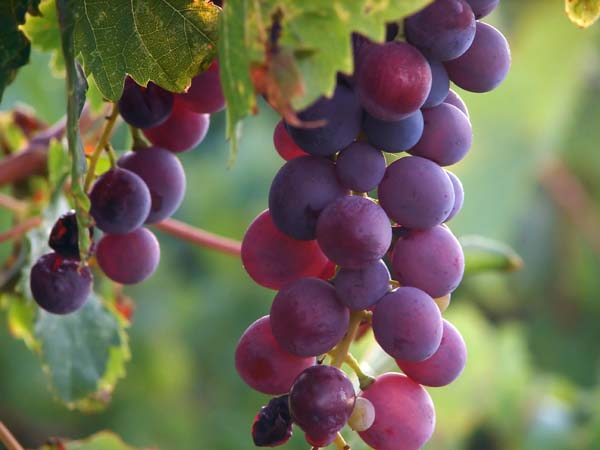
While gathering May apples you might now and then notice a
gleam of blue from vines that twine overhead around the
branches of trees. Investigate these blue flashes. They
will probably turn out to be wild grapes, a food so good
that the Vikings named our entire continent Vinland after
eating some.
I have seen only a few good grape years in our area. This
happens to be one of them. Grape vines that I notice on my
walks appear, from a distance, to be solid blue in
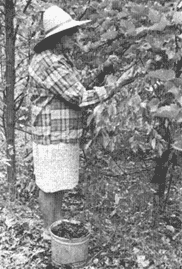
sections. Everyone in our family has picked grapes until we
have one shelf of the fruit cellar covered with juice . . .
both the drinking kind and the kind we will later make into
jelly .
We make drinking juice by simmering crushed grapes about
twenty minutes in water that is well below boiling. The
fruit is then placed in a jelly bag and allowed to drip
overnight. We freeze the juice for storage or return it to
the stove, warm it to just below boiling, pour into
sterilized quart jars and cap tightly with sterilized lids.
Before drinking this juice, you’ll want to sweeten it to
taste and–probably–add water, as it will tend
to be concentrated.
Jelly juice is made by boiling crushed grapes about ten
minutes and letting them drip through the jelly bag for a
few hours. Squeeze the juice out if you’re in a hurry. To
each 5 cups grape juice add one box of commercial pectin.
If necessary, add water to make even cups of juice. Bring
mixture to a high boil. Add 1 1/3 cups of sugar for each
cup juice. Bring to a boil and boil hard for one minute.
Pour immediately into sterilized jelly jars and seal with
melted paraffin.
The best grape jam in the world is my mother’s recipe: Cook
one quart of wild grapes until the pulp comes off the seed.
Push through a sieve, then, to separate the seeds from the
pulp. Core two quarts of apples and grind them–peels
and all–with a food grinder. Cook the ground apples
until they’re soft. Combine grape pulp and cooked apples.
Add equal amounts of brown and white sugar a tablespoon at
a time until the jam is sweet enough for your taste. Then
add a tablespoon of cinnamon and simmer over low heat until
thick. Can this or keep it frozen. If you decide to can,
just place the jam in sterilized jars as it comes from the
kettle.
Make grape pie by simmering one cup of grapes for 20
minutes and then pushing them through a sieve to remove the
seeds. Blend together 1/2 cup sugar, 1/4 cup flour and a
dash of salt. Pour in the pulp, add the juice of 1/2 lemon
and one tablespoon melted butter. Mix very well and bake
between two crusts at 400° until the crust is golden
brown.
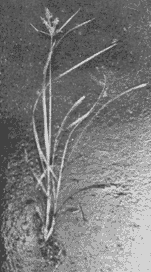
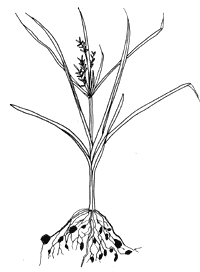
Chufa is known as a “dang weed” in my area. Every time
water stands for any length of time in a corn field, a
great stand of chufa or “nut grass” springs up. It is
notoriously hard to discourage and commercial farmers douse
it with all kinds of weed killer. On the contrary, I’m
pleased when I see the plant growing–especially in
low peaty soil–because I know it will soon send up a
triangular flower stem with cross-like seed branches and,
after the first frosts, it will be ready to dig. In fact,
anytime after the seed cross appears on the chufa plant
there will be tasty tubers waiting underneath.
Chufa tubers are like potatoes: The harder the ground, the
smaller and more scattered the tubers on the plant. In our
low, loose marsh soil, they grow to the size of marbles; in
central Wisconsin’s sand and marshes they get bigger; in
hard clay they sometimes are scarcely as big as a pin head.
Armed with this knowledge, you can readily understand my
rule of thumb for harvesting chufas: If the ground isn’t
loose enough to allow the plant to be easily pulled, there
probably won’t be any tubers worth bothering with
underneath.
I harvest chufa by grasping two or three plant tops and
pulling them up. Still holding the tops in my hand, I beat
the plants against the ground until the dirt is shaken
loose from the roots. The tubers are then pinched loose and
placed in the gathering pan. They make good nuts, flour or
vegetable.
Chufa Recipes
I make salted “nuts” by boiling one cup of tubers in salted
water for about 30 minutes, changing the water once or
twice during the boiling to eliminate all the soil that is
contained in the wrinkled skin of the nodules. Next, I
drain the tubers on a cloth for 15 minutes. Then they go
into a fry pan containing bubbling hot vegetable oil or
grease for a five-to-ten-minute toasting.
If you try this, after five minutes start removing, cooling
and tasting a series of average-sized tubers. When they
crunch nut-like between the teeth, they’re ready. Remove
from the pan, cool and eat.
To make flour from the nodules boil them for about 20
minutes, changing the water once or twice to get rid of the
soil. When the boiling is complete, place the tubers on a
cookie sheet and toast in the oven at 250° for about
one hour or until they are crisp enough to shatter when
pounded. Grind them, then, to the consistency of fine corn
meal and use as corn meal.
One good chufa recipe is: To 1/2 cup chufa flour and 1/2
cup wheat flour add two teaspoons of baking powder, 1/2
teaspoon salt, one egg and one teaspoon sugar. Beat this
together and add enough milk (or water) to make thick
dough. Spoon into a greased pan and bake at 400° for
about twenty minutes.
It’s also pretty good to just combine 1/2 cup chufa flour
with 1/2 cup wheat or acorn or cattail flour and add 1/8
teaspoon of salt and a teaspoon of baking powder. Mix in
enough water to make a dough and fry in bubbling grease
until a straw will pierce it and come out clean. This makes
a good crust if you like crusty bread.
Chufa nuts can be used as a vegetable by boiling them for
20 minutes, changing the water twice to eliminate the soil.
Place a cupful of the clean tubers in three cups of salted
water and boil for about one hour. At the end of the hour
replace the lost water, add two beef bullion cubes and
simmer for another 20 minutes. As with most soups, you can
add anything you have around to this one and it will
probably make it even better. Season well and eat it while
it’s hot.
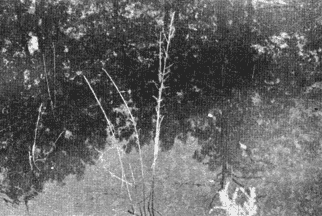
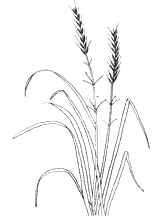
When chufa is ready to dig, another plant is also ripening
in the marshes: Wild rice, a food so nourishing and
satisfying that Indians fought bloody battles over the
lakes in which it grew.
I once asked a man who lived in a northern Wisconsin county
if any wild rice grew in his area. He replied, “I don’t
know, I wouldn’t eat that stuff anyway.” Not far from the
spot where we were talking is a wayside marker for the
burial grounds of 500 Indians killed in a battle over the
wild rice gathering privileges for one particular lake. The
battle was between the native Wisconsin Chippewa and a
tribe of Sioux from farther west who tried to move in on
the rice lake. That’s pretty much the story of wild rice:
If you’ve never eaten it, you may never know what you’re
missing . . . but if you do know wild rice, you
will rate it as very valuable indeed.
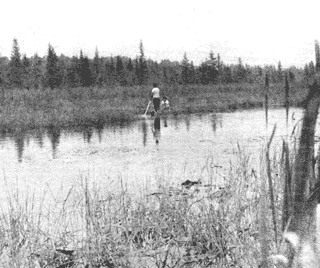
Wild rice is ready to gather when most of the kernels are
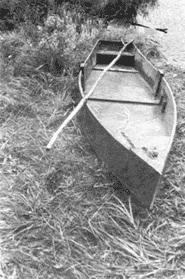
filled out and dark black. The traditional Indian method,
utilizing two people and a narrow canoe, is still the best
way to harvest the grain. One person sits or stands in the
back and poles or paddles the canoe around while the other
mans a pair of tapered hardwood sticks. One stick is used
to bend the rice stalks in over the canoe’s side and the
other to strike the grain head, and shake them loose from
the stalks. This method has the advantage of collecting
only the mature grain and it’s inefficient enough so plenty
of seed is left to feed the wildlife and next year’s
plants.
Wild Rice Recipes
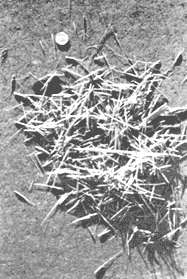
After the rice is harvested and taken home you’ll have to
separate the husks from the kernels. This is done by first
drying unhusked grain in the sum. It drys very fast. Then
pour it slowly from one container to another out in the
breeze. This will blow away most of the broken bits of rice
plant and leaves.
Now place the grain in an oven set at 250° and leave it
for about 20 minutes. At the end of this time the husks
should be very dry and the kernels hard. Put the rice in a
close-mesh cloth bag, grasp the bag by the neck and slam it
against a hard surface again and again. This is a
surprisingly efficient thresher.
Another way to separate the grain from the husk is by
rubbing the oven-parched rice between your hands. This is
only good for small amounts, however.
I like to thresh rice best the way the Indians did it. Dig
a shallow excavation in hard ground. This hole should be
about as long as your feet and as wide as you normally
stand. Line the hole with tough cloth (such as canvas),
pour a thin layer of rice in . . . and walk on it. Walk in
place for a few minutes and examine the rice. If it is
properly parched it should be fairly threshed out in about
five minutes. Pick up the cloth, then, with the rice inside
and winnow it.
Winnowing is necessary as a final step no matter what
threshing method you use. If a breeze is blowing, pour the
rice slowly from one container to another exactly as we did
at the beginning. The breeze will blow the husks and chaff
away and leave fairly clean rice. Don’t attempt to get out
every speck of dirt. When you cook the rice you’ll wash it
first in one or two waters to float the impurities away.
This you would do anyway, so you’re adding no work.
There are so many ways of cooking wild rice that an entire
book could be written on recipes for this grain. Some ways
that I’ve developed, and especially like, are Wild Rice
Breakfast Food, Wild Rice Lunch Soup and Wild Rice and Fish
Supper.
Wild Rice Breakfast Food is made by stirring one cup of
wild rice into three cups of lightly salted water and
boiling for 45 minutes or until tender. Do not stir but
watch the grain closely and add water if necessary to keep
it from boiling dry. When the rice is tender, drain off any
water and serve it with milk and sugar or just mix it with
a teaspoon or two of honey as the Indians did. A good
breakfast of wild rice will keep you going very well until
time for Wild Rice Lunch Soup.
Make this rice soup by dropping a meaty soup bone into a
kettle with enough salted water to cover it. This water
should be measured and wild rice added to the equivalent of
one cup of rice for each four cups of water. Add a chopped
onion. Boil this mixture as long as you care to, but at
least one hour. Add small amounts of water if necessary.
The rice will probably split open which makes it all the
better, to my notion. As with most soup you can add any
leftover vegetables you may have or want and it will be the
better for the adding. Nothing at all wrong with just the
beef and rice however.
All the “makings” for the Wild Rice ‘and Fish Supper
probably can be taken from the same lake. Boil some rice
until tender (as for making the breakfast food) and set
aside. For each cup of rice add one cup of boiled, flaked
fillet of any fish. Trout, if you have it. Fillets are not
necessary but you should strain or pick out any bones.
Don’t over boil the fish. Stop boiling when you can flake a
fillet with a fork. Stir the rice and fish together, add
enough water to barely cover and simmer for one half hour.
Season well. Serve hot or cold. This meal will stick to
your ribs like nothing else in the world, regardless of its
similarity to “Chinese food”.
This is all very simple food forager fare. If you wish to
get more exotic with wild rice any cookbook will provide
the recipes.
I realize that, if you can’t find your own or grow your own
wild rice, it won’t play a very big part in your “wild
diet”. Not at the prevailing price of $6.00 a pound,
anyway. However, wild rice is rumored to grow all over the
United States and Canada so there is probably some in your
locality. If you have a fish pond, there is a pretty good
chance you can grow your own. Seed is available from the
University of Minnesota. At times I have seed too, as does
the Wildlife Nurseries, Oshkosh, Wisconsin. Read A Fish
Pond Of Your Own* for more information.
*A Fish Pond Of Your Own, another excellent
article by James E. Churchill, will appear in MOTHER EARTH NO. 7.






