Industrial pork producers have profited from a catchphrase that for years predicated every piece of their advertising, from print to television: “Pork. The other white meat.” And, for once, the advertising bared the truth. The food industry’s pork tastes exactly like the original white meat — chicken. Well, factory-farmed chicken, anyway. How did that happen?
Factory farms produce pigs of the same size and weight, bred for a short, unhealthy life inside a metal barn, with little or no chance at being a regular ol’ pig — rolling in the mud, grazing on grass and flowers, and digging up grubs and roots. These factory-raised pigs taste more and more like the processed feed they eat. In addition, they’re subjected to antibiotic regimens, are raised in cages with no fresh air or fresh grass, and their processed meat is injected with sodium and water. Eating animals raised in those conditions can’t be good for us, and it’s definitely not good for the animals. Given the option, wouldn’t you rather eat something raised wild, grazing on grass, acorns, roots, and grubs? Fortunately, you don’t have to eat that lackluster pork, not when millions of healthy pigs are running wild all over America. It’s time we take a closer look at eating wild game instead of factory-farmed meats.


Setting the Trap
If you live in the United States, chances are there’s a wild pig lurking nearby. They can be found in the woods on the edge of towns, and people have been reporting more sightings of wild pigs within city limits: near jogging trails, on golf courses, and digging up backyards. If you own property, or have been granted access somewhere outside of town, your odds of catching a few wild pigs is probably better than you think. The U.S. feral pig population is estimated to be about 6 million, and growing rapidly. These wild animals are nonnative, and can cause extensive damage to property, ecosystems, agriculture, and native species. I’ll bet you dollars to donuts there’s a pack of wild pigs within 5 miles of where you’re sitting. You just need to lure them into a trap.
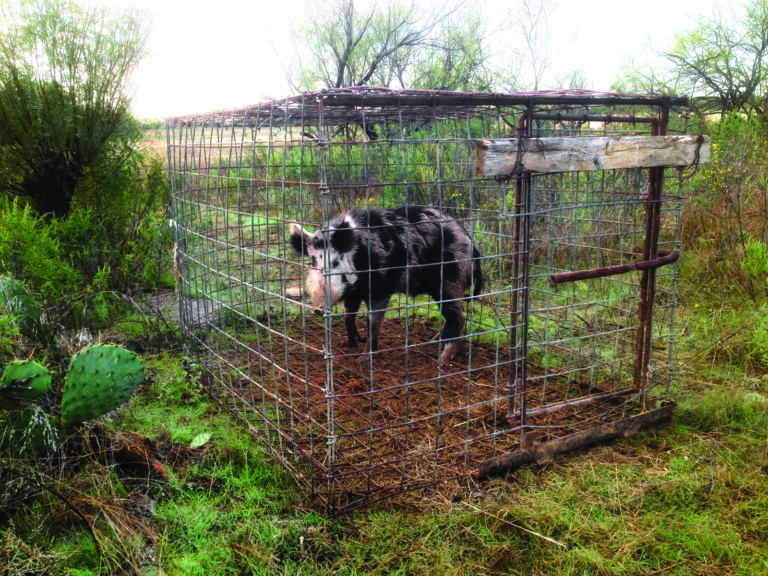
In Texas, wild pigs are so numerous that it seems everyone traps and hunts them. Around here, you can buy a small steel trap for $500 or less. Most of these traps are made from thick-gauge-wire hog panels, bent and tied together with wire or other fasteners. These smaller wire-style traps are typically 4 feet wide and high by 8 feet long. They’re spacious enough to catch big pigs, several yearlings, or a few sows and their piglets, but light enough for one person to move around empty and load in the back of a pickup or onto a trailer. These traps often have a spring-loaded door on one end, set off when a pig bumps a string inside the trap connected to a latch on the door. Some traps are made with guillotine-style doors that drop down, or doors that swing into place.
If you have a severe pig infestation, large traps with remote operation are available. These traps can get pricey — as high as $6,000 or more — but you can monitor them live on a smartphone and spring the door when pigs enter the trap.
Catching a 350-pound wild pig may sound a little risky, but I’ve trapped more than 500 in the past seven years with two small traps. With a well-made trap, some extra-stinky bait, and the right conditions, you can catch wild pigs just about anywhere.
Corn or wheat left to ferment, or mixed with a little diesel, is the best bait for wild pigs. Diesel keeps deer, raccoons, and other critters from stealing all the bait, and pigs love it. If you’d rather not use diesel, beer or water will help sour the mash. Leave it sealed in a 5-gallon bucket for a couple of weeks if possible. Bait the trap liberally, and sprinkle a small amount of grain around the perimeter and between the trap and any nearby game trails. Usually, you’ll catch smaller pigs first, medium-sized lone boars second, and then others as food supplies dwindle during winter months. Don’t trap pigs in warm weather, and make sure you’ve had at least one freeze before butchering.
Follow the proper precautions anytime you check a trap. Don’t go unarmed, alone, or in sloppy weather conditions. Stay on high alert; trapping wild pigs is dangerous. Don’t underestimate their untamed animal instincts. If you plan to transport them, make sure you securely lock them in the trap, trailer, pen, or cage.
Once trapped, separate any boars and load them into a trailer or cage. Kill any pigs destined for the table immediately, and then hang and gut them. Sows weighing between 50 and 150 pounds will produce the best-tasting pork, and smaller piglets, male or female, weighing 20 to 50 pounds are ideal for whole-pig roasts. The boars, often masked in a musky, wild smell, which sometimes permeates the meat, can often be sold to a local buyer, who in turn buys for a big-scale packer. Don’t handle the babies under 4 weeks old, because they tend to have more urine and fecal matter on them, making them more likely to transmit bacteria and viruses. Most hog trap wire is wide enough that young piglets can easily slip through.

From Trap to Table
Once you’ve trapped a wild pig, you’ll need to butcher it yourself, or dispatch it to a local butcher, and turn it into all-natural, free-range pork.
Gutting a wild pig is an unpleasant experience, to say the least. But the ends justify the means, so take your time and keep the meat free of hair, blood, urine, and excrement. Let the carcass hang for at least one night to bleed out and cure. If you live where temperatures stay below 45 degrees Fahrenheit, or have access to a walk-in cooler, let it hang for three days to remove any gamey taste.
If you plan to cook a whole pig, it’s best to leave the skin on, which requires removing the hair. This can be troublesome, but there are several ways to do it. Burning off the hair with a blowtorch will work, but will discolor the skin and leave an ashy residue; use steel wool to remove the ash and hair particles left behind. You can also put the carcass directly on a barbecue pit for about three hours, which will burn off any hair and leave a clean surface. Alternatively, dip the carcass in a large tub of boiling water for a few minutes, and then remove the hair with a knife or hand-held scraper. This process is effective, but it isn’t easy to master. The water temperature has to remain consistent at near-boiling, and the hot water will cook the meat somewhat, especially if you’ve gutted the carcass. (You can remove the hair before gutting, but I don’t recommend it, because there’s nothing to protect the skin and meat from getting dirty.) The hair doesn’t exactly fall off the hide, either, so be prepared to spend some time removing it. Once you master this task, though, cooking the whole pig on a pit or smoker will make it worth your while.
Wild pig meat also makes great sausage and ground pork. From breakfast sausage to chorizo, there are about a million recipes for making pork sausage. All types of sausage are good, if you use the right ingredients and make it yourself. Grind up a ham and try your hand at making some, and use the remaining ground pork for other recipes, such as meatballs, egg rolls, dumplings, terrines, and more.
If you trap a young sow — weighing 75 to 100 pounds — you’ll enjoy great-tasting meat, and you’ll likely never reach for store-bought pork again.
R.D. Copeland raises pastured beef in north Texas on his organic farm and weekend retreat, The Sunflower Farm. Visitors can experience a cob cabin getaway or take a DIY skills seminar. Learn more here.

This versatile No. 8 Electric Grinder doubles as a sausage stuffer and features a compact design for easy storage. Its powerful 575-watt motor is ideal for grinding any wild game or domestic meat at home. This product is available here by calling 800-234-3368. Mention promo code MMEPAKZ5. Item #8851.