The following is an adaptation from A Householder’s Guide to the Universe: A Calendar of Basics for the Home and Beyond by Harriest Fasenfest (Tin House Books, 2010). In her book, Fasenfest leads readers through a year in her garden, kitchen and home on her continuing journey to self-reliant householding. The basis of her homemaking decisions lies in her dissatisfaction with industrial agriculture, commodification of our crops and food system, and the replacement of handmade, artisan foods with genetically modified food-like substances. This excerpt comes from the chapter “June.”
The Real Food Fight
While some genetically modified seeds or plants can never reproduce naturally, others do. And that is where the real fight comes in. When, for example, a farmer takes the bait and grows genetically modified seeds, he is unwittingly participating in a sad chain of events. By planting those seeds, he is introducing some of the traits of those seeds into the wild. The pollen from genetically modified seeds can, unfortunately, cross with a native variety and infect it. Its pollen can fly over to the plants of a neighboring farmer (one who may have been raising a particular heirloom variety for generations) and alter the plants’ gene pool. That, for a traditional farmer, is a tragedy.
But worse than the destruction of an established hybrid or heirloom seed stock is the ensuing legal nightmare. It is a nightmare from which we can only wake up once generations of good farming practices and lifestyle have been destroyed. Strange as it may seem, if the errant pollen of the genetically modified seed makes its way to the farm next door, the traditional farmer must pay. Once his seeds or his plants carry a single trait of the genetically modified seed (whether he wanted them to or not), he must pay royalties to the manufacturers of the GM seeds. Unlike those who use the natural process of selection (hybridization, or cross-pollination in the wild), those who genetically modify seeds do so for profit — big, big, monopolized profit. The companies that modify seeds genetically (or the corporations that support their research) patent the seeds they develop. They sell them to farmers (or even supply them free, at first) by suggesting the seeds will produce disease-resistant crops and an increased yield. They convince farmers that the return will be great. Sometimes, over the first year or two, it is true. These plants yield big, disease-resistant crops. But over time the return is not as great as the farmers have been led to assume it will be. When there is a bumper crop, the commodity price (what big companies pay for crops) may go down. Big yields lead to surpluses and poor returns. At that point, not only must the farmer keep paying for the next crop of patented seed (now at a higher cost), but he also begins to question this logic. He begins to wonder, from both
an economic and an environmental perspective, what he has signed up for. It is not true that all large-scale farmers do not care. They have been seduced by a system that has captured us all. Many large-scale farmers understand that they are caught and do not like it. In the game of big agribusiness, only a few farmers will make it to the top. This game, as they will discover, is a brutal game. Unfortunately, in the case of genetically modified crops, when farmers sign up, they are stuck. Once the pollen has made its way into the air, there is no going back — for the farmers or their unsuspecting neighbors. Patented-seed distributors are watching to see if their plants are crossing with older seed stocks in the neighborhood, and then they move in for the kill.
I doubt there are many people who have not heard about the fight of seed activists trying to hold on to their right to use their indigenous foods, seeds, and plants. Who has not heard of the small farmers in India who committed suicide when the promise of greater crop yield landed them in debt? Who has not read of the small farmers who, in a brutal showdown with corporations, have lost their ancient traditions of farming, seed saving, and harvesting to the invading ideology of private ownership? It is not at all dramatic to suggest that the roots of civilization are being privatized. In the world of agribusiness and resource commodification, controlling all the water (a whole other story) and the seeds is nothing short of brilliant. It may take a fiendish mind to design such a system, but if profits are what you’re after, what greater assurance could you have than by controlling seeds and water? This is why my stomach turns every time I think about where this is all going. What child has not played Monopoly? When folks are hungry and thirsty, what will they not pay? What is the outcome of high demand and limited access? Who cannot see what will come of this? We do not think about all of this for a reason. Sometimes it’s because we don’t want to, but more often it’s because they (whoever “they” are) are adept at convincing the public that all is well. They will tell you they are only working to feed the poor, and that the movement toward genetic modification and seed privatization is one of stewardship. They will say it is for the good of mankind, that the growing food scarcity and threat of world hunger demands it, that they will distribute these limited and precious resources equitably and with care. But is that how you think profit-driven enterprises are run?
Think it through. This system does not bode well for the masses, which is why I think seed activists are some of the most brilliant and radical folks out there. It is also why I think that learning how to sow, grow, and stow your food and seeds is essentially a political act. But so is knowing what you are buying in the marketplace. It is important to figure out what is what, and why it is grown, but this can be a slippery slope. For example, when I start seeing oceans of organic ‘Seascape’ strawberries in the marketplace, but nary a ‘Hood’, ‘Shuckson’, or ‘Benton’ (let alone the more elusive ‘Marshall’), I begin to wonder what is going on, why a new mono crop is making the scene. I wonder how different it is from any other industrial practice. If the ‘Hood’ strawberry, for example, is being discarded for other, more durable varieties of strawberry, where will it all lead? I should emphasize again that I am not a small farmer trying to make a living. I don’t have to go to my berry fields and see my tender strawberries decimated by heavy rains. If I did, and if I’d lost a big part of my income as a result, then I too would most likely shift my crop to an ever-bearing variety that better withstands the conditions of the region. But when organic and local farmers start shifting toward the practices of agribusiness (selecting varieties of produce that offer higher yields rather than the best flavor), they are aligning themselves more with industry than with the fleeting brilliance of the moment. Can I blame them? No. Do I see a common thread here? Yes, I do.
The Slippery Slope of Markets
Over and over, I am reminded of all the concessions, large and small, that we make whenever we take nature into the marketplace. Though there is not a straight line between the varieties of produce hybridized in your backyard or by your local Extension and those genetically engineered in a lab, there is a faint connection, if only in terms of the agenda. Each, in its own way, is working to control the market. In my idealized world of small-scale subsistence farming, I imagine a more holistic system. It is a system outside the market. It is about varieties grown by generation after generation on the family farm, by and for the people who live on the land. In that world, there is no marketplace or, if there is, it is one of back-road farm stands and bartering between neighbors. What idealism. What hopeful posturing. But those are the lives and systems I believe we are most enraptured by.
Those are the experiences and traditions that give us the transitory seasonal fruits and perennials of the region, as they appear not in our markets but in our homes or on our land (one and the same if we are lucky). These are the truths behind the “artisan” foods we adore — prosciutto, cheese, grappa, balsamic vinegar, good wines and oils, or les confitures (French for “jams”). That is the mystique that intrigues us. Is it just the flavor of these foods? I think not. I believe it is the humble birthright of these ingredients that gives them their appeal. It is their honest place and function within an agricultural society that seduces us. More than the products themselves, it is their attachment to traditions that sets us on fire. And we glorify them even though we will never do the work ourselves. Our appreciation for these products amounts to buying in, not living in. And that is a shame, since commodification will always offer only a shadow of the things we are really after.
It is important to remember that all these things, these valued artisanal products, have their origins in the world of self-reliance. These were the stuffs of old-world stores, resulting from people’s need to live off the land. We have turned them into designer foods only because we have forgotten what they were. We have forgotten that we, and not industry and markets, are responsible for keeping them alive, first with our own labor, and then (if we cannot pick up a shovel) by knowing where and why they exist. I am always cautious of shopping my way toward sustainability. I am not sure the beast can be contained that way, which brings me to berries, jam, and importance of purpose.
Purpose Matters
Somewhere between the insufferable toil and degradation of forced labor and the misty-eyed accounts of country comforts lie the stories of lives marked by the joy of self-sufficiency, the stories of work before industry, wages, and “labor-saving” devices took over. They are the stories of people buoyed by the pride of doing what was needed on the land and having the skills and trades required for it. It is hard to know whether all this work gave folks a sense of value and purpose, or whether it was nothing more than utility born of necessity.
What I do know is that purpose matters. That is the sentiment I read in accounts of the past — that once those things produced by and attached to a unique combination of skills among people, communities, and the land were transformed by industry into easily replicated widgets, something was lost to human experience, something akin to pride, purpose, and a sense of place.
During the industrial revolution and beyond, a modern “scientific” ethic emerged to support the sweeping displacement of place by the mass-produced products of no-place. What was offered as justification for this deliberate disconnect from the cycles of the natural world was the freedom from hard work. Has this proved to be the panacea that our forefathers imagined?
In a book of essays by Wendell Berry, he asks: “We are being saved from work, then, for what? The answer can only be that we are being saved from work that is meaningful and ennobling and comely in order to be put to work that is unmeaning and degrading and ugly.”
Of course, this is Wendell’s charm. He lures us with the nostalgia of honest work, hard work, work done on and for the land.
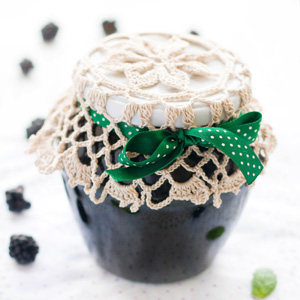
Will we, like the wild blackberry, be sweeter for our thorns? Will we stand up to the beast of industry? Will we claim the right to be? These days, when I make jam for myself, it is from wild blackberries. I have grown to love wild blackberries for a number of reasons. First, there is the smell. When you’re making wild blackberry jam you’re enveloped in an intoxicating fragrance of berry and roses, because they share a common genus. I had forgotten that connection, but was reminded of it as the jam cooked. Standing over that bubbling brew, I took in the scent and wondered if previous generations were aware that no amount of hybridization could match it. Yes, there are varieties that have fewer seeds and some that are fatter. There are varieties of blackberries that are thornless, and those “easier” varieties stand up better to the demands of the marketplace. Not one of them is as singularly rugged and fragrant as the wild variety, however. I know they are considered invasive, but had they remained our only blackberry, would we have watched over them better? Have they grown fierce in our neglect? Did we forsake them for tamer creatures? Can we blame them for taking root in abandoned fields and along back roads and refusing to become extinct? They are not the newcomer. They deserve to be where they are. This gets me thinking about the lives we lead. Will we endure? Will we stay free and wild, fragrant and feral? Will we, like the wild blackberry, be sweeter for our thorns? Will we stand up to the beast of industry? Will we claim the right to be? Will we remember our heritage, our traditions, our natural and rightful place in that plan? Or will we only be the cultured and civilized version of the real thing? Who knows. But when I make jam for my morning toast it is with the wild blackberry.
Reprinted with permission from A Householder’s Guide to the Universe: A Calendar of Basics for the Home and Beyond, published by Tin House Books, 2010.