
With this compact, portable reference in hand, crafters can quickly and easily look up any of 100 sheep breeds, the characteristics of their fleece, and the kinds of projects for which their fleece is best suited. Each breed profile includes a photo of the animal and information about its origin and conservation status, as well as the weight, staple length, fiber diameter, and natural colors of its fleece. The Field Guide to Fleece (Storey Publishing, 2013), by Deborah Robson & Carol Ekarius, is a great primer for beginners, and a handy guide for anyone who loves working with fleece! The excerpt below comes from the section, “Merino.”
You can purchase this book from the MOTHER EARTH NEWS store: The Field Guide to Fleece.
Merino Wool
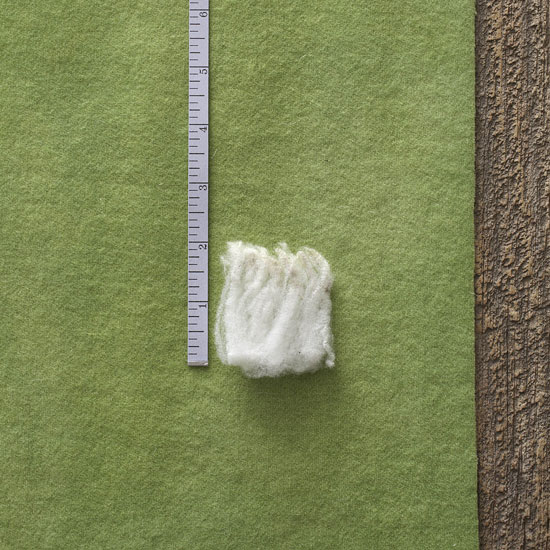
Although Merino wool is one of the most recognizable names in fleece, there are dozens of identified Merino breeds around the world, and the softness levels of Merino wools vary noticeably, from ultrafine to relatively sturdy. Merinos grow large quantities of dense, fine wool; the locks are blunt, often weathered, with regular crimp. The fibers’ heavy coat of grease must be washed out in very hot water with a reliable cleansing agent — and no agitation, as Merino felts easily. You can spin from the lock, comb, or card. The wool’s fineness means it forms neps easily. You may want to use fine-toothed combs, cotton carders, or fine-fiber carding cloth. To produce thick yarn, spin several thin, nicely twisted strands and ply them together.
Effect of Dyes
The white wools take colors well.
Best Uses
Merino wool is wonderful for lightweight, soft, delicate fabrics and garments, including baby clothes. It felts easily.
Merino Wool Specs
Origin: Spain
Fleece Weights: 6 1/2-40 pounds (3-18 kg)
Staple Lengths: 2”-5” (5-13 cm)
Fiber Diameters: 11.5-26 microns
Natural Colors: Whites for the most part; some blacks and browns
More Merino Facts
In the twelfth century, Spanish royalty began importing rams from the Beni-Merines, members of a Berber tribe in what is now Morocco. The Spanish crossed the rams with their own ewes; the result was a fine-wool sheep like no other. It changed the world of wool profoundly.
Read more from The Field Guide to Fleece:
The Field Guide to Fleece: Wool Characteristics
Rambouillet Wool Facts
This excerpt has been reprinted with permission from The Field Guide to Fleece,by Deborah Robson and Carol Ekarius and published by Storey Publishing, 2013. Buy this book from our store: The Field Guide to Fleece.