

Make an oxymel recipe using sorghum as a sweetener, make overnight sourdough pancakes for happy guts, follow a teen-led community initiative, keep things out of the waste stream, and plant a cinder block herb garden.
I found myself with a dilemma. I had mint and fennel in profusion in the garden but no plan for what to do with any of it. After consulting my preferred herbology texts, I came across a tantalizing description of a thing called an oxymel, which involves stuffing dried herbs into a jar with raw honey and vinegar and then letting the whole mess steep for a couple of weeks. The essential oils from the herbs are absorbed into the syrup that emerges from the interaction between the honey and the vinegar, and then the solids are strained out to produce a syrup that can be used as the base of a digestive tonic.
I didn’t have any raw honey on hand, but the prospect of mint and fennel in tandem led me to another sweetener I did have on hand: sorghum syrup. I’m lucky enough to live within driving distance of the Seminole Nation, where some of the best sorghum in North America is produced.
That’s how I came to create what I call a sorghumel. Here’s how I did it and how you can do it too. Yield: 1 quart.
- 2 cups dried mint, loosely packed
- 2 cups dried fennel fronds, loosely packed
- 2 cups sorghum syrup
- 2 cups apple cider vinegar
- Pack the jar: Chop up your dried herbs and stuff them into a 32-ounce jar.
- Combine the liquids: Pour in your sorghum and your apple cider vinegar.
- Cap it safely: Top the jar with a plastic lid, or place a piece of parchment paper under a metal lid so that the vinegar doesn’t corrode the metal.
I went by once or twice a day to burp the jar to release trapped gases and then give it a few slow turnovers to make sure all the ingredients were being integrated. After five days or so, the visibly separated syrup and vinegar became less so, and then not at all.
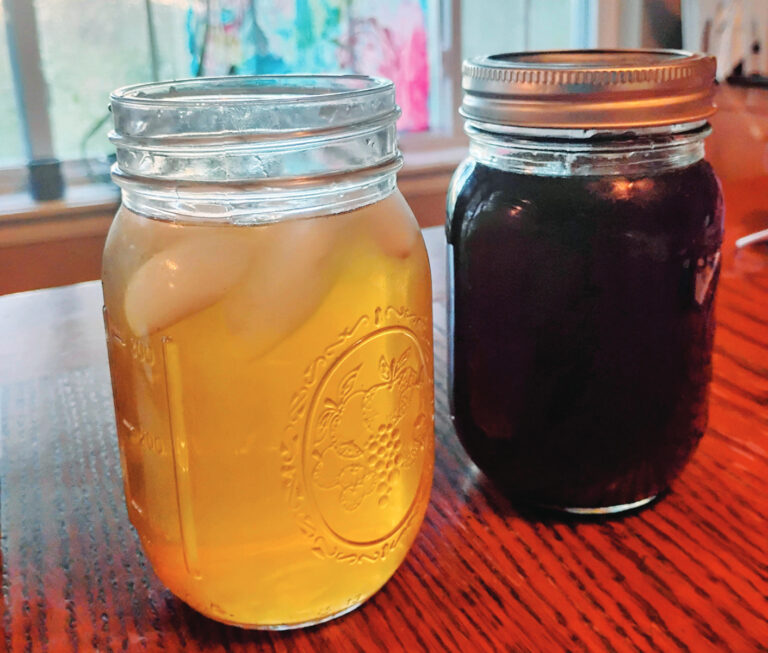
After two weeks, I poured the jar’s contents through a fine-mesh strainer and into a bowl, and composted the expended herbs after giving them a last squeeze. I measured out a couple of tablespoons of the syrup into a glass, added 12 ounces of cold water, gave it a stir, and then added some ice.
The sorghumel is bright and tart, and its unique sweetener deepens the flavor. Honey would be a good alternative if you don’t have access to sorghum syrup. Raw honey and sorghum each have their own known health benefits, but the mineral content of the sorghum (potassium, magnesium, calcium) was especially attractive to me.
The X factor here is what you decide to dissolve in that jar of tangy goodness. Want to maximize the benefits as a digestive tonic? Fennel seed, fresh ginger root, and rosemary. Something to promote lung vigor in a season transition? Lemon peel, thyme, and cinnamon bark. There’s no end to the possibilities!
Or, do what I did, and just ask yourself, “What do I have too much of right now?” Dry it, stuff it in a jar with your twin engines of digestive health, and get your first oxymel started today!
Rob, Oklahoma
Teen-Led Community Initiative
When most people think of a garden, they think of fresh vegetables, colorful flowers, or a fun summer hobby. For me, a garden became an opportunity to help others. Three years ago, I founded Westfield Seeds of Change, a community initiative that collects excess produce from local gardeners and delivers it to families experiencing food insecurity.

Starting this initiative at 13 years old felt highly daunting. I was unsure if people would participate or take the initiative seriously because of my age. But in the three years since, the project has grown far beyond what I originally imagined, creating a meaningful impact in my community while teaching me valuable lessons about leadership, service, and the power of small actions. Here’s the story of what I did. I hope it inspires you to make a difference in your community!
The idea for Westfield Seeds of Change was inspired by two important parts of my life. First, I live in New Jersey, which is known as the Garden State. Agriculture and gardening have always been an important part of our state’s identity. Second, my family has always loved gardening. Every summer, our garden produces more vegetables than we can possibly use. As I looked around my neighborhood, I realized many families were having the same experience. I also knew there were people in our community who struggled to access fresh produce. I began to wonder: What if the extra vegetables growing in backyard gardens could help families in need?
That simple question became the foundation for Westfield Seeds of Change. Throughout the growing season, community members donate excess produce from their gardens. I collect the donations and deliver them to St. James Food Pantry in Woodbridge, New Jersey. Fresh fruits and vegetables are often some of the most requested, and least available, items at food pantries.

We accept any form of fresh produce; we’ve had everything from tomatoes to okra. Neighbors can drop off fresh produce at any time of day, any day of the week, in the cooler in front of our home. We check the cooler multiple times a day. Donated produce is rinsed and then packed into clean baskets to be taken to the pantry. We drop donated food off at the pantry every morning. This food pantry is fairly small, but it accepts donations in any quantity.
Over the past three years, we’ve donated over 620 pounds of produce! Every donation, no matter how small, contributes to helping local families. What may seem like a limited number of extra tomatoes or cucumbers from a backyard garden can make a meaningful difference when combined with donations from dozens of other gardeners.
As Westfield Seeds of Change has grown, I’ve also had the opportunity to educate others about food insecurity and community service. Recently, I reached out to local Girl Scout troops and spoke to them about the project. I shared the story of how Westfield Seeds of Change began and discussed ways that young people can make a difference in their own communities. It was inspiring to see how interested the scouts were in helping others and learning about food insecurity. These conversations reminded me that one of the best ways to create change is by encouraging others to get involved.
One of the most meaningful recognitions I’ve received was being selected as a Feeding America Youth Ambassador. Feeding America is the nation’s largest hunger-relief organization, and being chosen as one of 30 youth ambassadors from across the country was an incredible honor. This opportunity has allowed me to connect with other young leaders who are working to fight food insecurity in their own communities. It’s also reinforced my belief that young people have the ability to create meaningful change when they’re passionate about a cause.

For other folks who’d like to replicate this project in their communities, I recommend reaching out to local pantries and learning what the pantry needs most. From my experience, multiple pantries in our area have difficulty consistently sourcing fresh produce, and this isn’t just an issue local to New Jersey.
One piece of advice I have for teens looking to start similar projects is to not let their age define them. Don’t be afraid to reach out to experts in the field or other established organizations, because a majority of the time, they’ll be willing to help or redirect you to someone else who can help support your project.
Looking back, Westfield Seeds of Change has become much more than just a produce donation project. It has connected gardeners, volunteers, community organizations, and families around a shared goal of helping others. It has shown me that leadership isn’t about having all the answers, but about taking initiative and inspiring others to join you. Just like a garden starts with a single seed, meaningful change often begins with a simple idea. Westfield Seeds of Change has shown me that when people come together to help one another, those seeds can grow into something truly powerful.
Caroline, New Jersey
Cultivate Beauty
Garden spaces can be both functional and beautiful. I like to add a few flower boxes or borders at the ends of garden beds to create small moments of beauty. I also plant flowers alongside vegetables. Marigolds, sunflowers, and zinnias brighten the beds and attract pollinators. The painted end of our hoop house adds personality and reminds us that farming should feed the soul as well as the table.

Don’t overthink a painting project. I painted these sunflowers freehand, which keeps them looking natural and playful rather than perfectly uniform. I started by lightly sketching the center circle of the sunflower with chalk or a pencil. This will give you a guide without committing to permanent lines. And don’t worry about perfect shapes – sunflowers in nature are all slightly different!
Katie, Maine
Bury Your Wool
We’ve gotten a lot better at thinking about where things come from. Food, especially. More of us are choosing local, organic, or regenerative options. But we don’t think nearly as much about where things go. When clothing or bedding wears out, the default is pretty simple – we throw it away and move on. But some materials give you another option. Natural fibers, such as wool, come from the land. And if they’re untreated, they can go back to it.
At home, that can be pretty straightforward. Smaller wool items can go straight into a compost pile. Bigger pieces can be cut up so they break down more easily. If you’ve got a backyard, you can also bury wool directly in the soil – ideally in a garden bed or somewhere you’re trying to build up the soil. It won’t disappear overnight, but over time, it will break down and feed the ground.
The only thing to watch for is blended, heavily treated, or synthetically dyed fabrics – they won’t behave the same way, and you don’t want those in the soil. It’s a small shift, but it changes how you think about materials. Some things are designed to be thrown away. Others are part of a cycle. So when something finally wears out, there can be another option.
Greg, Arizona
Protect Plants with Junk
Living in a small town near the coast in Oregon, it’s not unusual to see deer in the yard. I enjoy watching them, but I’ve discovered their favorite foods include my flowers and young plants.

I frequently go crabbing using traps, which on average last only 5 to 8 years because of the salt water. I used to recycle them, but now I use them to protect my plants. The large openings allow plant growth and easy access, and when the plants get bigger, I put another trap on top.
David, Oregon
Tuck Plants Everywhere

My husband had wanted to build a poolside grill deck for years, and part of that project was to level the hillside and build a retaining wall. I’d heard about cinder-block gardens and thought they’d be an economical and practical way to build a retaining wall around the stone-block grill deck. The soil and then the plants go right into the holes in the blocks. We planted various herbs and edible flowers that would please the palate, the eye, and the pollinators. This is the wall garden’s third year. The nasturtiums, violas, parsley, Thai basil, dill, marigolds, butterfly weed, and cilantro seeded themselves from the previous years – including into the ground below! I filled in the blank spots with annuals, rosemary (a tender perennial in Zone 7b until it gets a big woody stem), and a squash plant this year. Last year saw a tomato jungle (I should’ve chosen more compact varieties!). The possibilities are endless!
Maria, Virginia
Grow Food in October
All gardeners get their start somewhere. A great way to start is by trying to grow herbs indoors. Indoor herb gardens let you grow in any area, any climate, and any season. Here are a few herbs to consider.
- Basil is a great herb to grow for cooks and bakers because of its widespread use in Italian cuisine and breads. Lemon basil is especially good in sugar cookies and for steeping in tea. Basil needs large and deep pots to grow indoors successfully.
- Chives are very low-maintenance, which helps them thrive inside. Chives are excellent in savory breads and egg dishes, and they add a special touch to potatoes.
- Mint thrives in any light condition and is great in teas and in lamb dishes. Spearmint can be an invasive plant, so growing it indoors is a good option.
- Oregano is a low-maintenance plant that just needs a tray filled with pebbles underneath it to help with moisture retention. Oregano is used to bake savory breads, including homemade pizza dough. It adds great flavor to anything grilled.
- Rosemary grows best with a pot that has good drainage, but it also requires a bit of moisture in the air. It adds perfect flavor to stews and roasted meats.
- Thyme shines in shortbread cookies, scones, and biscuits and is also an important ingredient for homemade stocks.
Have fun experimenting and enjoy your new adventure!
Heidi, via email
Organize Zip Ties

When I have a project that needs multiple zip ties, it can be hard to keep them organized and easy to access while I work. I’ve discovered a solution. Slip the zip ties you need for your project onto a scrap piece of a zip tie. It’s like a chain, and when you need one, just slip it back off. No more retrieving loose zip ties after they’ve fallen onto the ground from my pocket.
Gail, Michigan
We Pay for Top Tips
Do you have handy home, farm, or garden advice? We’ll pay you $25 for each tip we publish, plus another $25 if we use your photos.
So, send your niftiest tips to us at Letters@MotherEarthNews.com.
Originally published in the October/November 2026 issue of MOTHER EARTH NEWS and regularly vetted for accuracy.






