It’s early January in middle Tennessee. My hives stand silent against the still winter cold. A warm ear against a frosty hive brings the reassuring hum of all those shivering bees, keeping one another warm. If I don’t hear them, a couple of raps on the hive will bring the hum to a momentary, more audible crescendo.
Because I am dedicated to keeping bees sustainably and without chemicals and to building survivor stock – strong healthy, disease-free bees that can forage efficiently – my work is done for the season. The survival of the bees now depends on whether I’ve left them enough of their own nutritious honey in the fall, whether the cluster is big enough to keep them warm, whether breaks in the weather come often enough for cleansing and water-gathering flights, and depends on the condition of the queen. For now the bees are safe from further contamination by agricultural chemicals, but I suspect these chemicals still play a role in the health and longevity of my queens.
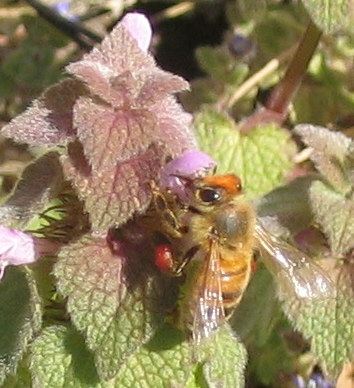
In winter as well as other times of the year, the queen comes first. Inside the hive, the worker bees surround her and keep her fed as they move from the outside of the cluster to the inside and back again, regulating their own warmth along with hers. The queen is not laying now, but in only a few weeks, elm, cedar, and henbit pollen (see photo of bee on hen bit) will be available to feed to her larvae, and she will begin anew. (To augment your own observations of what pollens are available and when in your area, go to www.pollen.com and key in your zip code.)
Although summer worker bees only live about 6 weeks, the bees of winter live several months, making up for this lull in egg laying. Often called “fat bees,” winter bees even have a different composition from that of summer bees thanks to changes in the protein vitellogenin.
On warmer winter days, I’ve seen a lot of activity at the hive entrances and I’m encouraged. The books say the bees will break cluster to do their winter chores when the outside air is about 50 degrees. My bees haven’t read the books, and I’ve often seen them out on sunny, windless days when the thermometer reads much colder. The bees clean house on these days. They drag out their dead, take cleansing flights to relieve themselves of fecal matter, look through the sawdust piles where I’ve been cutting wood (for what I’m not sure? resin for propolis? minerals?), and gather water.
Although water requirements are lower in the winter, bees need water to mix with and thin out their honey stores before eating them or feeding them to their larvae. A lot of condensation can build up inside a hive in the winter time, especially if poorly ventilated, and I imagine they use this water. I’ve also seen them out collecting water drops from blades of grass and other plants on warm winter days.
If the hives were well provisioned above the brood nest in the fall, the bees will move up closer to the stores as the winter progress and will use warm days to move honey closer to the cluster. If it’s too cold for too long and the food is too far away, the bees can starve despite honey still being present in the hive. Taking your losses in the fall by combining weak hives and culling poorly performing queens make bigger clusters, allow more efficient warming, and increase survival overall. The bees use propolis to glue their hives shut for more winter protection. I won’t break their protection to try to feed them in cold weather, so my being judicious in honey harvesting is critical to their winter survival.
Today it’s very cold. The bees are clustered up, conserving energy, and eating less of their honey stores. For now, I’ll go inside and do the same–sit by the fire, conserve energy, and dream of spring.
For more information on preparing your hives for fall and about what bees do in the winter, see archived posts at PersimmonRidgeHoneyFarm.com.