

One winter a few years back, I worked in the medical center in Bethel, Alaska. Never have I seen a flatter or whiter terrain than this winter tundra. However, I very much enjoyed working with the Yup’ik people, and when I left they gave me a book telling of their Eskimo culture. The book is called, “Always Getting Ready.”
Surviving such harsh conditions certainly does require that knowledge and skills be handed down to each new generation. These skills include being prepared so that food, clothing and shelter are available when needed. Our lives in Ohio are much easier than the traditional Eskimos; and Ohio certainly doesn’t offer the challenges that the subarctic tundra does.
However, as I watch what is required to grow our own food, I do see that there is a rhythm of the season on a homestead and each season has different tasks. In a sense, I’m getting the feel of “always getting ready” right here on our little farm.
I have always loved seasons and welcome the change that they bring. If I describe seasonal activities, I tend to begin with winter because it is physically the slowest of seasons for us. It is slowest because food and firewood were “gotten ready” during the previous seasons.
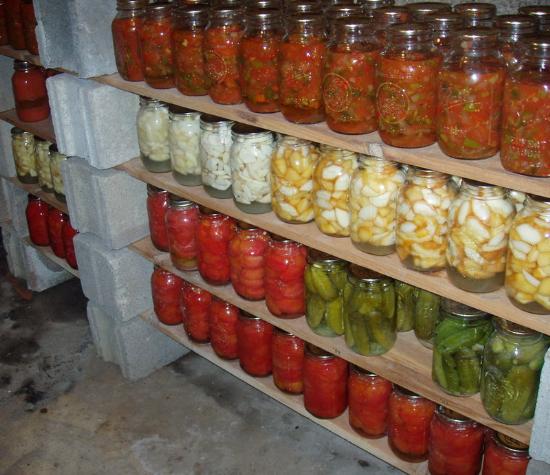
Food is prepared when it is harvested in the summer and autumn. That means a winter’s meal can be easily made by combining a few items from the freezer, canned goods or root cellar. It’s a time to rest and catch up with reading and letter writing. This quiet time comes between bundling up in the mornings and late afternoons when animals are fed and protected from the weather.
Winter is also the time for tasks that make the summer’s work easier. My husband built the milk-room in the barn last winter and had completed the turkey house before the ground froze. Indoor painting and deep-cleaning of the house gets done then, or probably doesn’t get done at all. Winter also becomes the time to research the questions we accumulate during the summer about animals or the garden.
But spring comes early as we begin indoor seeds at the end of February. The onions, shallots, leeks and some cabbage are begun in the sunroom at that time and most other seedlings are started at the end of March. March is also the time to prune fruit trees. I enjoy this task immensely, probably because it comes after a couple of months in the lazy-boy chair. If the garden isn’t too wet, it’s also time to continue preparing garden beds.
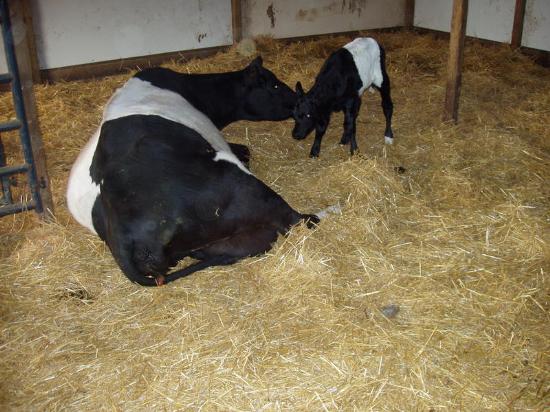
But when April comes, the pace goes quickly from a saunter to a gallop. Pregnant cows are checked in the middle of the night and milking begins when the calves are born. Baby chickens either arrive by mail or hatch in the incubator. This coming year we also anticipate baby “red wattle” pigs and Narragansett turkeys. Just like a party game, there seems to be a new task added with each spring day–perhaps to see if we can remember and juggle them all.
The garden won’t wait for our attention. Seedlings become leggy if they don’t get put in the garden, and weeds multiply when the garden is ignored. And of course the grass needs cutting. But then, daffodils are blooming and the bees are already bringing pollen into their hives, and busy or not, we have smiles on our faces.
We are dependent upon the weather in every season, but it is in summer that we hope for adequate rain and not-too-hot weather. By August, harvesting and processing food from the garden has priority over daily weeding.
It is not only plants that are harvested at this time. Milking continues and I am able to put aside cheese for the winter. As the chicks mature, “processing days” are required for the old hens and too-many cockerels. They either provide summer meals or are put in the freezer for winter food.
Summer is also the time to get the animals’ food and bedding prepared for the winter. Hay and straw are cut and put in the barn. The work that seems difficult to manage as the summer begins becomes a rhythm as the season progresses. I just need to remember this from one year to the next.
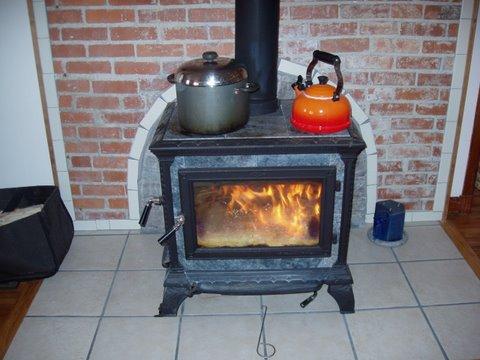
And then comes my favorite season of autumn, when homesteading brings more changes than just the cooler temperatures. We stop milking at this time so there will be adequate time for other winter preparations. Barns are cleaned and bedded for the winter. If firewood is not already in the shed, it is cut and stacked. We depend on this wood for both heat and for cooking in the winter.
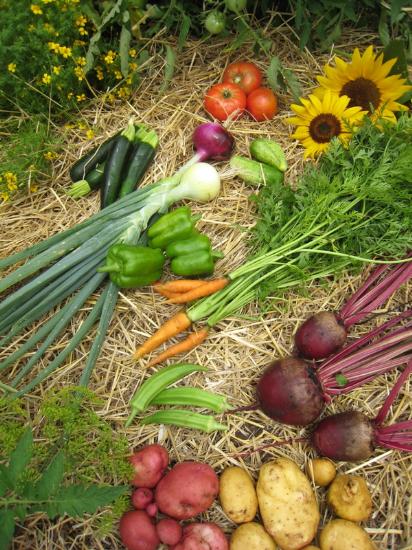
We work on the garden daily to get it cleared out and the planting beds prepared for next spring. I continue to pick tomatoes and sweet peppers and spend the evenings shelling dried beans. We depend on them for winter’s meals, but also for the seeds for next year’s garden. Potatoes have been dug, dried and are now put in the root cellar along with onions and squash. The canning jars are lined-up and the freezers full. No wonder Thanksgiving is in the autumn—it is such a time of gratitude, even as it is a time to be “getting ready” for the winter.






