

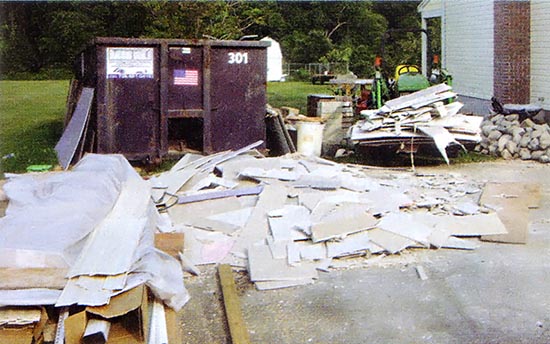
Waste materials at construction sites typically fill several large dumpsters that are eventually emptied into landfills. We put a 1,500-square-foot addition on our home that involved the removal of the old garage roof and a treated-wood patio deck. During all phases of this deconstruction and construction project, I made a concerted effort to recycle nearly all of the construction waste.
In the end, the accumulated waste amounted to one half-filled dumpster. This was far less than the three dumpster loads our contractor expected. In fact, at the completion of this construction project, our contractor said our recycling efforts resulted in significant savings and deducted $1,000 from our final project invoice. This was a nice way to be compensated for our laborious recycling efforts.
Here is how we utilized the various waste materials:
Old Lumber and Wood Scraps. We saved about 80 percent of the previously used lumber by pulling the nails and stacking the boards for later use around the farm. The treated lumber from the old deck went into the dumpster. We cut up scrap wood that was untreated but not worth saving as used lumber and used it as firewood in our woodstove. We spread the ashes as a soil amendment. We swept up sawdust from cutting untreated lumber and composted it.
Metal Scraps. We collected gutters, dull saw blades, bent rusty nails, pieces from duct work and so on, and took them to a recycling center. We saved nails that were reasonably straight for later reuse.
Cardboard. During construction, this easy-to-recycle material is typically commingled with dumpster waste, but we kept it separate. Altogether, we collected a pickup-truck load of cardboard and took it to a recycling center.
Insulation. We collected fiberglass insulation scraps and will use them to augment the layer of insulation in our attic.
Sheetrock. This amounted to a huge pile. Gypsum board consists mostly of calcium sulfate and some paper. Gypsum is widely sold in garden centers for use as a calcium and sulfur soil amendment, and for improving soil structure and soil drainage. Some drywall gypsum board from bathrooms had been treated to resist mildew, so it went into the dumpster. We distributed the bulk of the untreated gypsum board scraps over the area intended for a lawn. After this material becomes moist and crumbly, it can be tilled into the soil.
Joseph Heckman
Monroe, New Jersey






