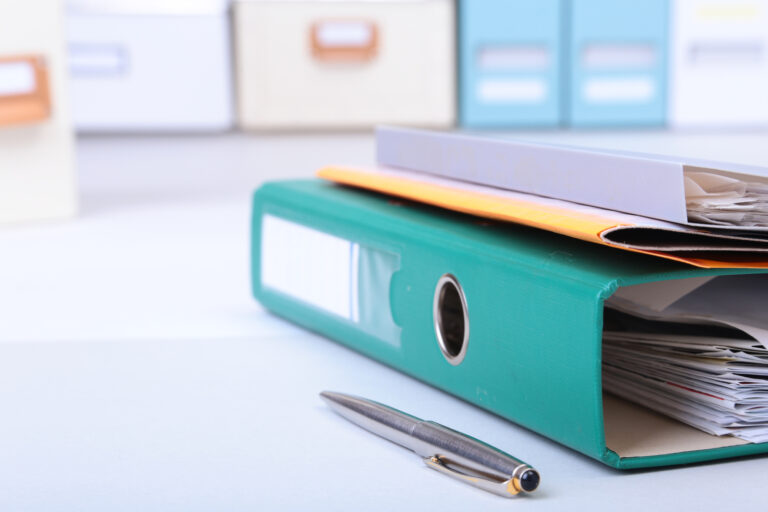
Use this comprehensive checklist of important papers to keep in case of emergency on hand in a binder, ready to go at a drop of a hat.
In the interest of full disclosure, I should tell you that I never met a list I didn’t love. In the face of an emergency, I’m as likely to organize my sock drawer as anything else. Being organized helps me quiet my mind and think rationally as opposed to panicking and forgetting essential tasks. So it should come as no surprise that the first thing I suggest you do on your journey to a more prepared life is to get yourself organized with a preparedness notebook.
I call this the grab-and-go binder because it’s the one you’ll want to grab on your way out the door in an emergency. If the worst happens — you wake up to the smell of smoke or the call comes telling you to evacuate now — this will be the thing you grab after your kids and pets. Your binder holds hard copies of all the details of life that help you navigate the electronic and bureaucratic world we live in. If nothing terrible ever happens, if your life flows by without a single serious event, you will still be grateful to have your paperwork organized and at your fingertips.
Your notebook might look different from mine. If you live in an apartment in a big city, keep a plan for how to get beyond the city limits. Are you in a hurricane-prone area? Keep a copy of local evacuation routes, as well as the numbers for places you can stay once you have evacuated the area. The beauty of this binder is that, as your personal guide to getting by in a crisis, it’s a continual work-in-progress. Pages can be added or removed, updated, and refined. It will serve you well in an emergency.
You can use whatever kind of binder you like; I prefer the type with a plastic overlay that allows you to insert a picture. I stenciled “Home Sweet Home” on mine, but you might prefer a picture of your house, your family, or maybe even a zombie. Add some filler paper, lots of dividers (I like the kind with pockets), and clear page protectors for important paperwork. Plastic sheets with small pockets designed to hold baseball cards are perfect for holding business cards and single keys.
Important Papers to Keep in Case of Emergency
Prepare a section in the binder for each family member. Include documents that would be potentially important to your ability to function and difficult to replace, such as the following:
- Adoption decree
- Birth certificate
- Driver’s license
- Immunization records
- Marriage license
- Passport
- Prescriptions for eyeglasses
- Medications
- Social security card
Be sure to add pictures of your dependents, especially if they would be unable to provide identifying information due to age or special needs. If you get separated, the photos will aid in finding them.
Don’t forget a section for your pets. Include an up-to-date picture, immunization records, and notes of any medications or health issues, as well as a list of pet-friendly emergency shelters.
Storage
Once your binder is complete, choose a dedicated spot to keep it. You might consider hiding it in plain sight in a bookcase or with your photo albums, or you might prefer to keep it in a more secure location. Just be sure it’s accessible in an emergency and your family knows where it is.
I store my original documents in my fire safe and keep copies in my binder. It’s a balance between security and accessibility, and you’ll have to weigh that yourself. This is especially true for numbers that could compromise your financial security like the personal identification number (PIN) for each of your automated teller machine (ATM) cards.

Other Important Documents
Housing
Keep key documents related to your house in another section of the binder. Mine contains the deed to our house, a copy of our home insurance policy, and a copy of my last real estate tax payment receipt. I’ve stashed copies of my house keys there, too.
Financial
Include a printout of each account and its PIN, as well as a copy of your credit card information. These should be in sealed envelopes for security reasons. You might want to keep a record of any valuables like jewelry or art pieces. Only you know what information will be critical in an emergency. I would far rather keep a copy of something that seemed a bit like overkill than find myself needing some documentation that just went up in smoke. You don’t need an entire tax return, but you might keep the cover sheet that shows how much tax you paid in the preceding year.
Contact information
How many people are unable to call friends and family if they don’t have access to the lists in their smartphones? Too many, I fear. After a terrible ice storm, people in my community had to spend valuable time compiling a list of vulnerable neighbors who needed to be checked on. Now that list is at my fingertips.
Create a hard copy of critical phone numbers, e-mail addresses, and mailing and street addresses. Include family and friends, of course, but also the numbers for your insurance companies, clergy, medical providers, and emergency services like the Federal Emergency Management Agency (FEMA). If you have pets, add your veterinarian’s number, as well as that of local animal shelters. Include the numbers for a couple of hotels you might relocate to if you needed to evacuate. I go into more detail about each of these categories later, but you need a jumping-off place.
A Great Gift
If a member of your household moves into independent living, you can give him or her a preparedness bind. Such a binder is a great house-warming gift for the newly independent young adult or even for a parent or grandparent who isn’t in the habit of thinking in terms of emergencies.

More from Prepping 101:
Excerpted from Prepping 101 by Kathy Harrison. Used with permission from Storey Publishing.
Frequently Asked Questions
What is a "grab-and-go" emergency binder?
A grab-and-go binder is a physical notebook containing hard copies of essential personal documents, identification, financial records, housing information, and emergency contacts. It is designed to be picked up immediately during an evacuation or crisis after ensuring the safety of family members and pets.
What kind of binder and supplies should I use?
You can use any binder you prefer, but a ring binder with a clear plastic front overlay works well for inserting a custom cover picture or label. Useful organizational supplies include:
• Filler paper for notes and logs
• Dividers with pockets to separate sections
• Clear page protectors to keep paperwork clean and secure
• Baseball card protector sheets for storing business cards and single keys
What personal documents should I include for each family member?
Create a dedicated section for every member of the household and include hard copies of documents that are hard to replace and critical for functioning after an evacuation, such as:
• Birth certificates and adoption decrees
• Passports and driver's licenses
• Social Security cards
• Marriage licenses
• Immunization records and eyeglasses prescriptions
• Current medication lists
• Photos of dependents (crucial for identification if separated)
How should I prepare documentation for pets?
Your pet section should include an up-to-date photo, immunization records, notes on health issues or medications, and a pre-compiled list of pet-friendly emergency shelters and local veterinarian contact numbers.
Should I store original documents or copies in the binder?
It is generally recommended to store original vital documents in a fireproof safe and keep copies in your emergency binder. This strikes a balance between protecting sensitive data from loss or theft and maintaining quick accessibility during a crisis. For high-security items like ATM PINs or credit card details, keep them sealed within envelopes inside the binder.
What housing and financial records are necessary to include?
Housing: House deeds, copies of home insurance policies, recent real estate tax payment receipts, and spare house keys.
Financial: Printouts of financial accounts, records of valuables (like jewelry or art), and relevant tax cover sheets.
Why is a hard-copy contact list important?
Many people rely entirely on smartphones for phone numbers and email addresses. If phone networks fail, batteries die, or you lose access to your digital devices, a physical contact list ensures you can still reach family, friends, insurance providers, medical offices, clergy, and emergency services like FEMA.