

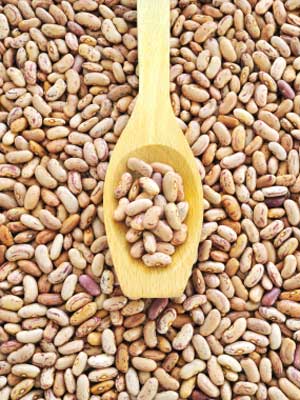
Americans already spend far less on food than the citizens of most other nations, but our recent national belt-tightening has translated into even less money spent on groceries. A consumer survey from 2009 shows that in order to save money, 80 percent of the American public is spending less on groceries, and half of those admit to replacing healthy foods with cheaper, high-calorie foods. But a recent study from the American Journal of Clinical Nutrition proves that if you choose the right foods, such as nuts, beans and grains, you can actually spend less on food and still achieve a higher quality diet.
The study’s authors used food-cost data from the U.S. Department of Agriculture and survey data from the long-running Harvard Nurse’s Health Study to examine the diets of nearly 80,000 women over several years. Each participant was assigned an Alternative Healthy Eating Index (AHEI) score. Higher AHEI scores are associated with lower rates of cardiovascular and other chronic diseases, and are achieved by eating more fruits, nuts, vegetables, soy, lean meats, fish, beans, whole grains and monounsaturated and polyunsaturated fatty acids.
The authors found that, although spending more money overall was associated with a healthier diet, you can improve your diet greatly without spending more. They examined changes in AHEI scores for a $1 shift in spending on various food groups, and found that greater spending on nuts, soy, beans and whole grains yielded a higher AHEI score, while greater spending on red and processed meats, and high-fat dairy products resulted in a lower AHEI. (Note that the study did not differentiate between industrial red meat and dairy and pasture-based options, which have far more healthful nutrient profiles.)
Shift Spending for a Health Boost
Health scores are determined by Harvard’s Alternative Healthy Eating Index.
Spend more on fruits and vegetables: +7
Spend more on whole grains: +18
Spend more on nuts and beans: +19
Spend more on red and processed meats: -10





