Put the tart, nutritious elderberry to good use in these elderberry recipes, wine, jelly, and even dumplings.
Are you ready to discover how to gather wild elderberries and turn them into something delicious? If you’ve ever wondered how to eat elderberry, this guide will walk you through everything from harvesting to creating different elderberry foods at home.
The elderberry is a small, dark fruit that grows in clusters and has been used for generations in traditional remedies and elderberry recipes. However, before using them, it is very important to understand how to prepare elderberry, as raw elderberries should not be eaten.
When you go out hunting elderberries, seek the blue variety (Sambucus canadensis) and not the red (S. pubens) … the latter are distasteful and in some areas even poisonous. Don’t worry about confusing the two, though, for they look quite different. The toxic plant produces bright-red fruit in dome-shaped bunches, while its edible cousin bears a flat cluster of rich-blue to purple-black berries with a whitish, “dusted” surface appearance. The riper the pickings, the more frosted they become. In fact — when fully ripe — these wild delights look very much as if Mother Nature had dipped them in powdered sugar.
The sugared look is deceptive, however … raw elderberries are tart, not very appetizing, and must be cooked to come into their own. Though the fruit is small and inclined to be seedy, this slight drawback is outweighed by its distinctive fresh taste and its versatility in the kitchen.
Here’s a hint that will make any berrying expedition easier: Carry a small bucket with a pail and wear a heavy leather belt on which you can sling the pail when you get to work. That way your container will be suspended at your waist within easy reach and you’ll have both hands free for easier and faster picking. If you plan to gather large quantities, take along another receptacle to collect the contents of your filled bucket.
And another, more important pointer: No good forager, of course, breaks down or tramples fruit-bearing bushes. Be just as careful in harvesting and moving through a wild patch as you would if the berries were cultivated. You, or someone else, will want to come back and gather more. And always spare some of the booty for the birds and animals which depend on that source for their food. You’ll still have plenty to eat if you leave those branches partly loaded … but if the shrubs are stripped, other creatures may go hungry.
When you pick elderberries, snip the clusters just below the fruit itself. Then separate the berries from the stems in a cool and shady spot (or even seated comfortably before the TV). The individual morsels are small, as I’ve mentioned, and the cleaning process takes quite a while. I’ve heard of using a comb for this purpose but never acquired the knack myself. All that work of sorting through your harvest will be repaid many times over when you enjoy the tasty dishes you can make with this free-for-the-gathering treat. Here are some elderberry recipes from my kitchen.

Elderberry Jelly Recipe
The most common use of elderberries is for jelly-making. Their juice produces a clear, ruby-red jewel-like delicacy with a sparkling flavor to match.
- 3 pounds elderberries
- juice of 1 lemon
- 1 box fruit pectin
- 4-1/2 cups sugar
- Heat the berries over a low fire until the juice starts to flow and then simmer the fruit for 15 minutes.
- Strain the liquid through a double layer of cheesecloth (easier if you cook the fruit in the evening and let it drain overnight).
- Mix the elderberry and lemon juices along with just enough water to make three cups of fluid.
- Add the pectin, bring the mixture to a boil and stir in the sugar. Bring the jelly to a full boil again for one minute, pour it into sterilized glasses and cover the jars with paraffin.
(Does anyone have a comparable recipe that uses honey instead of white sugar? — MOTHER)
Spiced Elderberries
- 10 cups ripe elderberries
- 5 cups sugar
- 2 tsp ground cinnamon
- 1/2 tsp allspice
- 1/2 tsp ground cloves
- 1 cup vinegar
- Cook the berries on the stove for about 20 minutes, until they’re slightly soft. (Stir very frequently while cooking.)
- Add the other ingredients and heat the mixture until it has barely thickened. (Test the consistency by dripping some of the solution from a spoon … the juice should divide into drops instead of flowing off in a stream.) When that stage is reached, pour the fruit into hot, sterilized jars and seal the tops.
Canned Elderberries
This delicious concoction can be used for many of the same purposes as cranberry sauce.
- 4 cups elderberries
- 1/2 cup sugar
Heat the berries over a low fire until the juice begins to run. Add the sugar (use more if you like your fruit sweet) and cook the combination until the liquid boils and all the crystals are dissolved. Pour the mixture at once into hot, sterilized jars and seal.
Frozen Elderberries
Elderberries are easy to freeze for use in pies throughout the year. Just stem and wash the berries, scald them in boiling water for one minute, cool them in ice water, and drain off the liquid. Cover the fruit with a syrup, made with 3 cups of sugar to 4 cups of water, and pack and freeze the sweetened mixture. (See the frozen food section of any good cookbook for full processing directions.)
Elderberry Dumplings
Berry Mixture
- 2 cups elderberries
- 3/4 cup sugar
- 1 tbs flour
- 2 tbs lemon juice
- 3/4 cup water
Combine all the ingredients, heat gently, and keep them warm while you make the dumplings.
Dumpling Mixture
- 3/4 cup flour, sifted
- 1 -1/2 tsp baking powder
- 1/2 tsp cinnamon
- 1/2 tsp salt
- 1/4 cup sugar
- 1/4 cup lemon peel, grated
- 1/4 cup milk
- 1 egg
- Add the other dry ingredients to the sifted and measured flour. Mix the milk and the egg in a small bowl and stir them into the flour combination until the dough is just blended.
- Now pour the hot berry mixture into a casserole and drop in small spoonfuls of the dumpling batter. Bake the dish at 400 degrees Fahrenheit for 25 to 30 minutes until the pastry balls are lightly browned. Serve the dessert warm with cream or vanilla ice cream.
Of course, no collection of berry recipes would be complete without a pie. Let’s call this one …
Grandmother’s Favorite Elderberry Pie Recipe
Use whatever method you prefer to make pastry for a double-crust pie. Line a nine-inch pie tin with dough and reserve the top crust. Then, in a large bowl, mix:
- 3-1/2 cups elderberries
- 1 cup sugar (more if you have a sweet tooth)
- 1/4 tsp salt
- 2 tbs cornstarch or tapioca
- 1 tbs lemon juice
- 1 tbs butter
- Mix the ingredients and pour them into the pie shell. Top the creation with the reserved upper crust and cut vents in the lid to let the steam escape. Bake the pie in a 400 degrees Fahrenheit oven for 40 to 45 minutes and serve it warm or cold with cream or vanilla ice cream.
- Another neat pie trick is to add about one cup of elderberries to your favorite apple filling for bright color and a fresh tang. (Not everyone enjoys the characteristic taste of this fruit “as is,” however, and some foragers prefer to dry the berries before popping them into the pastry or using them for other purposes. — MOTHER)
And here, for lovers of fine wine, is a recipe for a beverage made from elderberry flowers.
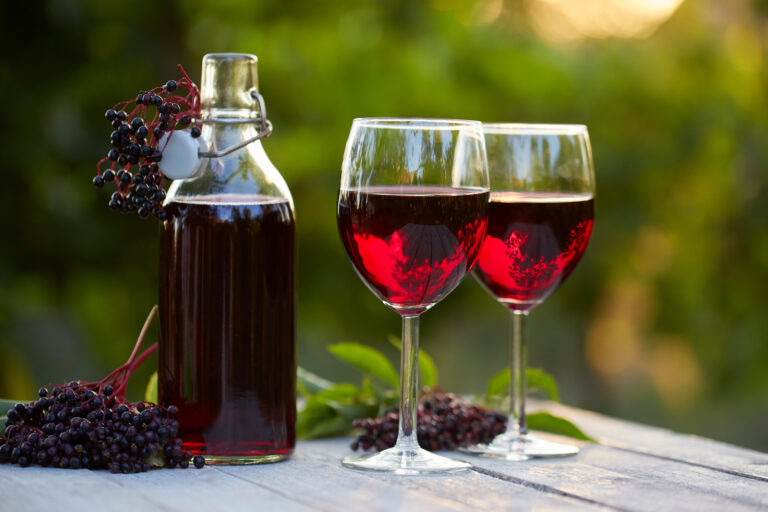
Elderberry Flower Wine Recipe
- 1 quart firmly packed blossoms, separated from the stems
- 3 gallons water
- 9 pounds sugar
- 3 pounds seedless raisins, chopped
- 1/2 cup strained lemon juice (about 4 lemons)
- 1 cake compressed yeast
- Combine the sugar and the water and boil them for about five minutes to make a thin syrup. Pour in the blossoms and mix them well.
- Then cool the liquid to lukewarm and add the raisins, lemon juice, and yeast.
- Put the mixture into a large crock and let it stand for six days, stirring three times daily. Then strain the wine and put it aside to age for several months.
- Finally, pour the liquid into bottles or fruit jars and cap the containers. The result is a light, delicate drink.
Originally published as “The Delightful Elderberry” in the July/August 1973 issue of MOTHER EARTH NEWS.
Frequently Asked Questions
What are the best elderberry foods to try at home?
Some of the best elderberry foods include jelly, syrup, pies, dumplings, and teas. These recipes are easy to make and help you safely enjoy elderberries while maximizing their flavor and health benefits.
How to eat elderberry safely?
If you’re wondering how to eat elderberry, always consume them cooked, dried then cooked, or cooked then processed. Raw elderberries can be toxic, so proper preparation is essential before adding them to any recipes.
How to cook elderberry for beginners?
Learning how to cook elderberry starts with simple recipes like jelly or syrup. Boiling the berries helps remove toxins and enhances their taste, making them safe and delicious to use.
How to prepare elderberry before cooking?
To understand how to prepare elderberry, remove stems, wash thoroughly, and cook the berries. Avoid eating raw berries, and always use heat-based methods like boiling or simmering.
What are popular elderberry recipes?
Popular elderberry recipes include elderberry jelly, pies, dumplings, syrups, and wines. These recipes are widely used because they are simple and bring out the natural flavor of elderberries.
Can I use elderberry powder in recipes?
Yes, elderberry powder recipes are very popular. You can add the powder to smoothies, teas, baked goods, or even desserts for an easy and convenient way to enjoy elderberries.
Is elderberry hard to cook?
Not at all. Once you learn how to cook elderberry, it becomes very easy. Most recipes involve boiling or simmering, making it beginner-friendly and accessible for home cooking.