If you garden without full sun, we’ll show you how to bask in great garden harvests by choosing the best vegetables that grow in shade, which include greens, culinary herbs such as chives, cilantro, and oregano, and root crops such as carrots and potatoes. You’ll also learn other tips for gardening in shaded conditions, such as growing in raised beds and using reflective mulches. Less-than-prefect growing conditions don’t have to prevent you from harvesting plenty of delicious, homegrown food!
For many gardeners, the optimum conditions most vegetables prefer — eight to 10 hours of full sun — just aren’t possible. Whether it’s from trees or shadows from nearby buildings, shade is commonly a fact of gardening life. Luckily, shade doesn’t have to prohibit gardeners from growing their own food. If you start with the best vegetables that grow in shade, take extra care to provide fertile soil and ample water, and consider using a reflective plastic mulch, you can establish a productive shade garden and harvest a respectable variety of veggies.

How Much Shade Is Too Much?
All shade is not equal. Some shady conditions will yield much more produce than others will, while some areas are better left for hostas and moss. Gardeners should be familiar with the different types of shade, but should also keep in mind that measuring how much shade your garden gets isn’t always easy.
For instance, nearby trees may cast dappled shade on your garden for some or all of the day. If the tree canopy is high enough and the branches aren’t too dense, the conditions nearby can be shady but still fairly bright. Trimming any low-hanging branches can help let in more sunlight.

More challenging than dappled shade is partial shade, which can be quite variable, ranging from only a couple of sunny hours and many hours of shade to the opposite. Shade from buildings is more difficult to deal with than shade from trees, as it often plunges the garden into total shade for large parts of the day. As a general rule, if you have a few hours of full sun but dark shade for the rest of the day, you can grow some crops, but the yields won’t be as high as if you had bright or dappled shade during the rest of the day. Maybe your garden has a little of everything: some areas that get a couple of hours of sun, some that get dappled shade and some areas that are in complete shade. In addition, the amounts of shade will change seasonally! It can be difficult to add up the exact amount of sun your crops get in such a scenario. Keep an open mind about what you may be able to grow in your conditions, and use our chart of the best shade-tolerant vegetables as a guide for where to start.
What Vegetables Grow in Shade?
When considering which crops to grow in shady areas, think of them in terms of leaves and roots. Crops we grow for their leaves (kale, lettuce, spinach) and those we grow for their roots (beets, carrots, turnips) will do fairly well in partially shady conditions. (The crops we grow for their fruits — such as eggplants, peppers and tomatoes — really do need at least six hours of full sun per day.)
| Crop | Shade Notes | Growing Tips |
| Arugula | At least three to four hours of sun per day. | Arugula welcomes shade, as this crop is prone to bolting as soon as the weather turns warm if in full sun. |
| Asian greens | At least two hours of sun per day. | Asian greens such as bok choi (also spelled “pac choi” and “pak choi”), komatsuna and tatsoi will grow wonderfully with a couple hours of sun plus some bright shade or ambient light. |
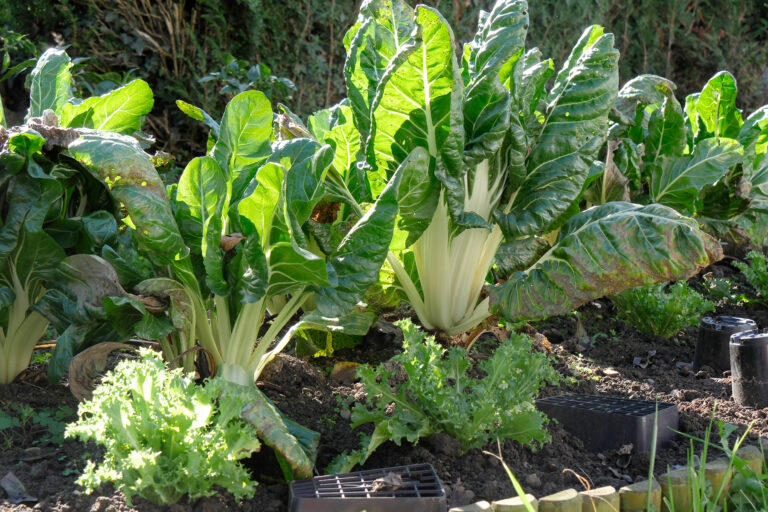
| Chard | If you grow chard mainly for its crisp stalks, you will need at least five hours of sun per day; if you grow it mainly for the tender baby leaves, three to four hours of sun per day will be enough. | Expect chard grown in partial sade to be quite a bit smaller than that grown in full sun. Baby chard leaves are excellent cooked or served raw in salads. |
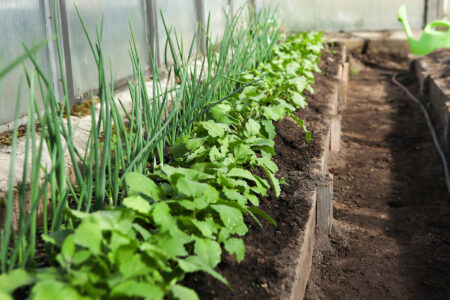
| Culinary herbs | At least three hours of sun per day. | While many culinary herbs need full sun, chives, cilantro, garlic chives, golden marjoram, lemon balm, mint, oregano and parsley will usually perform well in shadier gardens. |
| Kale | At least three to four hours of sun per day. | You’ll notice only a small reduction in growth if comparing kale grown in partial shade with kale grown in full sun. |
| Lettuce | At least three to four hours of sun per day. | Lettuce is perfect for shadier gardens because the shade protects it from the sun’s heat, preventing it from bolting as quickly. Often, the shade can buy a few more weeks of harvesting time that you’d get from lettuce grown in full sun. |
| Mesclun greens | One of the best crops for shady gardens. Grows in as little as two hours of sun per day and handles dappled shade well. | The delicate leaves of this salad mix can be harvested in about four weeks, and as long as you leave the roots intact, you should be able to get at least three good harvests before you have to replant. |
| Mustard greens | At least three hours of sun per day for baby mustard greens. | Mustard grown for baby greens is best-suited for shady gardens. |
| Peas and beans | At least four to five hours of sun. | If growing these crops in partial shade, getting a good harvest wil take longer. Try bush and dwarf varieties rather than pole varieties. |
| Root vegetables | At least four to five hours of sun per day for decent production. | Beets, carrots, potatoes, radishes and turnips will do OK in partial shade, but you’ll have to wait longer for a full crop. The more light you have, the faster they’ll mature. Alternatively, you can harvest baby carrots or small new potatoes for a gourment treat that would cost an arm and a leg at a grocery store. |
| Scallions | At least three hours of sun per day. | This crop does well in partial shade throughout the growing season. |
| Spinach | At least three to four hours of sun per day. | Spinach welcomes shade, as it bolts easily if in full sun. If you grow it specifically to harvest as baby spinach, you’ll be able to harvest for quite a while as long as you continue to harvest the outmost leaves of each plant. |
Reflective Mulches and Surfaces
Reflective mulches, including metallic mulches, are a great tool for gardeners growing in shady conditions, and for some crops in some regions, the benefits can be huge. University studies have shown increased yields in crops such as peppers, tomatoes and strawberries.

Reflective mulches — such as the red plastic mulch some tomato growers have become fond of — reflect light up onto the leaves of plants. Mathieu Ngouajio, Associate Professor of Vegetable Crops in Michigan State University’s Department of Horticulture, says that under partial shading, reflective mulches have been shown to provide the following advantages: increased amount of light in the plant canopy, increased air temperature in the plant canopy, increased photosynthesis, reduced incidence of certain insects (particularly aphids and thrips), and increased produce yield and quality. Ngouajio recommends metallized reflective mulches (which look like aluminum foil) because they reflect the entire light spectrum and will have the greatest impact on increasing photosynthesis and, therefore, growth.
Creating other bright, reflective surfaces near your garden will also benefit plants. If you’re growing near a wall, R.J. Ruppenthal, who shares his experiences with his small, Bay Area garden in his book Fresh Food From Small Spaces, recommends painting the wall white or another light color.

“A bright-painted wall that faces the sun for any period of the day, particularly south-facing, will reflect an enormous amount of light and heat,” Ruppenthal says. “This speeds up growth rates quite a bit, and can compensate for some other shade during the day.”
We encourage you to try reflective mulches (aluminum foil should also work nicely) and reflective surfaces in your own shady garden. If you use them, let us know how they work out!
Soil Considerations
If you’re going to push the envelope sun-wise, make sure your soil is well-prepared. Amend your garden soil with plenty of mature compost, and loosen the soil to at least a foot before planting your crops.

The roots of nearby shade trees present a challenge all their own. The roots will wick moisture and nutrients away from your crops, causing them to need more frequent watering and fertilizing, and the roots will eventually invade your well-prepared soil. To overcome this, build raised beds or grow in containers filled with good-quality potting soil. If you’re building a raised bed, try lining the bottom of the bed with discarded carpet to help keep tree roots at bay.
Pests and Diseases in Shady Gardens
In any garden, the key to successful pest and disease management is to pay close attention to your plants and deal with problems right away. This is doubly important in shady gardens, where some disease problems can be exacerbated by the low light levels, and pests such as slugs and snails — which thrive in damp, shady conditions — can decimate your lettuce crop in a flash.

Check your garden daily for the first signs of pests. Chewed leaves are most likely from slugs or snails. Handpick these pests whenever you see them. Also, a reflective mulch brightening your garden will do double duty as a pest deterrent: The reflective surface will confuse many pests, and they’ll tend to avoid the area.
Trial and Error Shade Gardening
Shade gardening experts tend to champion a trial-and-error approach to growing without full sun, all offering the same advice: Just try it and see! Some vegetables will grow better in your conditions than others will. The quality of shade, your soil type and level of fertility, ambient temperature and how much moisture the plants get all play a role in determining the success of the crops.
Regional conditions also play a part in how well your garden will handle shade. In the South and at high altitudes, some shade can be a good thing during summer to protect plants from the intense sunlight. In cooler, less-sunny areas, such as the Pacific Northwest, growing in shade is a bigger challenge. Orientation can have an effect on the garden, too: North-facing slopes are already cool and shady, but south-facing slopes tend to be hot and dry during the summer. South-facing gardens benefit from a bit of shade to conserve moisture and regulate temperatures slightly.
Have a blast experimenting in your garden. Rather than feeling limited by less-than-perfect conditions, try to see shade as a fun challenge to overcome, and we’re betting you’ll eventually enjoy plenty of delicious, homegrown food!
Read more: Year-Round Gardening Tips for Your Region
Reflective Mulch Sources
- Harris Seeds 800-544-7938
- Johnny’s Selected Seeds 877-564-6697
- Grow Organic: Peaceful Valley Farm Supply 888-784-1722
Colleen Vanderlinden has been gardening organically for more than 12 years, and has been in love with plants for as long as she can remember. She currently rests her garden clogs on a quarter-acre plot near Detroit.