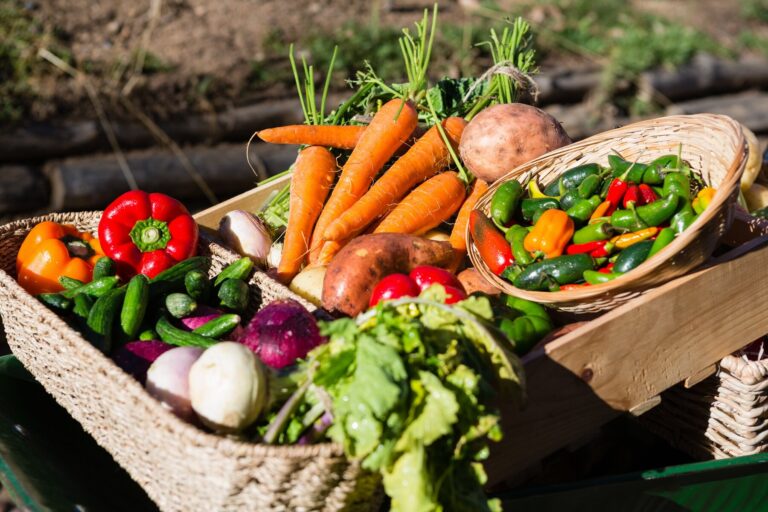
10 Best Garden Crops for Beginners

Plan your first garden with these 10 easy crops that offer great cooking possibilities.

garden, garden plan, how to start a garden, first garden, food garden
Discover the pleasures of gardening by taking on crops that can grow easily in your first garden.
JOHN IVANKO
Article Tools
Bookmark and Share

If you want to grow a garden next spring, it’s never too early to start planning. One of the best ways to “learn as you go” is to read the seed catalogs that many companies will send for free. One of our favorites, with lots of gardening advice and great color photos, is Johnny’s Selected Seeds.

RELATED CONTENT

If you’re a beginner, consider starting with the 10 crops discussed below. All are easy to grow, and this combination offers lots of possibilities for cooking. Some of these crops are best grown by setting out started seedlings, but most are easy to grow from a packet of seeds.

1. Radishes. Radishes do well even in not-so-great garden soil and are ready to harvest in only a few weeks. Plant the seeds in spring and fall.

2. Salad greens (lettuce, spinach, arugula and corn salad). Pick your favorite, or try a mix — many companies sell mixed packets for summer and winter gardening. Plant the seeds in spring and fall, and you can pick salads almost year-round.

3. Green beans. Easy to grow and prolific. If you get a big crop, they freeze well, and they’re also delicious when pickled as dilly beans. Start with seeds after all danger of frost has passed.

4. Onions. Start with small plants, and if they do well, you can harvest bulb onions. If not, you can always eat the greens.

5. Strawberries. Perfectly ripe strawberries are unbelievably sweet, and the plants are surprisingly hardy. Buy bare-root plants in early spring. Put this perennial in a sunny spot and keep it well weeded.

6. Peppers. Both hot peppers and bell peppers are easy to grow. Start with plants and let peppers from the same plant ripen for different lengths of time to get a range of colors and flavors.

7. Bush zucchini. This squash won't take up as much room in your garden as many other types, and it’s very prolific. Start from seeds or transplants. You won't need more than a few plants for a bumper crop.

8. Tomatoes. There’s just no substitute for a perfectly ripe homegrown tomato, and it’s hard to go wrong when you start with strong plants. If you get a big crop, consider canning or freezing.

9. Basil. Many herbs are easy to grow, but basil is a good choice because it’s a nice complement to tomatoes. Basil is easy to grow from seeds or from transplants.

10. Potatoes. An easy-to-grow staple that stores well when kept cool. A simple and low-maintenance approach is to plant potatoes in straw rather than soil. ‘Seeds’ are whole or cut sections of potatoes, sold in early spring.

Comments

  • LUCI Dawson 4/10/2007 12:00:00 AM

    For how to grow potatoes in straw, check out this recent post in
    the Whole Foods & Cooking
    section:http://www.motherearthliving.com/issues/motherearthliving/whole_foods/when-to-plant-potatoes_421-1.html

  • GAIL Erman 1/4/2007 12:00:00 AM

    The only herb that survived the move indoors for the winter is
    rue. I know it is good for discouraging flies but whatelse can it
    be used for? How can I grow better garlic. Last year it was very
    small and not in tight bulbs. Thanks
    AA 먀5ﭨ5Ń땰5湥tEﰀ5Ơ5Ň敧敮慲潴r5

  • JENNIFER Steele 1/4/2007 12:00:00 AM

    BHarrisFor really hot weather vegs, try looking at the zone
    requirements in any seed catalog. I'm guessing you will want zones
    8 and above. You will be looking at crops like tomatoes, peppers,
    basil, melons, etc. One suggestion I could make is to mulch your
    pots heavily and have deep water trays under every thing. Enough
    water to allow the plants transpiration will be your biggest
    challenge. Using deeper pots may help so you can mulch
    deep.

  • JENNIFER Steele 1/4/2007 12:00:00 AM

    FJohnsonThis is a great way to grow potatoes. My small son and I
    did this a couple years ago, when I was pregnant and did not want
    to have to dig the potatoes. We put cages made of wire right on the
    ground, and dug a shallow hole in the ground under it to retain
    water(we did this in our hard-packed front yard). We put in the
    potatoes, straw, and a little manure. When harvest time came we
    just unhooked the wire and pushed over the pile. It was wonderfully
    easy. The only thing I will do differently next time is to get some
    root crop fertilizer. Plain manure really grows great tops. Ha Ha.
    Also, if it's windy you might have to put a sheet or something to
    keep them from drying out. I had no trouble at all covering them in
    severe cold weather, though. The wire cages are easy to pin plastic
    or old sheets to.Good Luck!

  • woodsman 1/2/2007 12:00:00 AM

    Yes lay the potatoes on the ground then cover them with the
    hay/straw. A little manure, compost, or fertilizer can be added at
    this time. It is a good idea to allow the straw to remain on the
    ground after harvest to rot.Just keep adding more hay each yr. as
    needed. After a few yrs. no other fertilizer need be added. Your
    soil will become rich, black, and full of earth worms. Household
    garbage can be buried in the ground under the straw, this will add
    to your soil's fertility.

  • Faye Johnson 1/1/2007 12:00:00 AM

    Thanks for all the great tips and advice :) I think I am going
    to give this a try this year! I do have just one more quick
    question. Do you lay the potatoes on the ground and cover them with
    hay, or put them in it after you have it laid down? I am thinking
    you would lay them on the ground so they can reach the soil more
    quickly. Am I right. Thanks again for all your help:)

  • BETTY HARRIS 12/31/2006 12:00:00 AM

    I've seen this given before but don't know how much straw, etc.
    but you'd need to have it probably at least 8-12 inches I think
    because you'd need it deep enough to allow the tubers to grow and
    still be covered by straw. If you aren't sure you could use a
    mixture of straw and soil or compost. You have to have enough
    structure for the plants to hold themselves up as they grow. I
    wonder what you could find out by doing a search on wikipedia or
    organic gardenings website. have you tried a search on this website
    to see if the info is printed somewhere else?If you plant above
    ground in straw you'd have to water frequently because the water
    would run through to the soil beneath. i think.

  • Faye Johnson 12/31/2006 12:00:00 AM

    I have a question for anyone out there that may know the answer.
    In #10 of "10 Best Garden Crops For Beginners" It states that it is
    simpler to plant your potatoes in straw rather than soil. Can
    anyone explain how to do this? Any special way the straw has to be
    laid out, How deep or wide it should be, ect... Any and all answers
    are appreciated :)Posted by: FJOHNSON/December 31,2006

  • Faye Johnson 12/31/2006 12:00:00 AM

    Sorry, forgot this. How much water should they get since they
    would be above ground? As you most likely have already figured out,
    I am new to this:) So it would probably be easier to just give the
    directions from start to finish. Would be a lot easier for us
    "Blonde" gardeners LOL! Thanks Again!

  • woodsman 12/31/2006 12:00:00 AM

    Potatoes grown under hay or straw should be covered by at least
    eight inches of straw, ten is better. And you can add more straw as
    the tops grow taller. The straw in the row should be at least two
    ft. wide. But it is better to cover the ground completely with
    straw in the area you plan to plant your potatoes, this helps with
    weed control and moisture retention. It is better to till the
    ground the first year you use this method, especially if you have
    heavy grass or weed growth. Here in Maine where we have abundant
    rain fall it is not necessary to water the potatoes, as the roots
    from your seed tubers will grow down into the ground and find
    plenty of moisture. In dryer states maybe watering is necessary, I
    dont know about that. In any case watering wont hurt. Just put your
    hand under the straw, if it feels moist no need to water. also keep
    watch of the tops, if they look green and healthy your ok. Hope
    this helps and just remember the thicker the layer of straw the
    better. As long as the tops can grow up to the surface you are
    fine.

  • woodsman 12/30/2006 12:00:00 AM

    BHARRIS maybe you could use garden netting to shade your veggies
    from the sun. That would reduce the heat problem some. also would
    help with water retention. Good luck, Richard

  • BETTY HARRIS 12/30/2006 12:00:00 AM

    For local conditions and plants.... consult the local garden
    club and the local county extention agent... and check out garden
    info in the local newspaper.

  • LARRY Port 12/30/2006 12:00:00 AM

    anyone out there know anything about veggie gardens in Tucson,
    AZ??? It gets a little hot here in the summer, but that lets us get
    in an additional crop. I haven't done this in years, and need some
    advice on the type of veggies that will do well here. Thanks for
    your time, Larry

  • BETTY HARRIS 12/29/2006 12:00:00 AM

    I was raised on a farm and grew my own vegs and raised animals
    for another 16 yrs but I have a problem that I need help with... In
    a garden plants don't get as hot as they would on a balcony which
    is where I'd like to raise something. It is on the 3rd floor and
    faces the south and it gets too hot for me in the summer but I am
    hoping that it's not too hot to raise some kind of vegs....anyone
    have any idea which vegs would be able to tolerate very high temps
    and full sun? Anything besides corn because I don't eat corn.
    Thanks for any suggestions.

  • BETTY HARRIS 12/29/2006 12:00:00 AM

    I need help with how to ask a different question. I noticed that
    much of the issue was on alternative energy but nothing that I saw
    talked about using the ambient temp of the earth. A friend designed
    a courthouse in OK that had double walls and under ground it had
    pipes that air was circulated through by means of a solar powered
    fan which pulled the air from the pipes into the building.... it
    kept the inside temp of the courthouse at 68 degrees all year
    round. that meant that in the winter they only needed a small
    amount of energy to suppliment this and raise the temp to a
    slightly more comfortable level and in the summer it kept it the
    same temp. Now what do you call this and how can we learn more
    about it? When people are building a new house why would they do
    anything else? Yes it takes more to build because you have to have
    a foundation that goes down lower than most houses but this would
    solve so much of your energy needs.anyone know what I'm talking
    about?

  • BETTY HARRIS 12/29/2006 12:00:00 AM

    Thanks, I'll search online for geothermal exchange...and I
    appreciate the other response regarding pots, etc. but that's not
    the issue as far as raising plants is concerned...the MAIN issue is
    WHAT vegs can handle this kind of heat? I've built all kinds of
    pots, raised beds, etc...just need to know what vegs can handle the
    direct sun and high temps. It's especially going to be important
    with global warming.Oh, and it's not WALLA but the French for there
    you have it is Voila!sorry, 2 yrs of french, never used it except
    for noticing that most people don't know how to pronounce the
    french word...dang me for noticing that and for mentioning
    it...

  • BETTY HARRIS 12/29/2006 12:00:00 AM

    Thanks for the geothermal exchange term..I forgot that you can
    find all kinds of stuff on Wikipedia...where I found it is also
    called Ground source heat exchange or heat pump...some use fluid
    that runs through the pipes in the ground and some use air. I'd
    think that air would be cheaper than having to maintain a fluid,
    etc. Why go to the extra expense and maintenance problems I
    think.Maybe i can find out my answer on vegs
    also...hmmmm.

  • JOE clarke 12/29/2006 12:00:00 AM

    Dear Fellow Mother Earth Readers; I sure hope that you all enjoy
    your winterseason and I would like to offer you this veryefficient
    planting method," free of charge " OFCOURSE, Most everyone has
    heard of the "earthbox growing method, it really does work. I
    haveconcocked my own version of this wonderful invention. Why not
    try it this way? Five gallonpails are available everywhere, usually
    free.Drill a 3/4" hole about 3" down from the top and another about
    the same up from the bottom. Get a piece of 5/8" black irrigation
    tubing about 6"long and place it through the lower hole and intothe
    upper side of a small plastic container, like a margerine tub. I
    used worn out 8" pots cut downto about 4" high. Next you will need
    a 16" or sopiece of that same tubing. Install it through the upper
    hole in the bucket side and down into the top of your inner
    container. This will allow you to pour your water into the upper
    tube and down into the empty space you have created in the middle
    of your 5 gallon earth pot. Fill with yourfavorite blend of sand,
    manure, compost or whatever you need for your choice of plants.
    Install a piece of plastic sheeting over the top with a small hole
    in it for the plant to protrude through and " WALLA ". You have
    just made an excellent earth box for just a little effort and a
    heck-of-a-lot less money than store bought. " Toomuchfun " Joe
    Clarke

  • ANNE Hepp 12/29/2006 12:00:00 AM

    BHarris, what you're describing is a kind of geothermal
    exchange. Our local (rural W. Co.) electric association is
    encouraging consumers to install such a system in either new
    construction or as a retro-fit.

Add Your Comment

Please note that there is currently a problem with the comments function and your comment may or may not post successfully. We are working to correct the problem and thank you for your patience. 

You can use this comment form to enter your personal experiences or additional information and resources that you'd like to share with Mother Earth News readers. Your helpful advice will be posted on this page.  E-mail addresses are never displayed on comments, but they are required to confirm your comments.

Line breaks and paragraphs are automatically converted — no need to use <p> or <br> tags.

New to Mother Earth News?
Sign up to share comments.
Asterisks(*) indicate required fields.
Name*
Your name appears next to your comment.

E-mail Address*
This will be your login ID.

City State Zip Code

Password*


Confirm Password*

Comments
1500 character limit (Offensive materials and/or spam will be removed, no HTML allowed)
Please Note: Your sign-up must be verified via e-mail before your comment is published.


Subscribe Today - Pay Now & Save 66% Off the Cover Price

First Name: *
Last Name: *
Address: *
City: *
State/Province: *
Zip/Postal Code:*
Country:
Email:*
(* indicates a required item)
Canadian subs: 1 year, (includes postage & GST). Foreign subs: 1 year, . U.S. funds.
Canadian Subscribers - Click Here
Non US and Canadian Subscribers - Click Here

Lighten the Strain on the Earth and Your Budget

Mother Earth News is the guide to living — as one reader stated — “with little money and abundant happiness.” Every issue is an invaluable guide to leading a more sustainable life, covering ideas from fighting rising energy costs and protecting the environment to avoiding unnecessary spending on processed food. You’ll find tips for slashing heating bills; growing fresh, natural produce at home; and more. Mother Earth News helps you cut costs without sacrificing modern luxuries.

At Mother Earth News, we are dedicated to conserving our planet’s natural resources while helping you conserve your financial resources. That’s why we want you to save money and trees by subscribing through our Earth-Friendly automatic renewal savings plan. By paying with a credit card, you save an additional $4.95 and get 6 issues of Mother Earth News for only $10.00 (USA only).

You may also use the Bill Me option and pay $14.95 for 6 issues.