

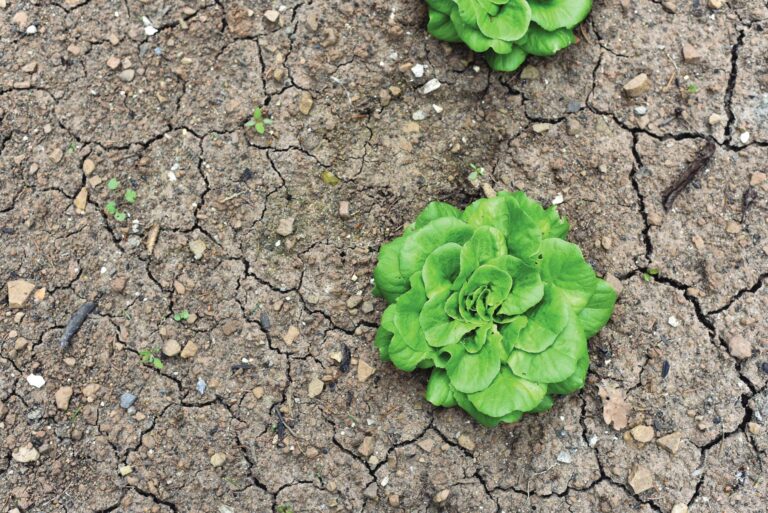
What are some dry land farming methods? Pick up tips for selecting desert-hardy vegetable varieties for a dry climate and tactics for successful growing.
Earth’s climate is in a perpetual state of change. We’re either cooling on our way toward another ice age or warming up from a previous one. On a smaller scale, farmers know that every year will be slightly different depending on the constellations of rain and temperature. With so much change going on, plants must be equipped with genes that allow them to change with the earth’s climate. From this large gene pool came many characteristics that define the contemporary garden vegetables we know today.
What are Some Dry Land Farming Methods?
For centuries, farmers and plant breeders have been selecting seeds of individual plants to improve the quality of their crops. The chosen plants may have larger fruits, greater yields, improved disease resistance, a different growth habit, or enhanced flavor. The places where these changes took place tell us much about what the farmer was seeking to better cope with local environmental conditions.

Know Your Terms
- Landrace cultivars were developed by farmers and gardeners around the world and are super-adapted to the local microclimate. If a farmer ceases to replant a landrace, it’ll vanish from existence when the last viable seed dies.
- Hybrids are the result of two species that cross-pollinate naturally or are crossbred artificially by plant breeders. The seed produced from this cross will carry some genetic characteristics of either parent, with highly variable results. Seeds of hybrid plants can be sterile.
- Heirloom is a term of affection for an old cultivar or landrace still in cultivation and thus available to buy from seed. The trend toward growing heirlooms helps keep plants in continuous cultivation, which is the only way to preserve those plants’ unique genetic characteristics for posterity.
How Vegetable Cultivars Differ
Just because a plant is an heirloom doesn’t make it better. In fact, planting the wrong heirloom can be a total disaster when it’s not adapted to your garden or climate. To understand how the world of heirloom plants works, let’s look at tomatoes as an example. This vegetable was native to Central and South America, and therefore genetically equipped to perform well in hot climates. When it was grown in northern Europe or Britain, the cool summer, rainfall, and shorter growing season didn’t allow enough time for the fruits to fully ripen. In the farms of this region, landraces evolved that fruited earlier under cooler conditions. Some of these evolved into named cultivars with better adaptation to summer rain, humidity, lower temperatures, and short seasons. These heirlooms won’t grow well in the desert or in drought or dry times because they aren’t adapted to growing in arid conditions and may demand more water than standard commercial cultivars, particularly in hot climates.

Similarly, the original tomato evolved elsewhere in the old world. Farmers in northern Africa and the Middle East had droughty conditions and extreme heat. In these regions, the farmers selected the most vigorous plants to create their landraces, and these produce some of the most desert-hardy plants possible. These heirlooms may not crack in high-UV sunlight. They may be genetically programmed for growing with less water, and their leaves may be smaller to lose less moisture in extreme low humidity and wind.
Pick Cultivars for Desert, Drought, and Dry Times
There are many characteristics unique to each vegetable cultivar, both modern and heirloom. It’s important to know what to look for when selecting them for low-water gardens and for the rigors of desert climates.
Vegetable cultivars are defined by their region of origin. Some cultivars are developments by science for nations to improve food production and reduce famine. Knowing the names of these countries of origin or regions where breeders hoped to improve agriculture can help you zero in on a cultivar strictly by its designated climate preference.

Selecting vegetables that originate in climates similar to yours will be your first requirement for success. These plants are also ideal for foodies who delve into the unique dishes of distant lands where their endemic cultivars lend a particular character to their flavors. For example, Middle Eastern cuisine uses less-sweet tomatoes, and unless you grow them, your dishes may not be quite the same. This is something important to immigrants and second generations who are trying to preserve their heritage and may seek out such plants to assist in maintaining this culinary inheritance.
When growing vegetables with as little water as possible, success depends on selecting the right cultivars naturally adapted to withstand minimal humidity. The world is full of little-known private landrace strains of common vegetables that maintain an edge over garden cultivars. You’ll soon realize how important more lengthy descriptions can be to discovering the stalwart strains that are so different from cool, moisture-loving versions of the very same vegetable. The real rewards come when you find a whole new kind of vegetable to grow, one that may be little-known outside isolated desert villages. This will make you an integral part of a collective effort to expand diversity and support sustainable agriculture through continuous cultivation of a vanishing heritage.
Tips for Growing in Dry Climates

In an arid climate, the most challenging aspect of growing vegetables is getting them started. Whether you sow directly in-ground or start your seeds ahead of time indoors, they all must eventually face the heat, wind, and low humidity. Well-started plants produce larger root systems better able to withstand the rigors of weather. Any plant not at the peak of health becomes more vulnerable in the low-water garden or in the extremes of the desert. The old expression rings true: A garden well begun is indeed half done.
Divide the Season in Two
Where the growing season is shorter, such as high-and-dry communities of the Rockies and Sierra Nevadas, vegetables may fail to ripen properly before the frost comes. If they do ripen, there’s often no time for a second or third picking. Vegetables with a long lifespan that produce their crops over many consecutive weeks rather than all at once won’t have time to reach their full potential. Starting long-lifespan vegetables, such as tomatoes, weeks ahead of time in the warmth of a greenhouse or indoors will help them ripen their first fruits earlier and allow more time for additional yields.
In the desert, the growing season is split by a brutal midsummer dormant season, and a “second spring” falls in late September. Here, crops produce very early, then some hunker down for summer and start up again in early fall. Others simply die in the heat. In the first season, tomato seedlings are planted out in late January or early February in the low desert. The earlier these plants get started, the earlier the harvest begins, since its duration will be terminated by the soaring temperatures of desert summer. New tomato plants can be started indoors during the height of summer to plant out fresh in fall. In the high desert, there’s also a split in the season, but with later spring frost, starting early extends the season, increasing pre-summer yield before high temperatures interfere with flowering. Here, too, new plants can go out in fall to produce well into the holidays.

Control Moisture Levels
The first few days after germination are the most vulnerable in the life of a vegetable plant. Out in the garden, it can be difficult to maintain steady moisture levels in dry conditions where temperatures fluctuate radically. Hot days literally suck moisture out of plant tissues and the soil at a startling rate, and unless you use a cloche or row covers, it can be nearly impossible to keep seedlings moist enough. For this reason, starting plants indoors or in a greenhouse is the best way to nurse them through those first days in an evenly moist environment. Even indoors in low-humidity climates, you may need further enclosure so the moisture in the soil actually humidifies the air around each plant.
A simple solution is to keep your seedling pots in a deeper box and attach a clear sheet of plastic or glass over the top for a miniature indoor greenhouse. After plants germinate, open the top each day for a few minutes to freshen the air. Open the top for a bit longer each day to harden plants off to drier conditions gradually.
To water the plants, pour tepid water into the bottom of the container, and the pots will wick up the moisture. This will prevent dislodging the seed or tiny roots, which might happen when you apply water to the surface. When seedlings become too large, leave the cover open or cut off the lid. Finally, move the containers outdoors during the day in a sheltered location to stimulate growth and help them adapt to wind before finally planting out into the garden.
Problems with Store-Bought Seedlings

While buying potted seedlings can speed up or simplify your planting process, it’s not always the best way to go. Here’s why:
Diversity. Seedlings sold in chain stores are usually the most common, general-purpose vegetable cultivars, with few heirlooms. The only way to grow specialized cultivars for a drought-resistant garden is to start them from seed yourself.
Acclimation. Seedlings grown in large greenhouses with softened lighting, humid air, and specialized irrigation aren’t ready to inhabit a low-water garden. When sold in the desert, you may notice that all the seedlings are kept under shade cloth or even under a solid overhead structure to protect them from the elements. The younger seedlings will require a more gradual period to acclimate to your home garden, so they’re not stressed by the sudden shift from optimal greenhouses or full shade to hot inland valley or desert with extreme UV levels.
Excerpted from Growing Vegetables in Drought, Desert & Dry Times by Maureen Gilmer (Sasquatch Books, 2015). This excerpt has been lightly edited for space and clarity.






