Wondering how to start homesteading? Learn how to understand your necessities for living off the grid and how to begin planning.
Several months ago, we at TeraVolt Energy had a conversation with Ogden Publications Publisher Bill Uhler and Editorial Director Marissa Ames about the Mother Earth News Sustainable Homestead project. Ogden cultivates some vacant acreage behind the company headquarters in Topeka, Kansas. Staff members have discussed different options for using the space, from community gardens to a totally sustainable homestead. For those of us in the renewable energy world, that means living “off the grid.” We all agreed that regardless of how long it might take to bring a sustainable homestead from concept to completion, it’d present a great opportunity for us to share ideas with readers.
Before building any homestead, it must be planned out. This is the first in a series of articles about what should go into a homestead plan. Plus, expect some first-hand experiences from Hoss’ days on a farm in the Ozarks and from the three years he lived in Alaska.
How to Start Homesteading: Setting Priorities
Imagine you’re dropped off in the middle of the wilderness. Your only supplies are what you can carry on your back and maybe on a horse or all-terrain vehicle. How do you begin establishing a place to live? In a normal survival scenario, the priorities are water, food, and shelter, and this idea can translate into starting a homestead too.

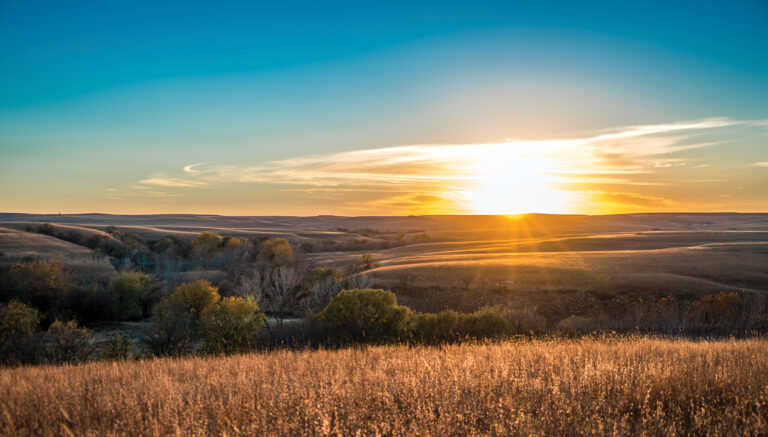
In an environment like Alaska, there’s usually plenty of water around, and food can include fish as close as the nearest stream. So if you were to start your homestead at spring thaw in Alaska, shelter would be your top priority, followed by food to store for winter. For the Kansas Mother Earth News Sustainable Homestead, shelter will be a priority. But unlike Alaska, where running water is practically everywhere, digging a well must be first priority in Kansas.
Determining water and food resources should fall into the category of site preparation prior to relocating to your homestead. Think about where you live and the types of natural resources available. Are water, food, and shelter easy or difficult to access on the property? Additionally, do you need to clear any of the land to put up a fence, plant a garden, drill a well (with a solar-powered pump), or build an outhouse? Can you choose plants and food sources that are native to the area and resilient to the local climate? It’s much better to know the answers to these questions before moving day arrives.
Necessities for Living Off the Grid: Determining Your Shelter
How do you quickly establish shelter on your homestead property? Weather can help inform you of your shelter options and limitations. For example, many places in Interior Alaska have bitter winters, but rarely do they have high winds, so a tent may be tolerable as temporary shelter — so long as you have a source of heat. But in Kansas, a tent might not be the best option, considering the high winds and violent storms. There, a permanent structure that can be built and occupied as soon as possible would be necessary.
What are some shelters that you could put up quickly and occupy soon after? Assuming you’re limited to locally sourced materials once you’re on-site, here are a few options.
Pre-built storage building

Any major lumber company has ready-to-build storage buildings, from the small garden shed to the two-story miniature barn. It won’t come insulated, wired, or plumbed, but it’ll be fully enclosed. If you’re going to camp out, a storage building would be slightly better than a tent. You could certainly use it for sleeping and cooking while you’re making it more habitable.
Shipping container

This option might be a more secure approach, but it’ll require some extra effort to set up. Shipping containers come in a variety of sizes and conditions. It’s possible to get a 40-foot “box” for about the same price as a 20-footer. But it’s much easier to offload, move, and set up a 20-foot shipping container than it is to set up the longer and heavier 40-foot version. Most container-home builders prefer the 20-foot version for siting in remote areas. Containers that’ve only been used for a single voyage are called “one-trippers” and come with documentation to prove they didn’t contain hazardous materials. These are the highest-priced container option aside from brand-new. The used ones are a great option for the container-home builder, because they’re much cheaper, and testing labs can verify the safety if there’s a concern about toxic residue. Although containers have been around the block a few times and may have cosmetic issues, such as dents, holes, and scratches, the builder can easily hide the defects even before delivery to the homestead. In our energy business, a shipping container is also a great option to use as a base for mounting solar panels. Three 20-foot shipping containers side-by-side can support enough solar panels for plenty of homestead electricity and have enough empty space for living quarters.
Prefab homes


This is the most expensive approach of the delivered homes but requires the least amount of work. For a sustainable homestead, plan to emphasize efficiency — the smaller the dwelling, the less energy it’ll require to maintain it. Prefab homes can come in a variety of sizes and prices. A tiny home can be a do-it-yourself project off-site and brought in on a flatbed trailer (like a typical mobile home). The next-largest option is a prefab modular home that’s pre-built and delivered to the site by the manufacturer; this can be comparable in size to the typical stick-built home. In both cases, some solar can be added to the rooftop; the number of solar panels is limited by the size of the roof. However, if you’re emphasizing energy efficiency in your homestead design, a better energy option may be a ground-mounted solar array.
Stick-built home
For an affordable but labor-intensive option, you can collect natural building materials outdoors to build your home. Or, you can have the materials delivered en masse from the nearest lumberyard. This would be the most expensive site-built option and most difficult to support logistically for out-of-the-way places.
Earth home
Settlers to Kansas and Oklahoma found prairies with a lot of grass and deep soil but few trees and rocks. Their shelter solution was the dugout. This was simply their version of the “earth home.” Hoss’ grandfather grew up living in a dugout in Oklahoma during the 1800s. They were usually dry, could be kept warm in winter, and were a little safer during the tornado seasons than a cabin. So long as they had good drainage and the sod roof didn’t leak (or fall in when the cows grazed on top), they were a low-cost and practical habitat.
Deciding on Food Sources
Once you’ve decided what to do about shelter, next is figuring out how you’ll feed your household from your first day living on-site. If we assume food isn’t available from a grocery store, how do we quickly meet the need for short-term sustenance, followed by sustainable food sources that’ll last indefinitely, especially when conditions are harsh? Hoss lived in Wichita, Kansas, for a short time as a youngster, and Kerena lived in Oklahoma. In Kansas (and its neighbor to the south), weather can be difficult. The summers are hot, the winters cold. Violent storms are common — hail, high winds, torrential rains, and tornadoes. Winters are also brutal, with a bitter wind that goes straight through a person. When it snows, drifts can pile up to the rooftops. In these conditions, finding and growing food can be difficult. From livestock and poultry, to vegetable gardens and fruit trees, to wild foraging and hunting, your food sources will depend on what the land can provide and what your household is willing to eat.

Poultry, such as egg-laying chickens, may be a good start for a short-term food supply while waiting on vegetation to mature and produce. If your selected site has naturally growing foods, such as edible wild berries or mushrooms, that’s added convenience and security. Hunting and fishing may also be an option if the land provides the means. Long-term food sources, such as trees and cattle, take time to develop, so make that a lower priority upon first moving in.
You can choose to start several types of gardens, including in-ground, raised, and hydroponic. Conduct a soil test to determine what’s possible given already-present nutrients, drainage, and microbial activity. Dead soil won’t sustain lively plants. Equipment and upkeep will vary across each farming style, so be realistic about what you’re willing to invest in financially and with effort.

Most seed suppliers will give an average number of days until a plant has reached maturity, which you can use to ensure food production from early on through the end of a growing season. Also, explore summer and winter crop options to keep the garden in use year-round. A good time frame to work with when planning is a single calendar year — which foods will you eat right away, and what will need to store and keep until next year’s harvest?
That brings us to food storage and preservation, another key element when deciding food sources. Fresh foods won’t remain safe to eat indefinitely, especially not meat and dairy products. Do your own research (and read our later articles on homestead planning ) to find methods of food preservation that work for you, such as canning, dehydration, and pickling. And remember, utilities like refrigeration and stovetops use electricity that your homestead must provide.
Depending on where you settle, keep in mind some hazards that come with farming — namely, critters. Expect some hungry challengers from the surrounding environment, such as bears, deer, squirrels, mice, and crop-eating bugs. Prevention is the best method of keeping unwanted guests away. Fences, watchdogs, and some forms of scarecrow are well-known animal deterrents. To keep a vegetable garden safe from colonizing bugs, consider companion planting with natural deterrents. You can also welcome beneficial bugs to combat the harmful ones, such as fostering ladybug populations to fight off mealybug populations. Inviting pollinators, such as butterflies and bees, are also important for a plentiful garden. For example, alliums deter pests, such as cabbage worms and carrot flies, while their purple flowers are sure to attract bees. When growing and protecting your own food, start with natural remedies before turning to harsh chemicals or violent alternatives that could do more harm than good.
For the Mother Earth News Sustainable Homestead — and your personal homestead — decide your best options for shelter, food, water, and energy. The highest priorities are shelter and food. In a future issue, we’ll continue our homestead planning with more in-depth shelter options. But for now, begin here to start “planning the plan.”
Hoss is the president and CEO of TeraVolt Energy, a Texas-based solar and energy storage development company. He’s also a regular contributor to Mother Earth News and speaker for the Mother Earth News Fairs. Kerena Reese is a Texas A&M University engineering graduate, working with TeraVolt Energy on project development and publications. Keep the conversation going with our upcoming column, “Aggie ‘n’ Arkie Off the Grid.” Send your questions about sustainable energy to Letters@MotherEarthNews.com.
Originally published as “Planning the Plan” in the April/May 2023 issue of Mother Earth News and regularly vetted for accuracy.