

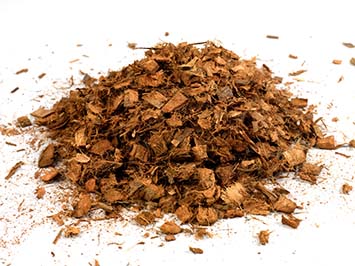
KUDOS FOR KUDZU! NASA biochemist Dr. B.C. Wolverton has shown that one cubic foot of dried kudzu can produce as much as four to five cubic feet of methane gas. Furthermore, he estimates that a home energy system using kudzu (grown under careful control) — and the waste bacteria from the family sewage — could produce a year’s supply of energy for the household … including enough methane to run a car for 12,000 miles.
“I’LL GO ON AHEAD AND SCOUT OUT THE TRAIL”: When, during last year’s crisis, a member of the board of supervisors of Newbury Township – which is located a scant two miles from the Three Mile Island nuclear plant – called the township’s civil defense director for help in mapping out an evacuation plan for area residents, he found that the CD coordinator was already long gone!
THE NATIONAL SOLAR ENERGY EDUCATION DIRECTORY (Second Edition), which lists 1,760 solar-related courses and 840 programs and curricula offered at over 760 post-secondary educational institutions in the U.S., is now available from the Superintendent of Documents, U.S. Government Printing Office in Washington, D.C.
A BIT MUCH! A billion tons of rock and residue — as much as was excavated in the construction of the Panama Canal — would have to be moved, each year, in order to produce a million barrels a day of oil shale. (We currently import over eight million barrels of oil a day.)
PHANTOM UTILITY TAX: The Environmental Action Foundation points out that customers of the nation’s 100 largest private power firms were “legally” charged for over $3.5 billion in federal income taxes in 1978, yet the utilities actually paid less than $800 million in income taxes to the government. In fact, 29 power companies charged their customers as if the utilities had paid a $698 million tax bill, but actually paid no federal income tax at all!
UP IN SMOKE! Ten to 15 billion pounds of excess ethylene products, which could serve as feedstock for alcohol fuels, are presently emitted from the nation’s petroleum refinery stacks each year. These materials could produce an annual yield of as much as six billion gallons of ethanol.
THE NEW RIVER CONTROVERSY, a book by Thomas J. Schoenbaum, chronicles the dramatic 11-year battle to save the New River (which is the second oldest river on earth), from being dammed by the Appalachian Power Company. In this saga (available from publisher John F. Blair) the good guys win.
WASTE WOOD POWER: Potsdam, New York’s Clarkson College will become the first U.S. educational institution to convert its oil-fueled system to a woodburning setup. By using wood chips, sawdust, and other waste from three area sawmills, Clarkson officials expect to save at least $175,000 a year in operational costs!
OIL BLACKMAIL? After the U.S. and Israel expressed reservations about France’s agreement to ship weapons-grade uranium to an atomic research center in Iraq, French officials decided to deliver a 10%-enriched fuel that can’t be used to make weapons instead. But Iraq, which is France’s second-largest oil supplier, refused to accept the “safe” fuel and forced France to deliver the contracted-for 90%-enriched uranium.
PIGEON POST: The birds now carry blood samples from a hospital in Plymouth, England for lab analysis in Davenport several miles away … saving thousands of gallons of gasoline a year. What’s more, “pigeon power” gets the samples delivered about three times faster than did the old car-and-road method.
LET THE SUN SHINE IN! Forty-five inmates of Georgia prisons are being trained in the basics of solar energy, using a Georgia Tech curriculum. Besides teaching work skills to the prisoners, the Georgia Department of Offender Rehabilitation hopes that applications derived from the program will cut energy consumption in half at several of its correctional institutions.
MINING METHANE: The Public Service Electric & Gas Co. of New Jersey now “mines” garbage dumps to bring in 830,000 cubic feet of methane a day, and will soon increase its output to one million cubic feet a day …. Starting next year, the Pennsylvania Power and Light Co. WILL REFUSE SERVICE to new homes or commercial buildings — in 89 specific counties — that don’t meet preset insulation standards …. The “Efficiency II” water heating heat pump can — its manufacturer claims — SAVE YOU $150 OR MORE A YEAR …. New York University researchers are processing newspapers and sawdust, under heat and pressure, to create a rich high-glucose syrup that’s IDEAL FOB THE MANUFACTURE OF ALCOHOL …. The nuclear industry is attempting to gain support for “THE NUCLEAR WASTE POLICY ACT,” a bill that would eliminate any industry responsibility for the controversial question of radioactive waste disposal and throw the problem all on the shoulders of the government (i.e., the taxpayers) …. Meanwhile, U.S. nuclear power plants reported 2,835 “INCIDENTS” IN 1978 …. We spend more for foreign oil ($90 billion a year) THAN THE TOTAL NET ASSETS OF GENERAL MOTORS, FORD, IBM, AND GENERAL ELECTRIC.






