Photo by Adobe Stock/Fly Dragon Fly
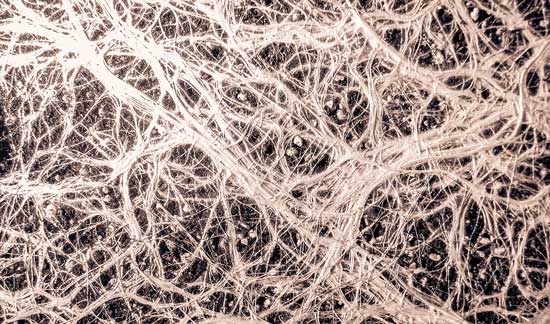
Plants actively harvest bacteria and fungi to reap nutrients, according to recent research from a Rutgers University-led team that included scientists from Banaras Hindu University in India and the U.S. Geological Survey. The scientists termed this symbiotic cycle “rhizophagy,” or “root-eating,” and describe it in results published in Microorganisms in September 2018. Plants secrete sugars, proteins, and vitamins around their root tips to generate microbe growth. Those microbes then enter the plants’ roots, where they become trapped and exposed to reactive oxygen, which breaks down some of their cells. The plants extract nutrients from the weakened microbes and then eject them, and the microbes re-form as they re-enter the soil. Then, the microbes accumulate nutrients from the soil around the roots, the plants gather the microbes again, and the entire process is repeated.
According to James White, lead author of the study and a professor in the Department of Plant Biology at Rutgers University, New Brunswick, organic gardeners have long thought that adding organic matter to soil helps plants thrive by providing nutrients. This new research confirms that hunch, and identifies microbes as the link between the nutrients in the soil and the plants. Understanding that plants seek sustenance from microbes could help scientists manipulate those microbes to affect the growth of a particular plant without using fertilizer or herbicides. “Some of the rhizophagy microbes increase growth of their particular host plant, but inhibit growth of other plant species,” White says. “We may be able to develop these microbes into ‘bio-herbicides’ to favor growth of some plants, but inhibit weedy plants. In the future, it may be possible to cultivate plants using only microbes to increase plant growth, and to suppress diseases and weeds.” Search for “rhizophagy cycle” on MDPI to read the paper.