

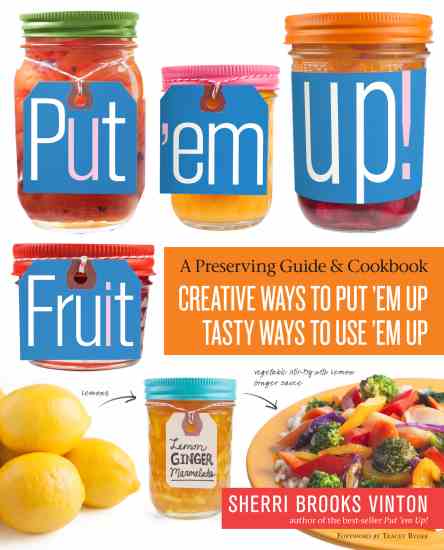
A wide range of possibilities for preserves awaits in Put ‘em Up! Fruit (Storey, 2013). Author Sherri Brooks Vinton offers 80 recipes both sweet and savory for canning, freezing, drying and more. In this excerpt taken from part one, “Getting Started,” learn what the most common blunders are when preserving fruit and what you can do to avoid them.
You can purchase this book from our MOTHER EARTH NEWS store: Put ‘em Up! Fruit.
Even the most experienced in home food preservation will turn out a less-than-perfect batch of goods now and again. Some preserves might be a smidge too thin, others a bit too thick, and sometimes you might get a jar or two that is just plain ugly. Most often you can cover up your errors with a little repurposing; loose jam makes fine syrup, if that’s what you call it. But whenever you are working with food it’s important to know the difference between “not pretty” and “not safe.” Here are the top challenges of preserving fruit and the best ways to avoid them.
The Dreaded Fruit Float
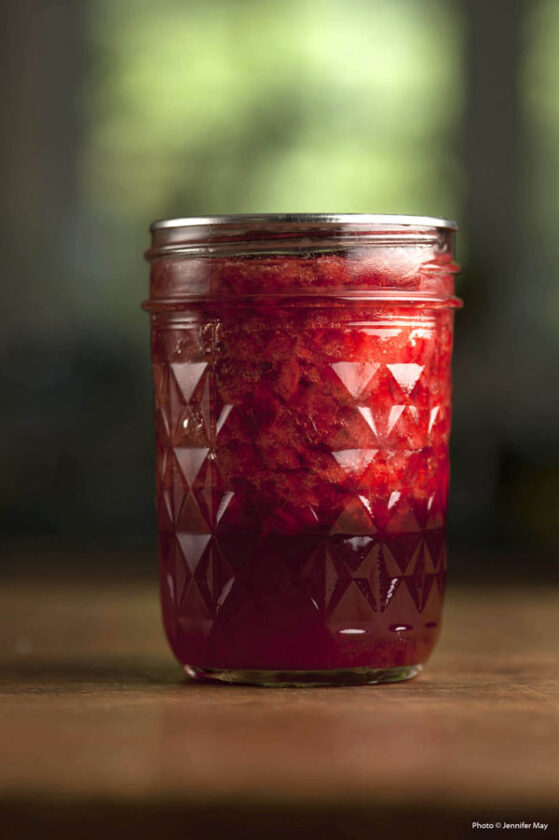
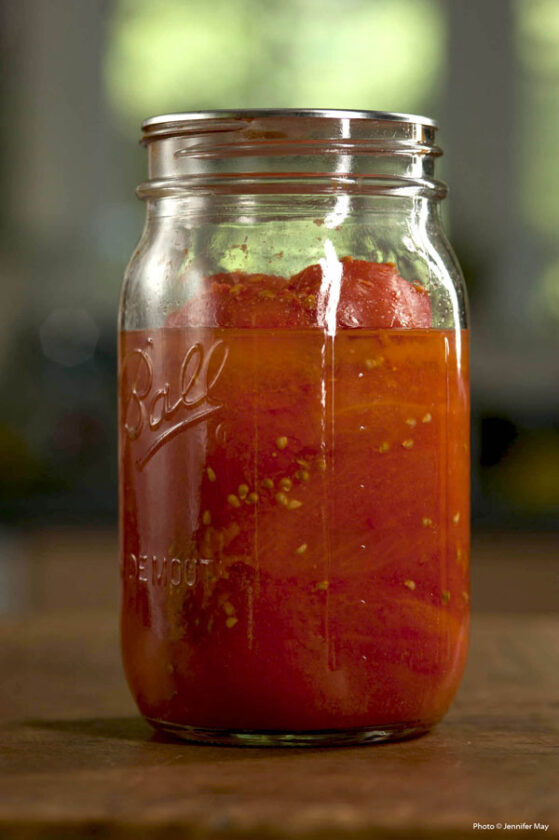
If you’ve ever processed gorgeous produce only to find that the contents of your jars have separated into distinct bands, with solids at the top and liquid at the bottom, you have experienced the dreaded fruit float. While it can occur in any recipe, fruit float is most pronounced in jars of canned whole fruits that contain a high proportion of liquid by nature and in jams, jellies, and preserves, where the gelling process sometimes suspends floating fruit as the spread sets, rather than letting it disperse throughout the mixture. Jars of whole canned tomatoes — picture-perfect going into the canner — come out clotted, with a dense layer of tomato bobbing atop inches of tomato water. Fruit float will turn a ready-for-its-close-up jam into a two-layer concoction of too-thick jam over clear jelly. While less common, fruit float may also manifest as a thin layer of liquid at the base of blended items such as barbecue sauces and mixtures such as salsas.
The good news is that fruit float is harmless. It won’t win you any blue ribbons, but it does not affect shelf life or safety. And while unsightly in the jar, fruit float can often be remedied by giving the contents of the jar a quick stir upon opening it.
Avoiding Fruit Float
Even the most skilled and experienced canner gets sideswiped by fruit float on occasion, but there are some things you can do to limit your jars’ susceptibility to this malady.
Cook your recipe thoroughly. Cooking breaks down the cell walls of your produce and gives the air that is normally housed there a chance to escape. If you are hot packing your recipe, be sure to cook it for the full amount of time indicated. But don’t overcook your recipe. Pectin, the natural compound found in fruit that allows it to gel, will break down when cooked for too long, losing its gelling properties.
Allow cooked recipes to rest for 5 minutes or so to let any air bubbles in the mixture settle out before you fill your jars.
Do not overprocess your jars. Boiling your filled jars for longer than indicated in your recipe is called overprocessing, and it can force some of the liquid in your recipe out of suspension.
Flip your jars. Once your jars have sealed, but while they are still a bit warm (but not hot), you can turn them over and let them settle for about half an hour to give the rising fruit a chance to redistribute throughout your jam. Then you can store them right side up.
Be patient. After a few weeks whole fruits, such as tomatoes, will often release the air trapped within them and descend back into the liquid.
Ignore it. Be proud that you got your good food into the jars safely, and know that it will all be just as delicious, fruit float and all.
Preserves Too Firm
One minute you have luscious fruit bubbling away in the pot; the next minute it has turned to tar. It can happen in an instant, particularly with marmalades, which, with their high pectin content, can seize up in a heartbeat. The trick is, of course, not to overcook the spread. But as long as you haven’t scorched the fruit, you can usually loosen it back up a bit by adding a splash of water. This will thin the spread enough to give it a more agreeable texture. Be sure to return the spread to a boil for a minute or two before canning to make sure that it is hot enough for your processing time to hold true.
Siphoning
When liquid is lost from jars during processing it is called “siphoning.” A small amount of siphoning won’t affect the safety of your product, but a large amount of siphoning, as shown in the Image Gallery, exposes your food to too much air for it to be considered wholesome. Even if you get a seal on the jar, you should refrigerate it and use the contents within three weeks.
Avoiding Siphoning
Always clean your jar rims thoroughly. Any trapped food particles or spices can prevent good contact between the lid and the jar and lead to siphoning.
Never over-tighten your jars. Doing so will cause the pressure to build up and the contents to be forced out of the jar.
Avoid over-filling your jars. The food can press up against the lid and cause the contents to leak out into the water.
Preserves Too Thin
Keep in mind that pectin can take a while — up to several weeks — to fully form a gel, so don’t pull the trigger too quickly. The jam or jelly that looks a bit thin 24 hours after canning may be perfectly set in a few weeks’ time. If your preserves are still too thin after that grace period, try using them as a syrup for pancakes or ice cream. You can also remake thin preserves and can them again. Here are some frequent causes of thin preserves and some tips for remedying them:
Not enough time. The most common cause of a thin preserve is undercooking. If you take a classic spread, one that doesn’t use packaged pectin, off the burner too soon, it will not have had the chance to reach the gel stage. It is important to follow the visual signals of the preserve — watching how it behaves in the pot — and not the clock. Use the cooking times indicated in recipes as guidelines, knowing that they will be affected by the water content of your fruit, the power of your burner, and the size, height, and thickness of your pot. You are the best judge of your preserve’s doneness.
Too little acid. If you did not add the lemon juice called for in the recipe, or if you are using fresh-squeezed lemons that are a little light on acid, you may have a hard time getting a gel. Acid acts with the pectin to produce a good set, so make sure to use the full amount indicated in the recipe. You can add a bit more lemon juice to the pot to encourage a gel.
Overcooking. Pectin will break down if cooked for too long, particularly if you have cooked your preserves over low heat — low and slow is more likely to break down your pectin than a lively boil. If the natural pectin in your produce has broken down, you will have to add powdered pectin to encourage the spread to set.
Not enough pectin. Even fruits that are commonly believed to have enough pectin to gel can fall short of adequate thickening from time to time. You stir and stir but the mixture never wants to reach the gel stage. Most likely the fruit was too ripe. You will have to add a bit of powdered pectin (or a bit more if you were already working with an added-pectin jam) to the pot.
Not enough sugar. If you are making what I call a “classic” spread — one with no added pectin — then the sugar is part of the magic formula that helps you achieve the gel stage. Think of it as “candying” the fruit. If you are having a hard time getting a gel in such a recipe, you can try adding a little more sugar to achieve your goal.
Excerpted from Put ‘em Up! Fruit by Sherri Brooks Vinton with permission from Storey Publishing, 2013. Buy this book from our store: Put ‘em Up! Fruit.






