Try modern landrace gardening techniques to create your own landrace vegetable seeds by overcoming challenging weather and pests.
Consider the following two stories:
In the first, a gardener goes out to her garden to plant some of her favorite vegetables, summer and winter squash. She holds her store-bought heirloom seed packets in her hands like the most precious of treasures, excited to harvest good food from her garden and save seeds for next year. Her carefully planted seeds sprout and begin to grow large as the summer’s heat swoops in. She waters the plants vigilantly, but frowns as some of them begin to succumb to the 100-plus-degree heat waves common in her area. Unwilling to use chemical pesticides, she picks squash bug eggs off the leaves of those that remain with harried diligence, silently cursing at her enemies, as the gray insects overtake her plants and literally suck the life out of them. By summer’s end, all of her plants are dead, and she doesn’t have any harvest to show for it. She feels like a failure.
In the second story, a gardener goes out to her garden to plant some of her favorite vegetables, summer and winter squash. She holds a jar in her hands, full of seeds of varying sizes and colors. She plants hundreds of them. Her seeds sprout and begin to grow large as the summer’s heat swoops in. She gives the plants water when she can, but there’s been a change in her demeanor. She doesn’t curse at the squash bugs as they suck the life out of some of her plants. She doesn’t glare at the sun as it bakes others to dust. Instead, she watches and waits. Most of her plants die, as they have for the past four years. But some of them don’t succumb to pest or heat or drought. She gathers these few finished squash as if they’re the most precious of treasures, and she thanks the squash bugs and rough summer for showing her which plants had what it took to survive. She harvests seeds from them and feels like she’s won a victory.
I’m both of those gardeners, as you might’ve guessed by now. I (quite literally) fruitlessly planted both summer and winter squash for years on my hot Ozark hill. Convinced that I was just choosing the wrong variety, I went through a few years of trying different cultivars and getting the same results (and feeling the same sense of failure). My husband was the one who shook me out of my slump as I was scouring the internet, still looking for the “perfect” cultivar to order. “You’re not going to find a plant custom-fit for our dry, hot hill,” he said. “But you can make it.” Thus began my adventures into modern landrace gardening.
How Is Modern Landrace Gardening Different?
In order to understand this idea, some explanations are due. Modern landrace gardening, sometimes called “adaptation gardening,” and technically called “recurrent mass selection,” is merely a revival of the most ancient and instinctive way of gardening.
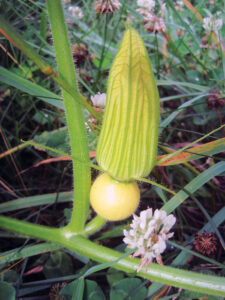
In our agricultural past, ancient gardeners around the world planted open-pollinated seeds, didn’t give attention to named cultivars (because they didn’t exist), saved seeds from the hardiest and best-tasting specimens, and replanted those seeds in the same location for generations. This is what created the original landraces – genetically diverse plants that were perfectly adapted to their specific locations and climates, growing with the same tenacity as the wild plants they thrived alongside. Some of these still exist in the modern day and are still planted in the same locations that’ve been their stomping grounds for generations.
Modern landrace gardening is an attempt by modern gardeners, lacking their own inherited land and ancestral landraces, to return our modern food plants to their more ancient state of genetic richness and adaptability to the extremes of their climates – without the need for pesticides, row covers, or other above- and-beyond support from the grower. Though it’s been given a name now, this once happened in every garden. And with a little bit of knowledge, it can happen in ours once again.
How Do I Do This?
Adaptation gardening allows gardeners to develop their own blend of whatever garden plant they want to focus on. The end result will be plants that need little coddling in the gardener’s specific climate, growing with the same vigor and unflappability as the wild plants that’ve been shaped by natural selection. The goal is worthy, but it takes years of work, hope, and a lot of dead plants along the way to get there.
The first step is to gather as many different cultivars of your plant species as possible – the more variety in the mix, the better chance your plants will have to gather what they need to reproduce with stronger descendants. Think of it as a long-overdue genetic family reunion for that species. The landrace gardener removes the boundaries between “open-pollinated,” “heirloom,” and “hybrid” varieties of the same species (as long as the hybrids were naturally created, that is).
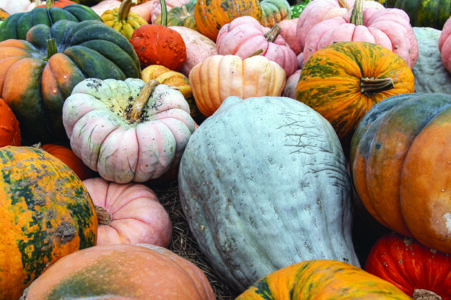
So, let’s say you want to make a tough winter squash like I’m trying to do. First, you need to know the species – Cucurbita maxima, in this case. Then, gather as many varieties as you can. ‘Big Max,’ ‘Hubbard,’ ‘Buttercup,’ ‘Jarrahdale,’ ‘Marina di Chioggia’ – they’re all C. maxima! I gather seeds by trading with other seed savers, combining all the remnants of the seed packets I’d previously ordered, and saving seeds from squash I’d bought. It doesn’t matter what cultivar name they have – it only matters what species they are. I used Suzanne Ashworth’s excellent book Seed to Seed to understand the differences between each squash species and sort my seeds accordingly.
Then, you have to plant abundantly – I try to get in at least 100 plants of the species in the garden, if not more. Why so many? Well, as far as my hot, dry, pest-riddled hill is concerned, most of them are going to die. You’ll have to resist the urge to coddle your plants, because whether they thrive or fail, they’re being naturally selected by weather and insects for their own vigor (or lack thereof). The plants that make it to fruiting maturity are your precious, mixed seed-bearers for the next generation.
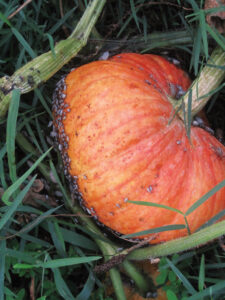
The first summer, I planted seeds of C. maxima, C. moschata, and C. pepo to work on three different squash landraces. We had our usual heat waves, droughts, and squash bug attacks, and a lot of plants succumbed. When all was said and done, I ended up with somewhere around 25 squash that made it. C. pepo did the worst, as usual, but I tried again the next year with a fresh collection of seeds. C. maxima did better. Some had empty seed cavities, and some rotted quickly, but some were hard-skinned beauties that lasted for months in storage and were loaded with viable seeds. C. moschata did the best, giving me at least a dozen (mostly) sweet, delicious squash that were chock-full of mature seeds.
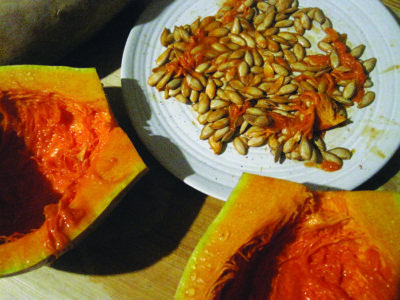
Landrace Vegetable Seeds
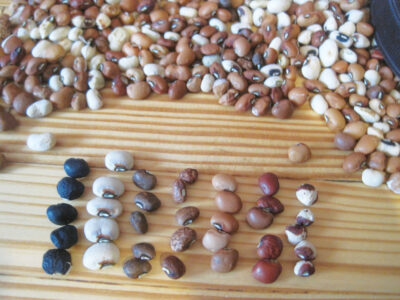
The next step is to do like the ancient farmers did: Save seeds from the tastiest, biggest, longest-storing or otherwise “best” plants and replant those seeds the next year, just as abundantly. Sure, these mutt plants aren’t any specific “cultivar” anymore, but as they’re selected by nature and by you and planted in the same area, they’ll start to become ever more adapted to your specific land. This is why you can’t buy a landrace perfectly suited to your land – you can only make one. I’ve planted the survivor seeds from every successive year, and I’m on my way to finally finding “my” super-tough squash (and, as I’ve expanded, “my” cucumbers, tomatoes, pole beans, cowpeas, collards, melons, and peppers too!).
Where Can I Learn More?
Now, I’ve only scratched the surface of this topic. But I’ll bet it’s resonated with some of you – for me, it’s a more sensible way to garden. It values the work done by heirloom seed stewards of the past, but it also reunifies plant cultivars so they can make seeds that can take whatever the future holds. With a grateful nod toward all of those past families who kept their special seeds alive, it’s exciting to plant seeds in my garden that are now the result of my own selection on my own land, not someone else’s from somewhere else.
If you want to learn more, there’s an excellent, free online course called Adaptation Gardening that takes a deep dive into the topic. An influential book on the topic is Joseph Lofthouse’s Landrace Gardening. If you’re new to seed saving (an essential skill for this endeavor), you can download a free seed-saving guide from the Organic Seed Alliance. You can also find seed companies selling “landrace mix” or “grex” seeds to give you a good first step toward your own projects – Southern Exposure Seed Exchange, Giving Ground Seeds, Experimental Farm Network, and The Buffalo Seed Company are a few I’ve worked with that have such offerings.
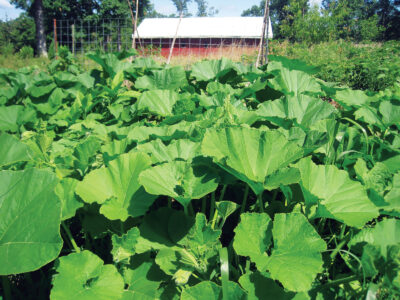
This summer, I’ll be holding my jars of mixed seeds and planting abundantly once more, embracing the weather extremes and pests as helpful guides along the way to finding my strongest plants. Instead of a constant struggle, it makes my time in the garden an adventure. I hope you can feel that same excitement and hope with your own projects.
Select Squash with Traits Suited to Your Garden
We asked seed companies to share their favorite squash cultivars and the reasoning behind their choices. Here are some to consider for your landrace mix. – Mother
Seed Savers Exchange (563-382-5990) recommends ‘Potimarron,’ also known as ‘Courge Châtaigne.’ Originating in France, it has a chestnut flavor, is prolific, and is easy to grow. It has a manageable 3-to-4-pound size.
Johnny’s Selected Seeds (877-564-6697) enjoys ‘Burgess Buttercup,’ which is a good choice for northern gardens. This cultivar has dry, sweet flesh and stores well into the winter.
High Mowing Organic Seeds (866-735-4454) shares that ‘Red Kuri’ is a popular choice for growers with shorter seasons. It has dark red-orange skin and smooth, sweet flesh.
Hoss (888-672-5536) likes ‘North Georgia Candy Roaster.’ This Southern heirloom has a nutty and buttery flavor and is easy to grow. It’s known to store 6 to 9 months.
Azure Husbandry (971-200-8350) favors ‘Sweet Meat.’ The bluish-gray fruits weigh 8 to 25 pounds and have vigorous vines. The deep-orange flesh is sweet, thick, dry, and stringless. They also store well.
If squash hasn’t been thriving in your garden, Baker Creek Heirloom Seeds (417-924-8917) suggests giving ‘Ayote Green Flesh’ a try. It’s a rich, sweet variety that originated in the Guatemalan highlands and is noted for its resistance to pests.
Have you dealt with powdery mildew? Berlin Seeds (877-464-0892) shares that ‘Butterbaby’ has good resistance. This miniature butternut offers 4-to-6-inch fruits, plus sweet, rich flavor and vibrant flesh.
Wren Everett and her husband quit their teaching jobs in the city and moved back to the land on 12 acres in the Ozarks. There, they’re happily learning to live as modern peasants, off-grid and as self-sufficiently as possible.
Originally published in the April/May 2026 issue of MOTHER EARTH NEWS and regularly vetted for accuracy.