

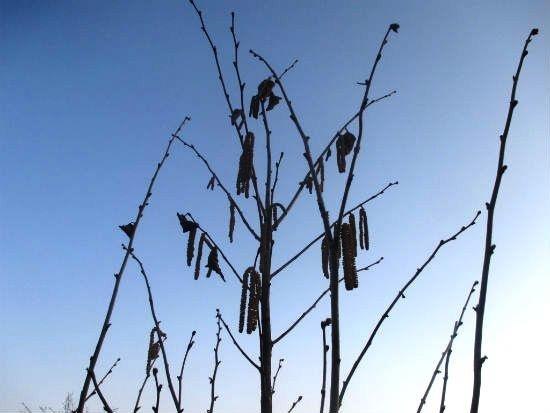
This year’s NOFA New York Winter Conference had a huge range of workshops, from practical presentations on cover cropping and compost to discussions about reducing food waste and how to advocate for a better farm bill to intensive, hands-on bread baking classes. With dozens of workshops each day there were topics of interest and utility for farmers, gardeners, and individuals interested in the connection between health and farming.
One fascinating talk, given by Akiva Silver, owner of Twisted Tree Nursery, and Brian Caldwell, a farmer and Cornell researcher, discussed the history and practical use of hazelnuts and chestnuts. These two species are beautifully complementary: chestnuts produce a carbohydrate rich nut, while hazels are high in fat and protein. Chestnuts are full-sized trees, while hazels are modest shrubs. There are varieties of each that are adapted to a wide range of climates. They are hardy and vigorous, and together yield an abundance of food.
In the first post, I’ll summarize Akiva and Brian’s key points about hazelnut cultivation, and in the second I’ll deal with chestnuts.
About Hazelnuts
There are species of hazelnut that can grow anywhere from subtropical Asia all the way to northern Canada. Though some hazels mature to the size of proper trees, most varieties, including all of the types grown for nuts, are multi-stemmed shrubs. Their small size and high level of production makes them a perfect choice for gardeners, homesteaders, and farmers alike.
But getting the right plant is critical. Almost all commercially grown nuts — those you’ll find in the grocery store or in confections — come from the Common or European Hazel. While this may be a good variety for large hazelnut producers, its particular requirements mean it isn’t suitable for most people in most parts of America. It requires cool summers and very mild winters, and it is larger than many other hazels, easily reaching 20 feet in height. Further, it is not resistant to Filbert Blight, a disease endemic to the eastern United States.
But hazelnut bushes readily hybridize, and for decades plant breeders have been working to cross European with native Beaked and American hazels. The result is a smaller shrub – usually about eight feet tall – that is prolific, cold hardy, and resistant to Filbert Blight and other common diseases. In good soil these hybrids will begin bearing nuts in three to four years, and in seven to eight they will reach full production. While there are not yet any named, clonally produced varieties, quality stock propagated from seed is available from several sources.
Once hazels are established they are incredibly hardy. They store a huge amount of energy in their roots, and they grow vigorous new stalks each spring. When they are bearing they appreciate fertilizer, but they will produce a good crop even in relatively poor soils with minimal inputs.
But just because you’ve grown a bunch of nuts doesn’t mean you’ll get to eat them. Squirrels, chipmunks, turkeys, and other birds love hazels, and they will happily spend every waking hour harvesting them once they ripen. This is another reason it’s good to get shrubs that mature at a relatively small size — they can be harvested by hand, which gives you a chance to beat the wildlife to them. Planting shrubs with American genetics helps here, too.
The husks of European hazelnuts open early, meaning birds have an easy time picking them out. Hybrid and American hazelnuts can be harvested while the husk is still tightly closed, before other critters have eaten them, and then dried inside. This can be done in a dehydrator, but simply placing them in an area of the house with good air circulation also works well.
There are a few insect pests to consider. Planting high-quality trees will reduce the risk of serious infestations, but good management practices also help. Proper soil preparation, particularly adequate liming, can significantly reduce disease and pests. Making sure all nuts are harvested from the bushes and the ground will help limit populations of weevils and other bugs that rely on them for food, and removing any dead wood is always a good idea.
Big bud mites are a pest that attack flowers, causing them to swell and then drop. American hazelnuts are more susceptible than European trees, which is yet another reason that hybrid trees, with their blend of advantageous traits, are the best choice for most people.
Fully dried nuts can be stored for at least a year in shell without losing quality. They can be shelled with most common nut crackers, but if you grow a lot it’s worth investing in a hand crank model. They are delicious eaten raw or roasted, and they can be ground into meal, or, if you own or have access to a press, they yield a fragrant oil.
Tips for Planting Hazelnuts
1. If you have acid soils, it is important to add some lime. Aim for a Ph of 6.5.
2. Good drainage is also critical. Making a small mound for an individual tree or a berm for a row will go a long way to keeping your hazels happy, particularly if you have heavy, clay-rich soils.
3. Generally, plant in the fall or early spring, but ask whoever you get your trees from what they recommend.
4. Young trees will appreciate having a scoop of well aged compost mixed in with their soil, but avoid chemical fertilizers, chicken manure, or any other amendment with highly available nitrogen.
5. Transplanting is always stressful, so water the trees as necessary. (But don’t waterlog them!)
6. Protect them from deer. If you’re only planting a few trees, staking a hoop of wire mesh fencing around each works well. Some people also have luck with pepper or egg sprays.
7. If you want nuts, plant at least two, but preferably three or more plants, with four feet between them. Hazelnuts do not self-pollinate, so they need friends!
8. When hazelnuts are fully mature prune them by removing some of the oldest wood each winter, starting when the shrubs are in their tenth year. Removing old live wood promotes vigorous growth, which keeps shrubs producing well.
Photos by Akiva Silver
Garth Brownis an owner ofCairncrest Farm. He sells 100% grass-fed beef and lamb as well as pastured pork and poultry to Long Island, Brooklyn, and the greater New York City area. You can read more of his writing on hisfarm’s blog. Read all of Garth’s MOTHER EARTH NEWS posts with his brother, Edmund, here.
All MOTHER EARTH NEWS community bloggers have agreed to follow our Blogging Guidelines, and they are responsible for the accuracy of their posts. To learn more about the author of this post, click on their byline link at the top of the page.






