I’m intrigued by the square-foot gardening (SFG) method; will it work in an urban setting?
Where suburban and urban dwellers may lack a yard, their balconies, decks, and porches can fit an SFG box’s location requirements. You may have to adjust the SFG box measurements to be able to put both yourself and your SFG bed on the balcony at the same time.
For aboveground structures, be sure the base can handle the weight of an SFG box full of wet growing medium. You’re looking at more than 300 pounds of wet growing medium, plus the weight of the bed’s building materials. That’s a lot of mass for a 16-square-foot area. Also, be sure to follow any necessary rules from your community or homeowners association before beginning your garden.
Rooftops also abound in cities and towns around the world. In New York City alone, rooftops cover about 40,000 acres. There’s room for a few thousand SFG boxes up there. If this sounds like a great idea, there are a few things you should know before sneaking an SFG bed onto the roof of your apartment building. First, check with your planning and zoning ordinances to be sure a rooftop garden is legal. Second, get permission from the building owner. Third, get confirmation that the roof has the load-bearing capacity to handle the weight of an SFG box full of wet growing medium. Finally, ensure you’ll have regular – and safe – access to the roof to tend your bed.
There are a few downsides to rooftop gardening: You’ll have to carry the lumber and growing medium up there to build and fill your SFG box. You’ll have to sort out a water source, which might involve carrying a bucket up the stairs. And you’ll probably have to contend with a lot of direct sunlight on a potentially hot rooftop surface. If these are inconveniences you think you can work with, a rooftop is a great spot for square-foot gardening.
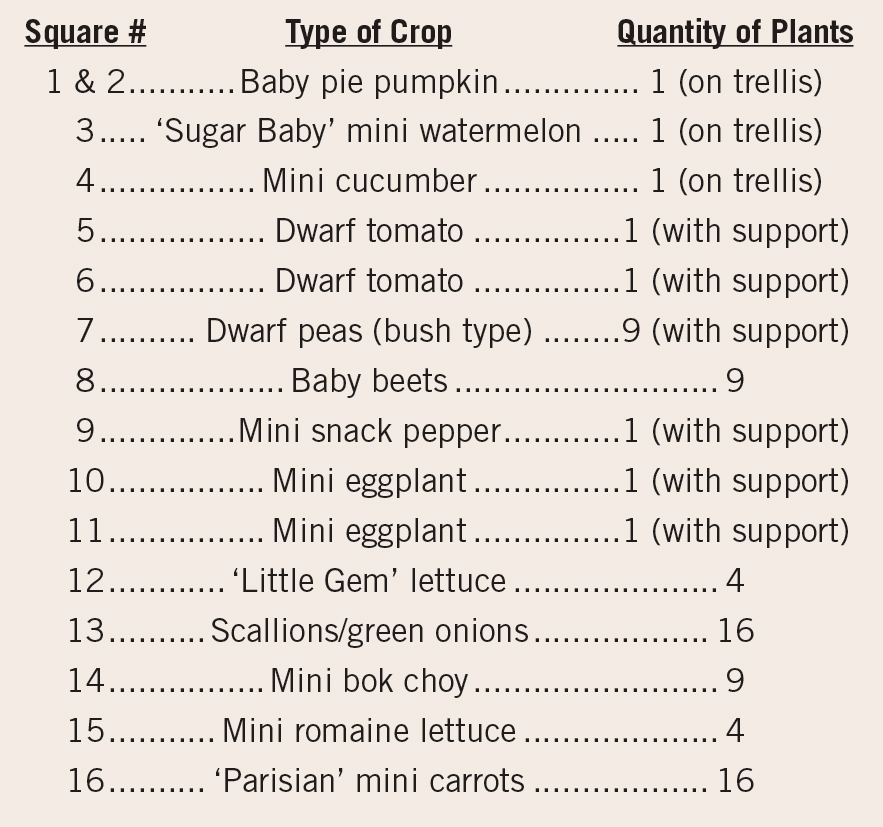
Dwarf Crop Varieties
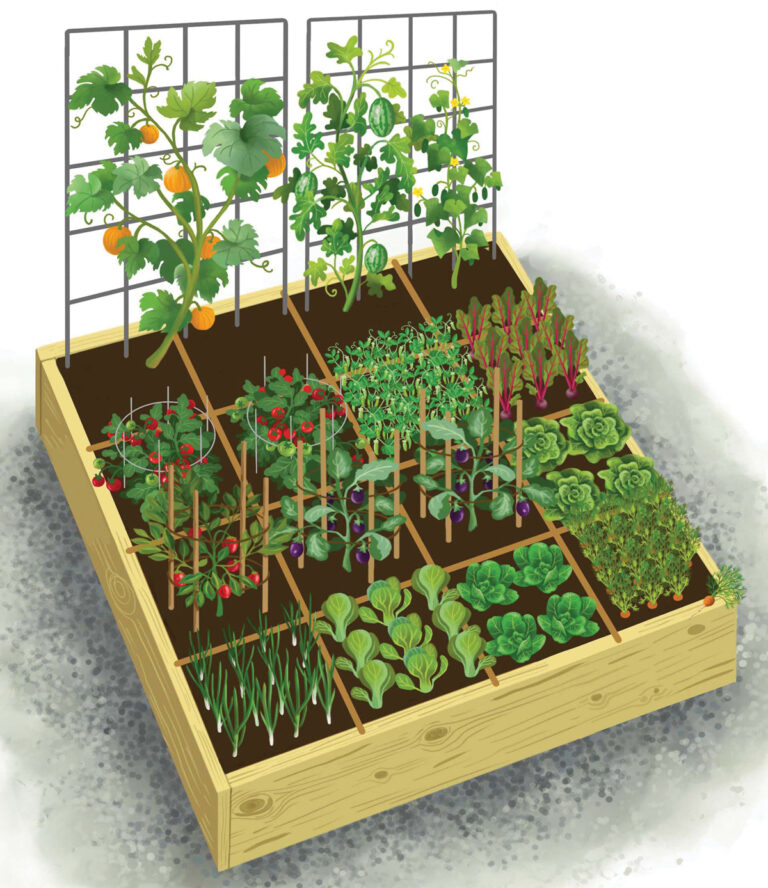
With just 16 square feet to work with, small-space crop varieties are a better choice than sprawling varieties. The garden plan at right uses miniature crops exclusively. Just because a plant is small doesn’t necessarily mean its yield will be less. One mini cucumber plant can give you as much, by weight, as one plant that produces slicing cucumbers, for example. Try bok choy no larger than your hand, carrots of golf-ball dimensions, and cucamelons – also called “mouse melons” – that may be the right size for a mouse’s cucumber-like snack. Look for varieties with mini, dwarf, and compact in the traits listed in your favorite seed catalog.
Excerpted from All New! Square Foot Gardening, 4th Edition (Cool Springs Press) by the Square Foot Gardening Foundation
Originally published in the June/July 2025 issue of MOTHER EARTH NEWS and regularly vetted for accuracy.