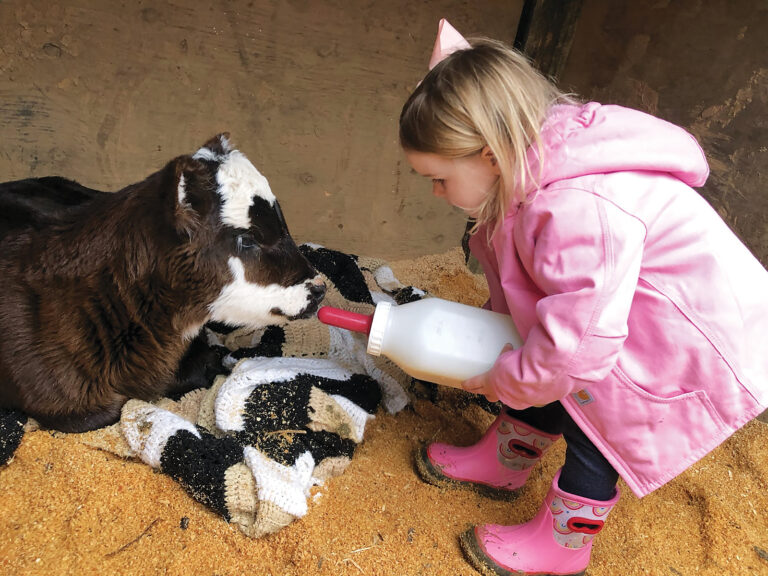
Learn the basics of humane farm animal care, including polled genetics in dairy cattle, why are antibiotics given to livestock, and lamb, calf, and piglet castration methods.
Far more years ago than I care to admit, a 22-year-old version of me was reading all about homesteading in the latest dog-eared copy of Mother Earth News, dreaming of a future farm full of happy animals and a contented me. It wasn’t surprising that when my husband and I moved from friendship to romance, we both had a subscription to this magazine. Little did we know that when we made the leap into cohabitation, sensibly dropping to one Mother Earth News subscription, we were setting up a monthly race to the mailbox to win first reading rights.
Fast-forward more than a few decades, and I find myself on that dream farm raising livestock and poultry the best way I know how. It’s been a bumpy road full of costly mistakes and plenty of tears, but also, luckily, lessons learned.
One of the most frequently asked questions I receive, both at my farmers market booth and in my role as humane farming program director at the nonprofit Food Animal Concerns Trust (FACT) is: “How do I know I’m treating my animals humanely?” This is a question I ask myself constantly as I try to balance profitability, kindness, and practicality. I frequently turn to A Greener World’s Certified Animal Welfare Approved (AWA) standards for guidance as our farm fine-tunes its practices, and I also turn to my trusted large-animal veterinarian. Developing a good relationship with a veterinarian you trust is the best thing you can do for your animals. Find someone who understands the species you raise, even if that means having the numbers for multiple veterinarians on your phone.
I bet you all make sure your animals have their basic needs met (food, water, and shelter), but what does it take to up your animal-husbandry game?
Here are five simple practices you can implement on your farm, no matter the size, to improve the lives of your food animals. I’ve broken all of these rules at some point in the past, so be kind to yourself and do what’s currently practical.
Give Your Livestock Space
Resist the urge to add “just one more.” This is the hardest practice for me to follow; it goes against all of my instincts, especially when it comes to cows (in my mind, you can never have too many Jerseys, which is how I get into trouble). However, limiting yourself is the easiest and most impactful practice you can implement.
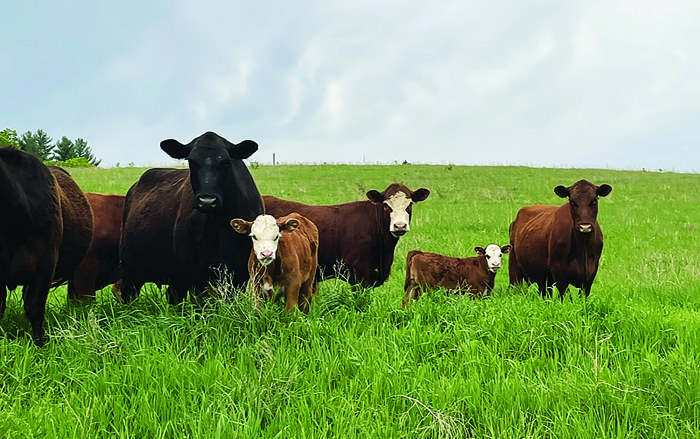
Stocking rates are highly personal; there’s no one-size-fits-all. I can feed more ruminants per acre here in North Carolina than others can in more arid regions. It comes down to how much grass and forage you can grow, the nutritional content of the forage, and the time required to let forage regrow. Every state and U.S. territory has a land-grant university that should have information on stocking rates in your region.
The next time you come across a cute cow, goat, or sheep, think about your land’s carrying capacity, do the math, and, if you have room, go for it. If not, resist the urge. Your animals and land will appreciate it.
Ditch the Medicated Starter Feeds
The most stressful time of life for young livestock is at weaning, doubly so if you wean too young. Despite what feed manufacturers lead us to believe, your livestock don’t need medicated feed to get a good start in life. As one example, carbadox, commonly added to pig starter feed, is a known carcinogen. You can learn more about carbadox on FACT‘s website. What young animals do need is their mother’s milk for much longer than the commercial guys would lead us to believe. By weaning at the appropriate time, not only for the species but the breed, or sometimes even the animal, you set your livestock up for success.
Years ago, when I was raising heifers for a commercial dairy, I had a calf that self-weaned at 3 weeks old; no amount of coaxing or wringing of hands would get her to drink milk. I lost a lot of sleep over Tinkerbell, who ended up on a friend’s farm, making a cow-loving little girl very happy. Tinkerbell lived well into old age, remaining as stubborn as ever.
According to AWA standards, beef calves should stay with their mothers for no less than 7 months, kids and lambs for at least 3 months, and piglets for a minimum of 6 weeks. The Mother Earth News article “When to Wean Piglets” is well worth the read.
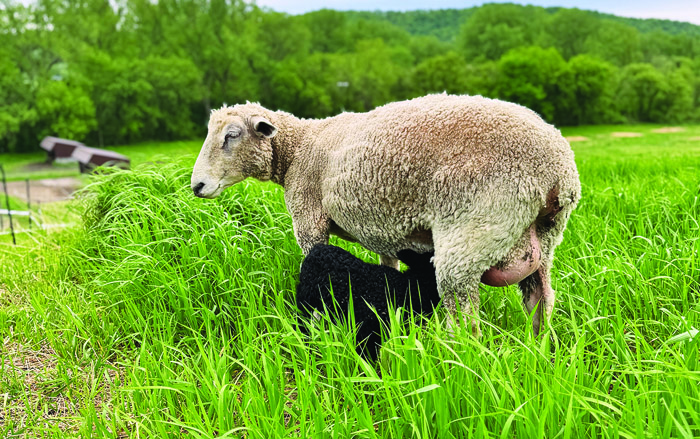
The standards for dairy animals are understandably different than those for meat breeds. The best-case scenario is to leave calves, kids, and lambs with their mothers and share the milk, but this isn’t always possible.
Dairy animals produce more milk than their young could possibly drink, which makes them perfect as foster mothers, especially Jersey cows. Our Jersey cows have willingly raised both goat kids and lambs. Our farm’s first cow, Sally May, stole a goat kid from a doe while the doe was busy delivering another. When the goat realized what was happening, she didn’t have the nerve to try to get it back from a determined Sally May. Another time, we had a ewe refuse one of her lambs. Iris, another Jersey, happily adopted the lamb. Both lamb and kid grew beautifully.
Keep in mind that nursing sometimes isn’t the best option, especially when you have a mother with an infectious disease that can be passed through the milk (such as caprine arthritis encephalitis virus or bovine leukosis). Other situations when a bottle may be better include a mother that’s losing too much weight or when there’s an injury to the udder. If you find yourself in a position where bottle feeding with milk replacer is the only viable option, choose wisely. I’d recommend species-specific milk replacers rather than multispecies milk replacers. This ensures each baby gets what it needs.
To Medicate or Not: Why are Antibiotics Given to Livestock?
The decision of whether to medicate is especially important with antibiotics. FACT has spent over 40 years at the forefront of responsible antibiotic use, but you might be surprised to learn that it once had a “no antibiotics ever” stance. After careful review, FACT moved away from this because of the negative impact on animal welfare. We align with most animal-welfare proponents by recommending homeopathic or natural remedies unless a veterinarian advises antibiotics. Antibiotic overuse can lead to resistance, which isn’t in anyone’s best interest, livestock or human. However, it isn’t humane to withhold antibiotics just to keep an animal under organic certification. Work carefully with your large-animal veterinarian on a case-by-case basis to determine when antibiotics are an appropriate choice.
I can easily count on one hand how many times I’ve administered antibiotics over the past 30 years. The last two times were for the same cow suffering from similar injuries to the same eye. My vet thinks Dotty might have a little dairy goat in her; apparently, they also manage to get into everything.
Lambs, Calves, & Piglet Castration Methods
No farmer worth a grain of salt wants to see an animal in pain. We go to extreme lengths to ensure their safety and health. But no matter what you do, there will be injuries beyond your control (such as Dotty’s eye injuries) or painful procedures that must be performed as part of a responsible animal-husbandry program. Castration is an important practice in livestock production, preventing young animals from being bred too early or inbreeding. It also helps avoid boar taint in hogs and reduces the risk posed by potentially dangerous dairy bulls.
Castration without painkillers is prohibited in the humane farming world. I say this as someone who has castrated hundreds of piglets and banded her fair share of lambs and calves without analgesics. However, it’s hard to continue once you know lambs are in pain for days after being banded and that piglets’ stress hormone levels remain high for days after physical castration.
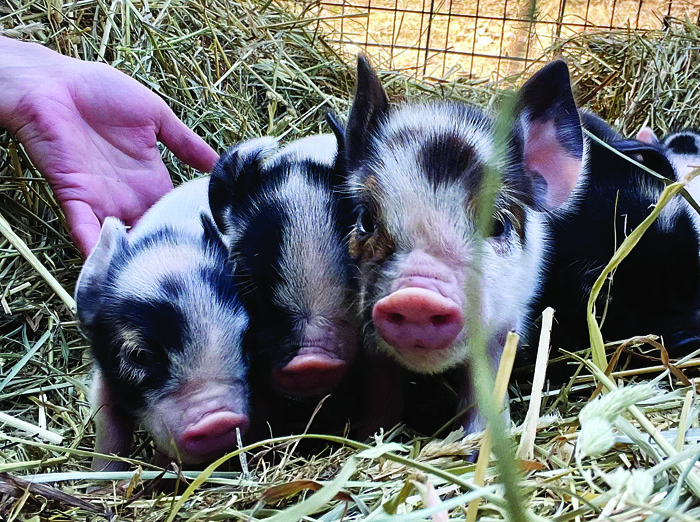
So, what’s the solution for those without the luxury of additional pastures for male-only flocks or herds? Luckily, there are now castration bands for pendulous testicles infused with a topical analgesic, making banding less painful. These are a solid, humane option. At a little over $2 each, they’re worth it to reduce the animal’s discomfort.
Castrating piglets, with their non-pendulous testicles, is more challenging. There are nonsurgical means, such as immunocastration or testosterone-limiting techniques, of which the welfare advocates seem to have contradictory opinions.
AWA doesn’t permit nonsurgical castration techniques but is currently researching their welfare impacts. Eyes on Animals is a proponent of the practice. I appreciate AWA’s effort to research nonsurgical castration in hogs before changing its standards, and I’ll wait until it makes a decision before FACT considers recommending it.
The best path forward currently is to use analgesics to reduce the suffering of your pigs. My veterinarian has agreed to show me how to do this properly, so I can castrate knowing the deafening piglet squeals are due to irritation or fear rather than pain. A good relationship with a vet is vital on a humane farm.
Horns: Breeding for Polled Animals
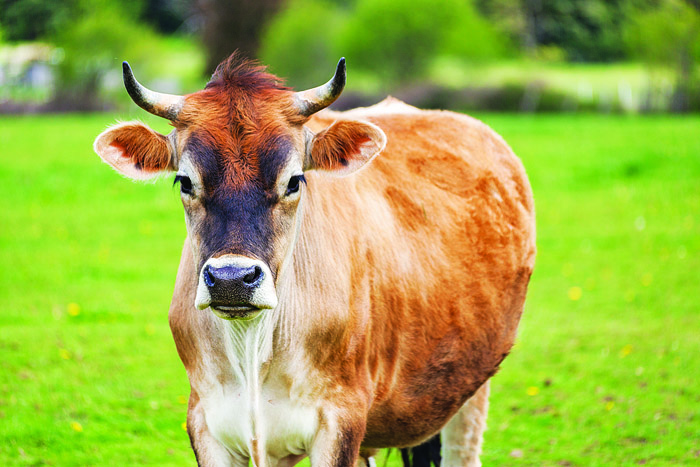
The genetics behind horns fascinate me. When we started raising heifers, I assumed all the calves had been disbudded, and I was shocked when we had our first polled (born without horns) calf born to a horned cow. Many don’t realize that in cattle and goats, being hornless is the dominant trait. There’s a reason why horns are rarely seen on a beef cow; unless the horns define the animal, such as Texas Longhorns, they’ve been bred out.
Polled Genetics in Dairy Cattle
Unlike beef cattle, dairy animals are handled frequently from Day 1, making physical alterations easier to perform. In the past, dairy farmers focused on milk production rather than polled genetics, but I’ve noticed polled genetics are increasingly noted in stud books. The modern dairy farmer wants horns gone.
If you’ve ever had a horned animal, you know the problems they can cause. Animals with horns learn how to use them early and efficiently, especially on their hornless herdmates, and they can also get tangled in fencing. So, what’s the solution? In the dairy cow world, it can be as simple as breeding for polled animals. Not only is the polled gene dominant, but it’s also simple dominance, no ifs, ands, or buts, just like Mendel’s peas.
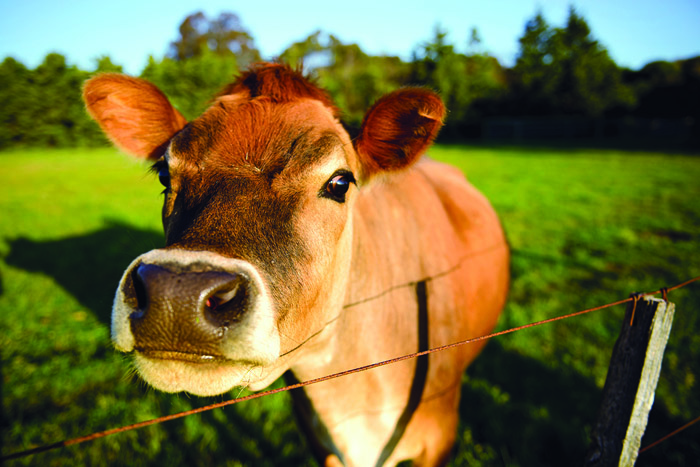
Polled cows can be either heterozygous (one horned allele and one polled allele) or homozygous (both alleles are the same). A calf gets one allele from each parent. Under the principle of dominance, which states “the presence of a dominant allele will always mask the presence of a recessive allele,” you need only one polled allele to have a polled calf, while you need both recessive horned alleles for a horned calf. This makes it easy to breed for polled animals if you have a polled bull.
Horns are also recessive in goats. Unfortunately, if you breed for polled genetics, you run the risk of polled intersex syndrome (PIS), where homozygous polled males are sterile, and females have genital defects. If you breed two polled goats, their offspring have a 1 in 8 chance of PIS. Given these odds, disbudding makes sense. Be sure to work with your vet to develop a plan to reduce suffering.
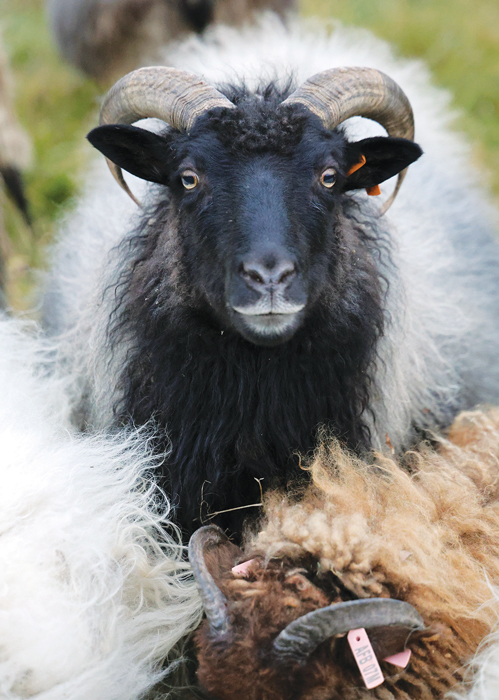
Horn genetics in sheep are completely different, but as their horns don’t tend to look like giant daggers (except for the Hungarian Racka sheep, which appears very dangerous), we usually leave sheep and their horns alone.
Farming humanely requires a different mindset than just raising animals for food. I hope you find practices that make sense for you to adopt incrementally over time. By no means are these the only practices that lead to a more humane livestock farm, but they’re pretty easy to implement and make for a good start.
Learn More
Greener World’s Certified Animal Welfare Approved Standards
USDA NIFA Land-Grant Universities Website Directory
Pasture Management Course
Mother Earth News and Friends Podcast: Responsible Antibiotics Use in Animals
FACT on Calf Sharing Webinar
Samantha Gasson is the humane farming prgram director for Food Animal Concerns Trust. She’s passionate about all farm animals, with a particular lean toward Jersey cows. In addition to her FACT position, Gasson owns and operates a diversified livestock and poultry farm in North Carolina, and her farm tends to have more “pets” than is advisable on a working, for-profit farm, most of them cows.
Originally published in the April/May 2026 issue of MOTHER EARTH NEWS and regularly vetted for accuracy.