
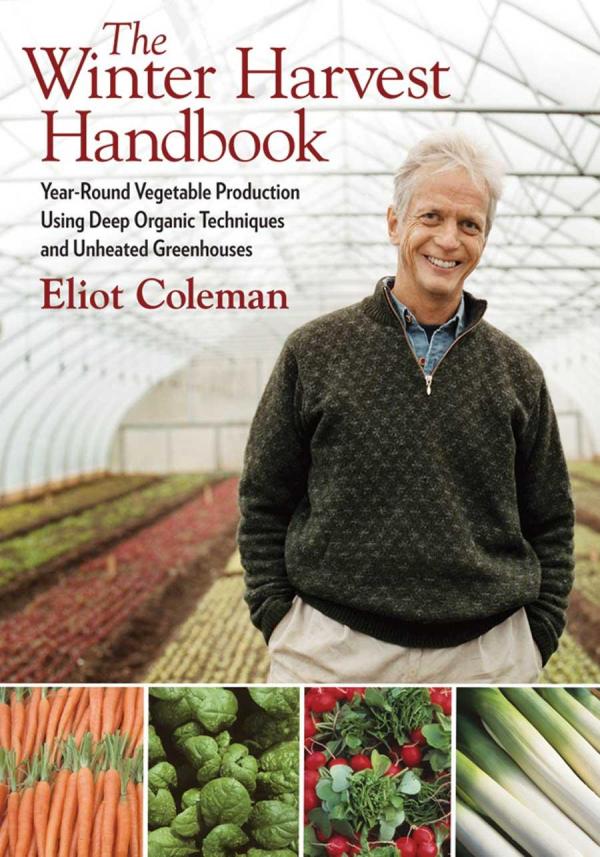
Gardening in winter is possible anywhere using deep organic techniques and unheated greenhouses, according to gardening expert Eliot Coleman. His latest book, The Winter Harvest Handbook, is packed with practical — and profitable — advice on growing organic vegetables in winter.
Though Coleman has been gardening year round in coastal Maine (Zone 5) for 15 years, he doesn’t claim to have all the answers. But The Winter Harvest Handbook does contain three guiding principles that have helped him gross $80,000 per acre annually and will assure you success as well, no matter where you live:
1. Plant Cold-Hardy Vegetables. Crops such as spinach and lettuce, Coleman says, “actually thrive and are sweeter, tenderer, and more flavorful” in cold weather.
2. Implement Succession Planting. Coleman begins planting winter garden crops on Aug. 1, the start of what he calls the “second spring.”
3. Protect Your Plants. Grow under some kind of cover, be it a low tunnel, row covers, or a hoop house.
“More than 85 percent of the United States is farther south than my location in Maine and has more sun and warmer winter weather,” Coleman writes. “There’s nothing standing in the way of winter production of high quality, fresh produce in any part of the country, except perhaps the lack of knowledge about how to employ the simple technology of cold houses and row covers, and lack of experience in planning planting schedules for continuous production.”
Coleman wrote his winter gardening book to “launch prospective local growers into successful year-round production wherever they live.” The 250-page handbook is richly illustrated with maps, charts, and stunning photographs by Barbara Damrosch, Coleman’s wife and fellow gardening expert. It contains 20 chapters that cover everything from getting started, scheduling plantings, choosing tools, and designing a greenhouse to marketing and economics.
In my opinion, The Winter Harvest Handbook is absolutely the best of the three books Coleman has written. It belongs in every homestead library.





