Best Plants for Backyard Pollinators

Attract more garden pollinators — bees, butterflies, moths and hummingbirds — by providing the plants they love.
By Betsy Franz
August/September 2011


Content Tools

Related Content

Solitary Bees: Specialist Pollinators for Your Garden

Solitary bees, such as the digger and squash bee, nest in the soil, making them great pollinators in...

What Are Your Best Tips for Sustainability in the Garden?

Considerations of sustainability factor into countless supplies, tools and methods present in your g...

My Battle Against Squash Vine Borers Gets Ugly

Squash vine borers send me over the edge, and it isn't pretty.

Help Us Confirm: Do Spent Coffee Grounds Protect Cabbage Plants?

Help us determine if a mixture of coffee grounds and eggshells can protect your cabbages from pest d...

Many food plants depend on visits from the birds and the bees to transfer pollen and ensure good crops. We can do our part to correct declining pollinator populations by choosing their favorite plants and eliminating insecticides in our landscapes.

The shape of a flower, the scent, the colors and even the time they bloom are all strategies that have evolved to attract specific types of pollinators. For example, because hummingbirds have long pointed beaks and long brush-like tongues, they prefer deep, tubular flowers. Hummingbirds also prefer red, orange and white flowers. Butterflies like bright-colored flowers, including red and purple. Some species like a place to land so they prefer broad, flat flowers, with a faint but fresh scent. Bees like bright-colored flowers, including white, yellow and blue, with sweet scents. As for flower shapes, bees can access pollen and nectar from flowers of almost any shape.

I took these tips from the U.S. Fish and Wildlife Service to guide my backyard garden plantings:

  • Use plants with overlapping bloom times to provide flowers throughout the season.
  • Select plants with a variety of colors and shapes to attract different pollinators.
  • Plant in clumps, rather than single plants.
  • Whenever possible, choose native plants. Avoid modern hybrids, as the pollen, nectar and fragrance is sometimes unwittingly bred out of these plants in exchange for “perfect” blooms.
  • Include night-blooming flowers for moths and bats.
  • Avoid pesticides, even so-called “natural” ones, such as Bt (Bacillus thuringiensis), which can be toxic to butterfly larvae.

Pollinators’ favorite plants in my garden:

  • Bees: daisies, asters, sunflowers, salvia, mint, lavender
  • Hummingbirds: trumpet vine, coral honeysuckle, hollyhocks, sage
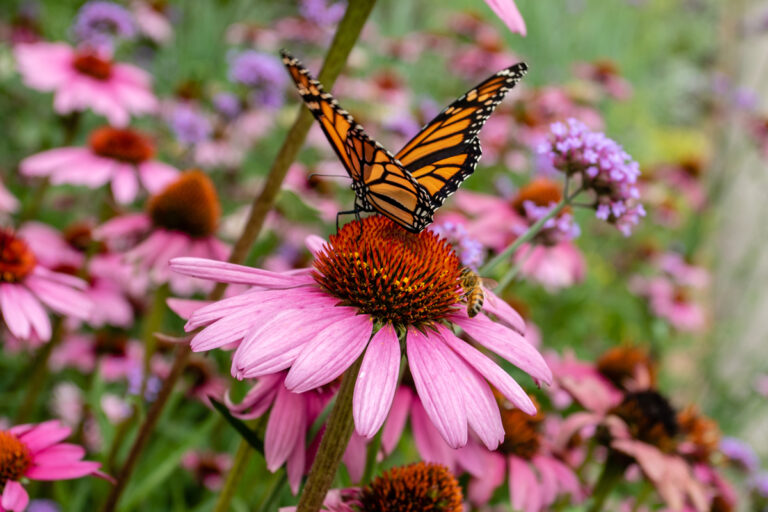
  • Butterflies: zinnia, purple coneflower, black-eyed Susan, coreopsis

Betsy Franz
Melbourne, Florida



Post a new comment
|


Subscribe Today - Pay Now & Save 72% Off the Cover Price

First Name: *
Last Name: *
Address: *
City: *
State/Province: *
Zip/Postal Code:*
Country:
Email:*
(* indicates a required item)
Canadian subs: 1 year, (includes postage & GST). Foreign subs: 1 year, . U.S. funds.
Canadian Subscribers - Click Here
Non US and Canadian Subscribers - Click Here

Lighten the Strain on the Earth and Your Budget

MOTHER EARTH NEWS is the guide to living — as one reader stated — “with little money and abundant happiness.” Every issue is an invaluable guide to leading a more sustainable life, covering ideas from fighting rising energy costs and protecting the environment to avoiding unnecessary spending on processed food. You’ll find tips for slashing heating bills; growing fresh, natural produce at home; and more. MOTHER EARTH NEWS helps you cut costs without sacrificing modern luxuries.

At MOTHER EARTH NEWS, we are dedicated to conserving our planet’s natural resources while helping you conserve your financial resources. That’s why we want you to save money and trees by subscribing through our earth-friendly automatic renewal savings plan. By paying with a credit card, you save an additional $4.95 and get 6 issues of MOTHER EARTH NEWS for only $10.00 (USA only).

You may also use the Bill Me option and pay $14.95 for 6 issues.