


Conserving energy at home is a great idea for many reasons. It cuts down on energy costs, and because most of the energy we use comes from fossil fuels, using less is beneficial for the environment, too.
In many ways, saving energy can be pretty simple. You can find dozens of different ways to conserve — such as turning down your thermostat in the winter, putting a blanket on your water heater or switching to more efficient light bulbs. But most homes are so inefficient that even after you’ve done all the easy home improvements, there are still dozens of ways to save money and energy. How do you identify them all and then decide which to do first?
Unfortunately, the improvements that save you the most energy over time tend to be expensive. Before you spend hundreds — or even thousands — of dollars on home improvements, such as buying a new furnace, installing insulation or putting in new windows, it’s nice to know how much energy they’ll actually save. Just as important, you’ll want to know how long these home energy upgrades will take to pay for themselves and start saving you money.
These questions aren’t just for older homes — new homes often have significant energy problems, says Ken Riead of Hathmore Technologies in Independence, Mo. Riead is a home energy rater (one type of certification for home energy auditors). He trains other energy raters and has been working in the field of energy efficiency and renewable energy since the 1970s.
“New houses typically aren’t as solidly constructed as older houses,” Riead says. “New homes can leak more air, causing health and comfort problems, and the quality of the wood and other building components can be poor. Insulation is often very sloppily installed and, in many cases, missing entirely.”
A home energy audit can help, he explains. “Most homeowners aren’t knowledgeable about how to look for these problems, nor how to properly correct them. Unless your home is an Energy Star home or has undergone energy testing, you will likely experience high energy bills and comfort problems, so it is well worth having an energy audit performed,” Riead says.
Where to Start with Your Home Energy Audit
Energy audit costs will vary depending on where you live, but Riead says that a professional energy audit, which includes on-site testing of your home, can cost $500 and up. If that’s out of your price range, consider doing a free online energy survey or DIY audit. Most of these will ask you a series of questions about your house — for example, the age of your furnace and water heater. One good option is the Home Energy Saver offered by the Department of Energy. Online energy audits are where most people start, Riead says, but a home inspection from an energy auditor can tell you some things the online calculators can’t. “There’s really no substitute for someone visiting your home and verifying the condition of everything,” he says. “Say your furnace is old, but it’s still operating just fine. The online software won’t know that.”
If you decide you would benefit from a home visit, what do you do next? First, seek out local and state programs that offer free or reduced-cost audits. One good place to check is the website of your state energy office. (Get a complete list of contact info for state energy offices from the website of the National Association of State Energy Officials.) Also, check the website of your local utility, which may offer its own programs or direct you to other local programs.
Next question: Are you thinking about taking out a loan to make these home energy improvements? If so, you’ll want to check out the options before scheduling an energy audit, because many loans will have specific requirements for an audit. (See “Energy-Efficient Mortgages” at the end of this article.)
Because energy audits are becoming more popular, you’ll find some auditors who are just getting started, while others have years of experience. To get the most for your money, do a little research before choosing one. Two organizations that certify home energy auditors are the Building Performance Institute and the Residential Energy Services Network. Visit their websites to search for a local energy auditor.
When you research energy auditors, ask what kind of training they’ve had and how long they’ve been doing energy audits, and request sample reports. Find out if they propose to do the retrofit work themselves, and how that process would work — be clear on exactly what you’re committing to. Finally, be sure they will perform combustion safety tests as part of the energy audit. This is an important safety test so don’t skip it! (See “Combustion Safety and More Things to Know” further along in this article.)
Our Energy Audit
I wanted to learn more about home energy audits, so my husband and I decided to get one for our house. It’s a two-story wood-frame home built in 1935, and it’s about 1,100 square feet, plus an unfinished basement. We’ve lived there a year and a half, and during that time we’ve done a lot of basic energy improvements, including adding insulation around pipes and sealing up leaky ductwork in the basement. For us, the big questions were, “What next? What are the other major energy improvements we could make, and which of these projects should we actually do?”
Riead agreed to do an energy audit of our home, and because I was doing research on this subject, we ended up with more than just the usual crew. In addition to Riead, the group included Joshua Peterson, another energy auditor from Riead’s company, as well as Kevin Goldstein, a professional engineer who runs a company, GreenEsco, that does energy audits. They all arrived at my house one Thursday morning and stayed for a few hours conducting the audit.
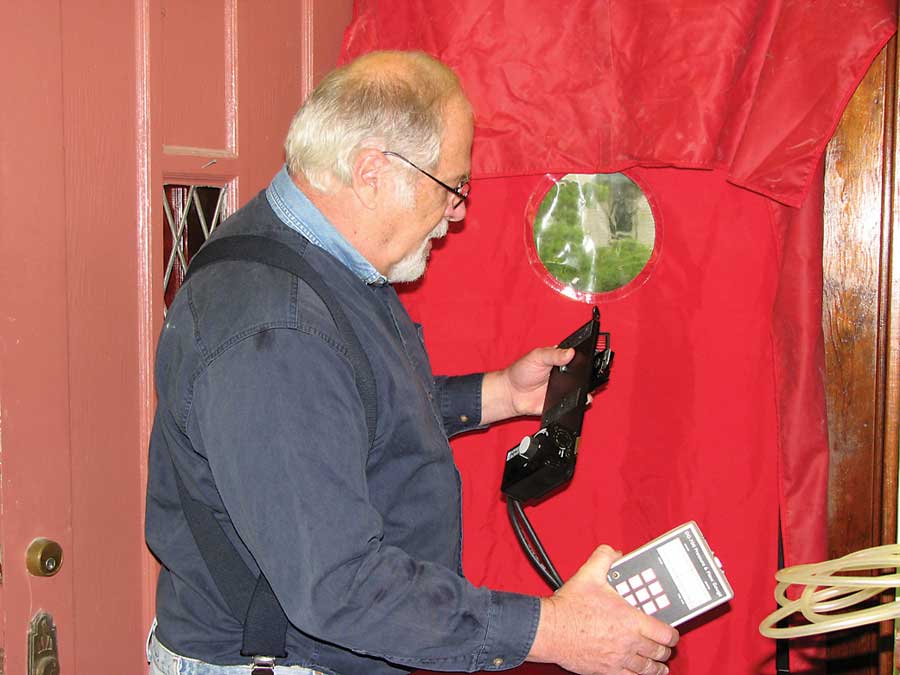
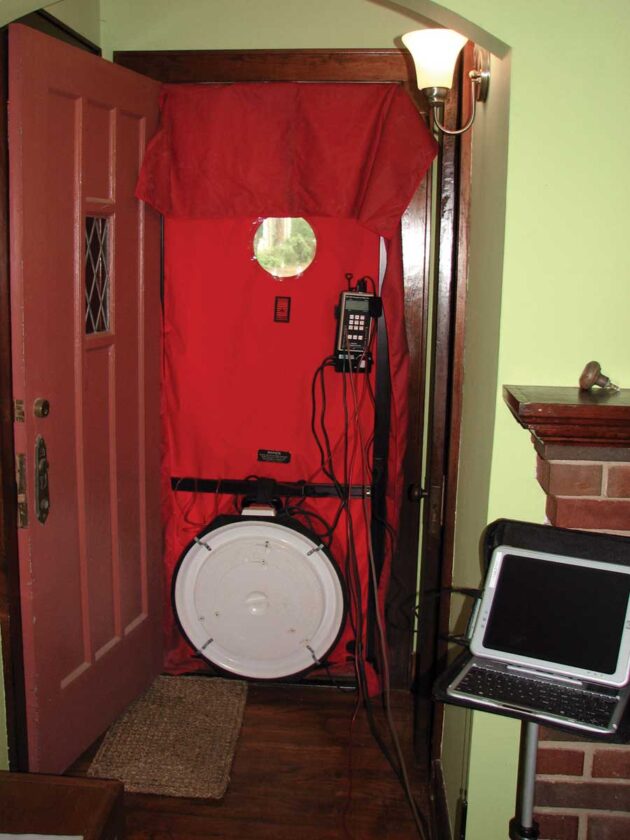
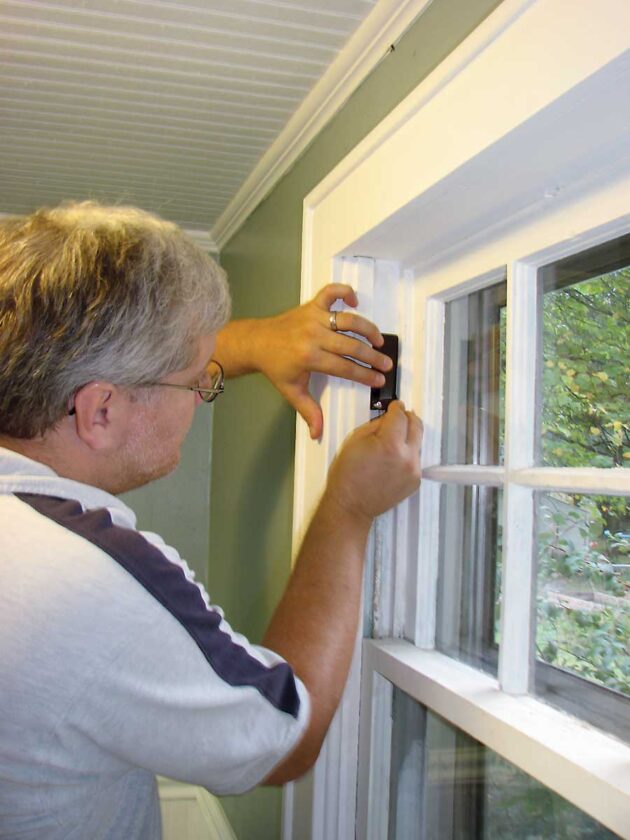
One of the major tests was the blower door test. We closed all the windows in the house, and then the auditors hooked up a panel with a fan in an open doorway. By controlling the air pressure, they could measure the overall air exchange rate — which tells us how quickly all that expensively heated or cooled air is leaking out of our house. While the blower door was going, we could feel serious drafts at all the spots where air was leaking.
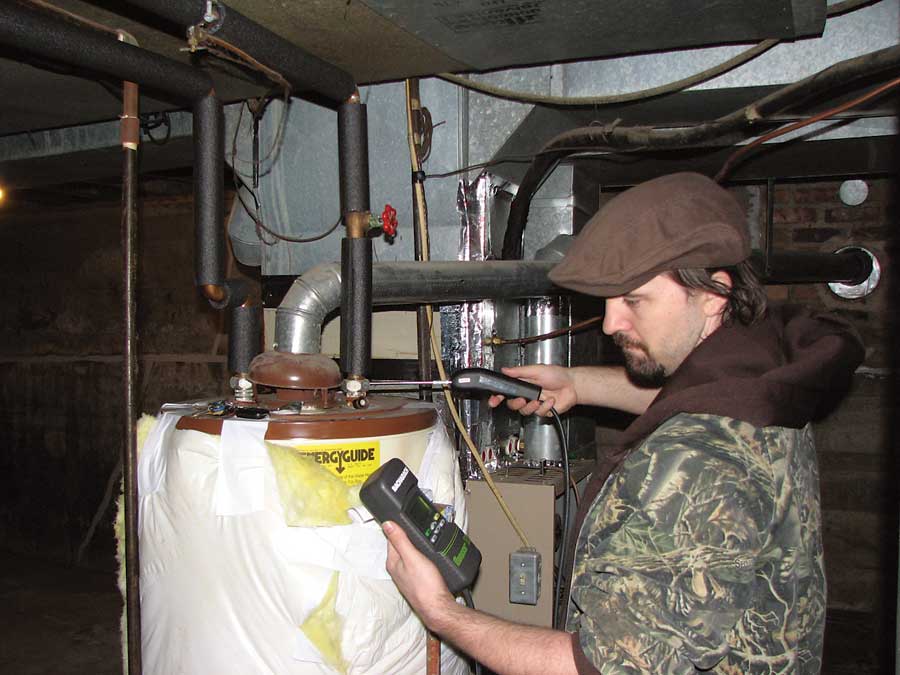
The energy auditors also checked “combustion safety,” meaning they checked for carbon monoxide in the house, and tested the water heater and furnace to find out whether they were backdrafting (whether the vents were releasing carbon monoxide, sulfur and soot into our house).
They also spent a lot of time measuring the house, getting dimensions of all the windows, doors and walls, so that if we needed to replace any of them, they could tell us exactly how much wall space or how many windows we were talking about. They peeked into closets, crawl spaces and other unfinished spots to look for insulation.
What the Energy Auditors Found
First, the good news: We didn’t have a problem with carbon monoxide. (Yay!) We had plenty of insulation in the attic, and they didn’t recommend replacing doors or windows. Our current windows (single panes with storms) were all classified as “tight,” and each exterior door was at least “adequate.”
The other news was mixed. The blower door test confirmed pretty much what we’d expected: Our home is reasonably airtight for an older home, but we’re still losing a lot of energy. “What you’re looking for is a complete air change every three hours,” Goldstein told us. “You have one every hour and a half.” So despite the work we’ve already done to caulk around windows, add weatherstripping around doorways, etc., there’s still a lot we can do to make our home more efficient.
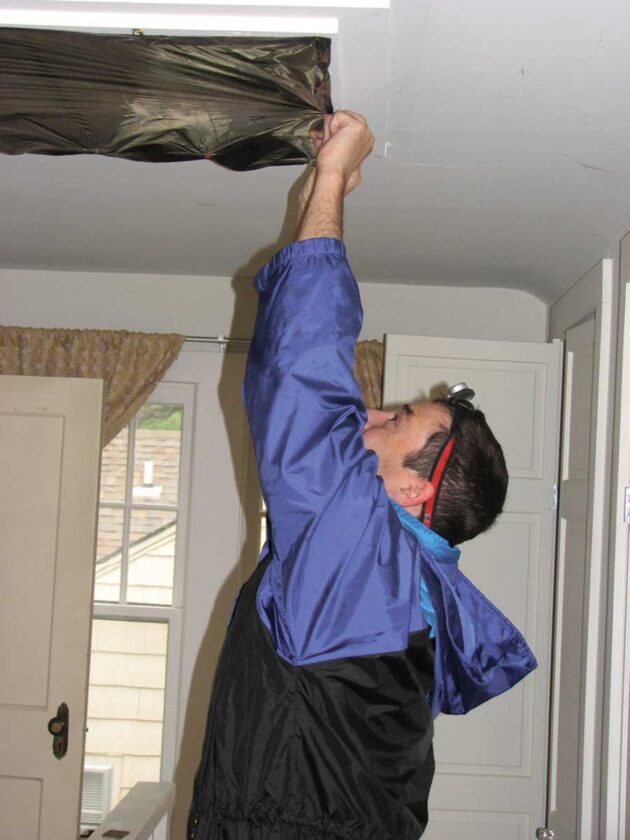
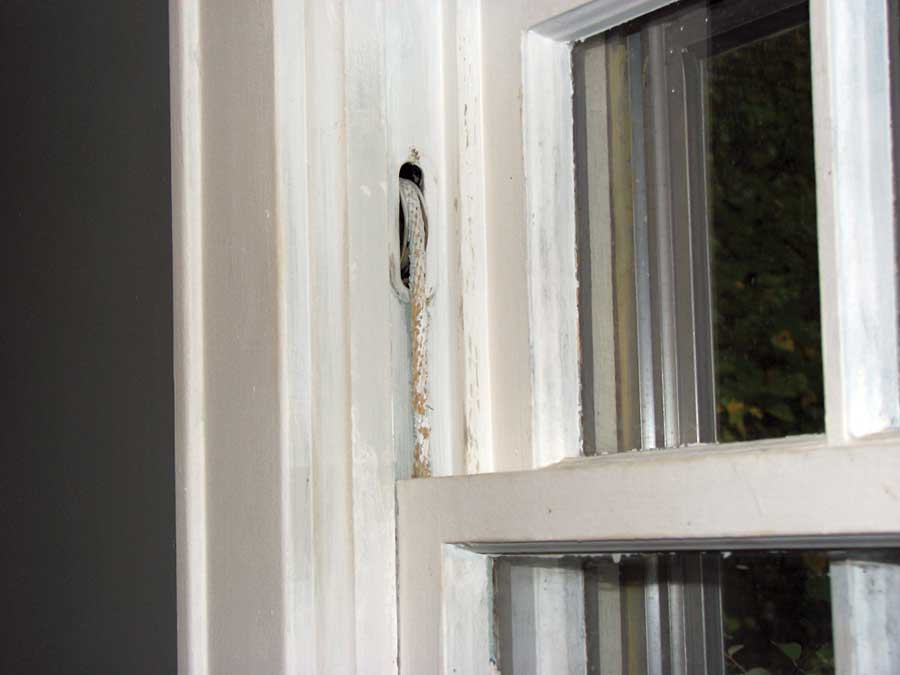
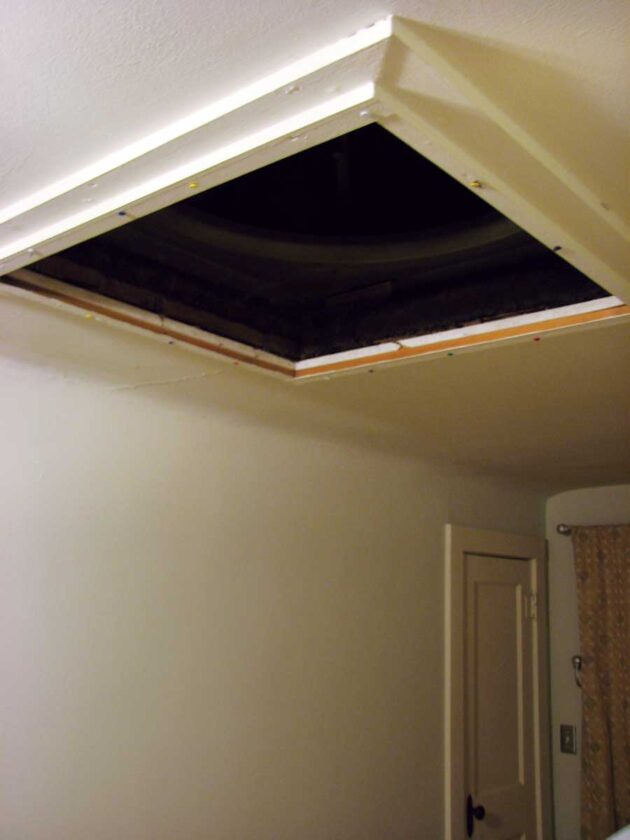
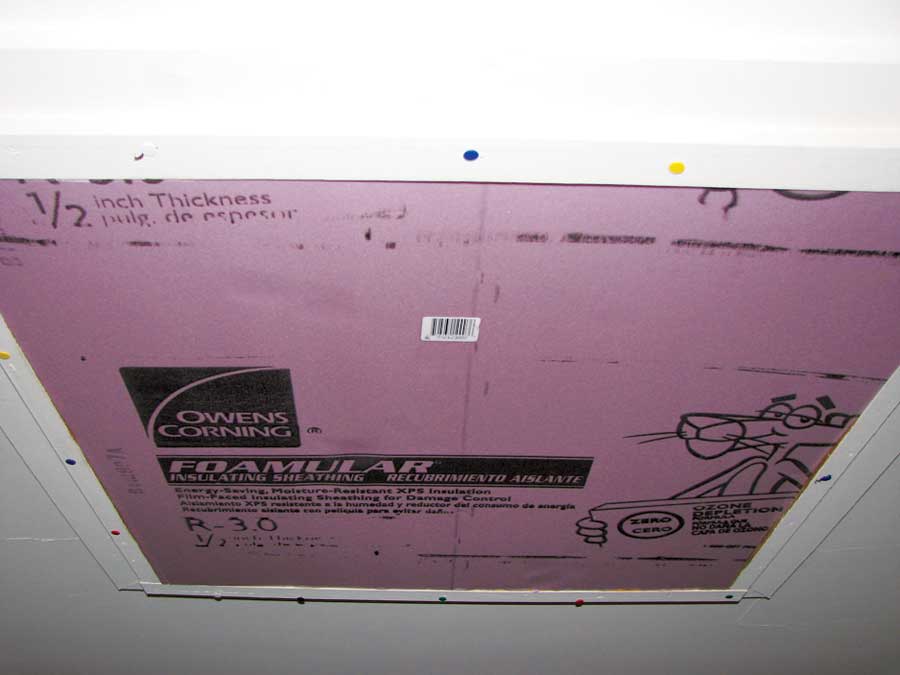
While there are numerous air leaks in our home, a few stand out. If we can stop the leaks from our broken attic fan, they estimate that we can reduce air infiltration by about 12 percent, and save about $15 a year in energy costs. (We started by covering it with foamboard. See photos, in the Image Gallery.) The pulley openings in our windows are another significant source of leaks. Apparently this is a pretty common issue in older homes. We can fix those with pulley seals, a nifty little product you can find online for about $3 per window. By using them on all our windows we can reduce total air infiltration by about another 10 percent. Sold!
Other recommendations were much more expensive — check out Energy Audit Results: Potential Costs and Savings for the breakdown of costs and savings. Here are a couple of items of particular interest.
The most expensive recommendations were for improved heating and cooling systems. We already have a reasonably efficient furnace and air conditioner (for an older home), but there are much more efficient models on the market. So, we can save about $320 a year with an upgrade, but the total cost is $11,000 and the payback period is about 35 years. As you might expect, we’re not rushing out to purchase those items. As Goldstein explains, new heating and cooling equipment isn’t going to decrease our energy costs because of our circumstances — our furnace and air conditioner are already fairly efficient, and we just don’t consume that much energy. For people in different circumstances (for example, someone with a bigger house, a colder climate, or a really old furnace), upgrading might pay off quite a bit faster.
Another issue was insulation. I was surprised to learn that our exterior walls have zero insulation. You’d think that adding insulation would always be a huge money saver, but in our case, it’s not as much as you might think — the payback period is about 15 years. That’s partly because blowing cellulose insulation into existing walls is a significant undertaking that’s beyond our DIY skills, so we’ll have to pay a contractor to do it. We’re still planning to do this, but not until we’ve finished a few smaller insulation projects that either cost less or pay off faster. For example, we can significantly improve the insulation in our basement by insulating around the rim joists (see photo in the Image Gallery). That would cost about $200 if we contracted the work out, but by doing the work ourselves, the only cost is for the materials — about $60.
So there you go. We now have a simple list of what we can do to make our house more efficient, and a pretty good idea of the potential costs and savings. However, I wanted to know more, so I asked the energy audit crew what they usually find during home energy audits, and what most people don’t know about home energy that they probably should.
Combustion Safety and More Things to Know
“The biggest thing I run into with energy audits is that people don’t realize what a big issue combustion safety is,” Peterson says. Low-level carbon monoxide leads to persistent flu-like symptoms, and high levels can cause death — so if this is a problem, you want to get it figured out before doing any work to seal up your home. “Those air leaks may actually have been keeping you alive. Sealing them up could be disastrous.” Riead says.
Goldstein says it’s worth doing this simple DIY combustion test at home, especially after doing any home air sealing and insulation work.
- Turn your water heater to pilot.
- Run hot water for five minutes. (This will cause your water heater to kick on.)
- Securely close all your windows and doors.
- Turn on your dryer and any exhaust fans in your house (usually in the kitchen or bathroom).
- Light your water heater burner.
After one minute, check to see if it feels warm and moist. You can also hold up a smoking match to see whether the air is blowing out into the house. In either case, you may have a problem and should consult a professional.
The auditors had other safety concerns. When doing DIY energy fixes, they warn to keep an eye out for potential fire hazards, especially if you’re putting in insulation. “Putting foam around a hot flue is never a good idea ,” Riead says. He suggests using sheet metal cut to fit around the flue and then sealed with pure silicone caulk.
Another fire risk Riead sees is that people try to cover up can lights with insulation. He says that although this project can be done safely with particular kinds of can lights and light bulbs, in most situations it’s dangerous, so you shouldn’t try it unless you know what you’re doing.
Faulty wiring can be a fire hazard, too, Peterson says. If your home’s wiring needs an upgrade, it’s best to do that before you put in insulation, because you don’t want to have flammable insulation around bad wiring.
They also told me that one of the most common home energy problems they see is air infiltration. Goldstein says that people tend to miss it because it’s not visible. “For every leaky door, there’s 10 times as much air leaking through unseen cracks.” Goldstein also says to be sure to do your air sealing before you cover these cracks up with insulation, otherwise you’ll slow down those leaks, but won’t stop them.
Fixing air leaks is the easiest place for most people to start making energy improvements, because many of those fixes are cheap, or even free. As just one simple example, Peterson says to remember to lock your windows. “It’s not just a safety issue, there’s also an energy issue. Unless you want your windows open, they should be locked at all times to reduce air leakage.”
Other air infiltration problems can be solved with inexpensive products such as caulk and weatherstripping, or pulley seals. In fact, after you know what needs to be done, most home weatherization is pretty easy to do yourself. Guess what I’m doing this weekend?
Finding the Money for Home Energy Improvements
Energy-Efficient Mortgages
If you’re looking at a major investment in home energy improvements, the next obvious question is where to get the money. Some people prefer to save money and pay as they go, but if you’re considering a loan, you should be aware that there are special classes of loans available for home energy improvements.
The general idea behind an energy-efficient mortgage, or EEM, is that when you buy a new house, you may need extra money to pay for a more expensive — but more efficient — home, or to make energy upgrades to an existing home. In the right circumstances, this type of mortgage can start saving you money immediately, because you can save more each month on your utility bills than you pay on your loan. A home energy audit (in this case, usually a specific level of audit, called a home energy rating) is part of the process of getting your loan approved.
These types of mortgages are becoming more popular and in theory, they should be easy to find. Major government agencies including the Federal Housing Administration (FHA) and the Veterans Affairs (VA) office have programs to encourage the use of EEMs. TheDatabase of State Incentives for Renewables and Efficiency (DSIRE) has a good summary of those programs.
In practice, you’re probably going to have to hunt around for a lender that offers EEMs — at least for now. In the course of researching this article I made numerous phone calls to lenders in my area to ask if they offered energy-efficient mortgages. I finally found one who said yes: Wells Fargo Home Mortgage.
But there’s a good chance that more banks will be offering EEMs in the near future. One promising development is that Energy Star is now offering a type of energy-efficient mortgage in limited areas. To learn more about EEMs in general, you can find information from Energy Star and from the Residential Energy Services Network (RESNet).
Find Rebates and Tax Credits
In many cases, you can get money for specific energy improvements in the form of government rebates or tax credits. Many cities have home-weatherization programs, usually restricted to low-income households.
However, you can also find energy-efficiency programs open to anyone. You can find a complete list of state and federal energy incentives at DSIRE. You should also be able to find information on state and local energy-efficiency programs by visiting the websites of your utility, your state energy office, and your city and county government. Depending on where you live, these websites may be incredibly useful — or not. But at the very least they should list phone numbers that you can call for more information.
For federal energy incentives, Energy Star has a user-friendly list, and the Tax Incentives Assistance Project has lots of good information. Whatever you do, check back frequently. It’s surprising how often government energy incentives change. Who knows what they’ll be by the time you’re reading this? The Energy Star and DSIRE lists are good resources for staying up to date.
Megan E. Phelps is a freelance writer based in Kansas. She enjoys reading and writing about all things related to sustainable living including homesteading skills, green building and renewable energy. You can find her on Google+.