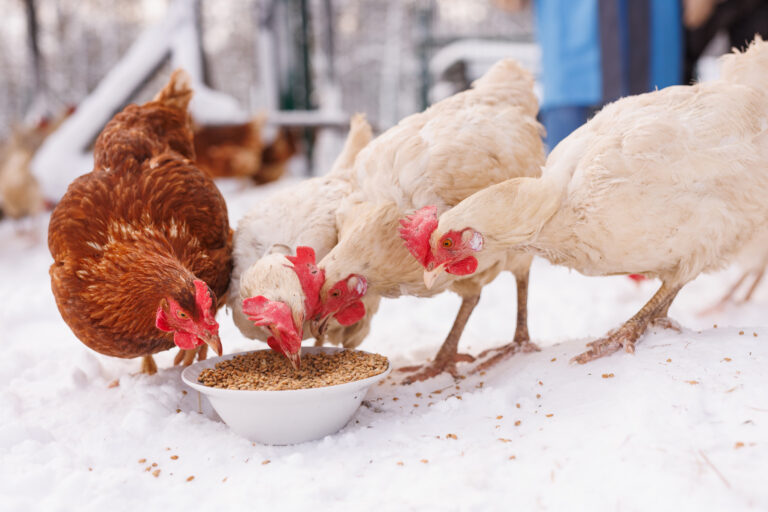
Learn what to feed chickens in winter and how to keep them safe while they aid you in preparing the garden for next year’s growing season.
 This article is also in audio form for your listening enjoyment. Scroll down just a bit to find the recording.
Keeping chickens in your garden in winter may sound counterproductive. However, your flock would love nothing more than to scratch through the garden soil in winter months – it’ll boost their mental and physical health while benefiting the garden soil and reducing weeds and harmful garden pests.
What Do Chickens Need in Winter?
Although chickens may not enjoy cold weather, they can survive the harshest winter months with some help from their keepers. Chickens can safely tolerate temperatures and windchills down to about 30 degrees Fahrenheit. When temperatures dip below this mark, hens should spend more time in the chicken coop. Letting them venture outside for short periods will help your flock stay active without becoming too cold or developing frostbite. In addition, here are four essential elements your chickens will need to successfully overwinter.

- Good nutrition. Chickens need a well-balanced layer feed throughout the year. You can also provide probiotics, prebiotics, herbs, and herbal tea. While they aren’t strictly necessary, they can boost the health of your flock and keep their immune systems strong.
What you feed your chickens in winter will depend on your climate. In colder regions, hens will need higher amounts of protein and carbohydrates. Flocks in warmer climates won’t need the higher amount of nutrients to stay warm. You can purchase chicken scratch and treats from a local feed store or make them yourself; just remember that such treats should never comprise more than 10 percent of their diet. Feeding chickens large amounts of scratch will cause extra fat to develop around your hens’ organs, resulting in shorter life spans. - Access to fresh water. An adult hen may drink up to a pint of water daily, making access to fresh water crucial. In winter, that means the water could freeze, preventing your hens from staying hydrated. Check your chicken’s water fountain several times a day in cold weather, and always have a spare waterer ready to replace a frozen one. Thaw the frozen fountain in the garage or basement. If power to your pen is possible, another option is a metal water fountain with a heated base, which can be purchased at most farm stores or online. If neither of those options is available to you, then you’ll need to haul buckets of warm water from the house several times a day during freezing weather.
- Protection from predators. In winter, chickens need protection to avoid being picked off by a hungry fox, hawk, or other predator. When they’re working in the winter garden, protect your chickens from predators via faux free-ranging or temporary fencing (more on that later).

- Protection from the elements. Set up physical barriers, such as straw bales or tarps, around the northwest sides of the run or garden space to help shield your flock from strong winter winds while still allowing fresh air to circulate. Providing a solid coop with proper ventilation is best when temperatures are going to be below freezing. Avoid heat lamps, as they’re a fire hazard. Also, avoid blocking off airflow. Though you don’t want cold drafts, you’ll need air circulation, especially up high. Moisture and ammonia from the chickens will rise, and without proper ventilation, the moisture can cause frostbite on combs, and the ammonia can be detrimental to your flock’s respiratory systems.

Let Them Loose
Because of chickens’ ability to rip up whole beds of seedlings in just a few minutes, many gardeners spend the entire growing season trying to keep their birds out of their garden beds. But letting your flock forage in fallow winter gardens is a different story. Chickens improve soil fertility by dropping natural fertilizer in the area. This manure is packed with nitrogen, a nutrient essential to garden plants. Many gardeners need to replenish nitrogen every year, so having your flock work the soil in winter may reduce fertilizer costs.
Not only will your flock supply the garden with fertilizer every winter, but it’ll also clear the garden of harmful weed seeds and invertebrates found just below the soil’s surface. These tasty morsels are packed with nutrients and calcium that hens need to lay healthy eggs.
To prevent pathogens like Salmonella and E. coli, the chickens need to be pulled out of the garden 90 days before you plan to harvest vegetable crops that don’t come into contact with the soil, such as corn, peppers, and trellised tomatoes, and 120 days before harvesting soil-contact crops, such as lettuce, cabbage, and carrots.

Add a layer of wheat, oat, or barley straw to the garden’s surface to protect the soil from drying out and encourage chickens to scratch. While a hen is busy scratching, she’s doing more than looking for tasty morsels; she’s also improving the condition of the earth below, gently working the straw into the soil. The straw then turns into brown compost that feeds the garden. The scratching motions deliver oxygen to the soil and promote healthy springtime planting conditions. They also help work in any manure the birds leave behind, which only benefits the garden.
Guard Your Girls
No matter the season, free-range chickens are at a higher risk of predator attacks than flocks confined to a run. To protect chickens from an attack, some poultry keepers have started a new form of free-ranging called “faux free-ranging.” The process uses chicken tractors to ensure the flock’s safety while providing free-ranging benefits. Consider incorporating chicken tractors into your winter garden. They can work well for inground gardens but may prove tricky for raised beds.

The good news is that chickens can work in raised beds or a small garden section with the addition of temporary fencing. Temporary fencing keeps chickens confined but doesn’t offer the same protection from predators as a chicken tractor. Only allow chickens in temporary fencing when you’re nearby to prevent a predator attack. Portable, electric netting can help deter ground predators, but hens should still be supervised for their safety.

Finally, inspect your area before bringing chickens into the garden. Remove all members of the nightshade family (including leaves, stems, and fruit) and other plants that are poisonous to chickens. Never allow your chickens to forage through areas that have been treated with pesticides and herbicides.
With their energetic foraging, chickens are a fantastic addition to the garden. Allowing your flock to work in the vegetable garden in winter will benefit both the garden soil and your flock, setting you up for a successful spring.
Originally published as “Keep Chickens in Winter Gardens” in the October/November 2024 issue of MOTHER EARTH NEWS magazine and regularly vetted for accuracy.
Erin Snyder and her family have raised chickens and ducks for nearly two decades. She’s passionate about all things poultry but is especially interested in poultry nutrition, predator protection, egg-laying disorders, and helping chickens live their best lives well into their golden years. You can follow her chicken adventures on her newly hatched Instagram page @TheHenHouseHygge.