
Heirloom Vegetable Gardening by William Woys Weaver is the culmination of some thirty years of first-hand knowledge of growing, tasting and cooking with heirloom vegetables. A staunch supporter of organic gardening techniques, Will Weaver has grown every one of the featured 280 varieties of vegetables, and he walks the novice gardener through the basics of planting, growing and seed saving. Sprinkled throughout the gardening advice are old-fashioned recipes — such as Parsnip Cake, Artichoke Pie and Pepper Wine — that highlight the flavor of these vegetables. The following excerpt on cowpea varieties was taken from chapter 15, “Cowpeas.”
To locate mail order companies that carry these heirloom cowpea varieties, use our Custom Seed and Plant Finder. Check out our collection of articles on growing and harvesting heirloom vegetables in Gardening With Heirloom Vegetables.
A Brief History of Cowpea Varieties
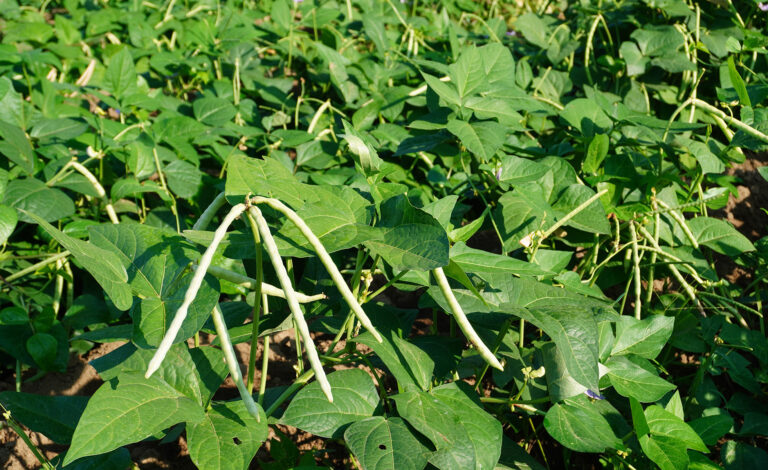
Cowpeas (Vigna unguiculata) are not generally considered among the vegetables fit for the kitchen garden, yet in recent times the heirloom varieties have taken their place beside okra and sweet potatoes, and many of the other vegetables that distinguish the American garden from its European counterparts. Because cowpeas require considerable space, they have always been treated as field crops. On the other hand, they are no more troublesome in this respect than sweet potatoes, and the bush varieties can be raised like bush beans. If there is a drawback, it is only that cowpeas cannot be grown in much of the country due to their need for a long, warm growing season. For this reason their culture is most closely associated with the South.
In the codex of Dioskorides from Constantinople (A.D. 500-511), a cowpea plant is shown in full bloom with several pods, some mature, some very small and green. It is identified in the manuscript as fasiolus, the term now used for New World beans (Phaseolus vulgaris). Originating in Africa and cultivated in Egypt since about 2500 B.C., cowpeas have evolved into hundreds of distinct forms. The Romans called them by three names: phasiolus, dolichos, and smilax, probably in reference to varietal distinctions now lost. Roman cooks prepared the young green pods just as we cook string beans today. Most interesting of all, however, the plant in the codex is a bush variety very compact in habit and nearly identical to the variety depicted by Camerarius in his 1586 herbal, suggesting a fascinating continuity of more than 1,000 years.

Botanists have determined that the genetic homeland of the cowpea is the Niger River Basin of West Africa. The Bantu peoples in particular have developed the cowpea to a high level of cultivation. It is this West African source that also provided the genetic stock for the cowpeas that came to the New World in connection with the slave trade. This close association with African Americans and the New England perception of the pea as a fodder crop for slaves undoubtedly provided Fearing Burr with grounds for omitting cowpeas entirely from his book on American vegetables.
It was not due to a lack of cowpeas or that the historical record was silent on their early culture in this country, for references to cowpeas abound. Thomas Jefferson raised a French variety of cowpea he referred to in 1774 as black-eyed peas (Betts 1944, 49). They were planted beside the corn patches, where many gardeners plant them even today. Other planters throughout the South also raised cowpeas. Most of the varieties appear to have been introduced from the Caribbean or from Brazil rather than directly from Africa. During the eighteenth century, they were quickly adopted into the diet of poor whites as well, who dubbed them crowder peas, from the Scotch-Irish word crowdy, a porridge.
Several varieties are documented from before the Civil War: Mountain Crowder, considered the finest sort; White Crowder, a middling variety; and Gray Crowder, often referred to as the “poor man’s pea.” Tennessee White crowder and Running Conch are two white heirloom varieties still available today. The Gray Crowder is also being maintained by heirloom collectors. However, the most famous variety from the early half of the nineteenth century was Clay, the cowpea included in the soldiers’ mess by the Confederate Army. This variety is still grown in the South, where it is treated with an enthusiasm verging on devotion.
Growing Cowpeas
Today, most of the heirloom cowpeas are grown in the South or Southwest, and the choice of colors alone is impressive, certainly as varied as that of beans. There are also many unusual shapes. One that I have raised is the Rice Cowpea, an 80-day pea that produces exquisite tiny seeds about double the size and shape of a grain of round rice. They cook in 40 minutes without soaking and make wonderful additions to rice or whole grain dishes.
Cowpeas were raised outside the South more as a crop to improve the soil or to serve as midsummer pasturage, since the plants could not often produce peas in short-season areas. Yet soil improvement is one reason why cowpeas ought to be grown in kitchen gardens, regardless of whether they are raised for food. Cowpeas absorb more nitrogen from the air than clover and draw up large amounts of phosphorus to the surface (“Cow Pea” 1901, 48-49). Grown simply as green manure, the peas will leave the soil enriched for the next crop. On ground where I planted cowpeas one season, I planted Musselburgh leeks the following year. I have never had finer leeks than those.

There is one heirloom cowpea that can be grown in many areas of the United States because it is hardy and produces consistently under adverse conditions. It is Whippoorwill, a variety with short, bushy plants and long pods that comes to crop between 70 and 90 days. The seed is small, brown in color, with speckles. It is often mentioned in seed catalogs of the late nineteenth century, and in my part of Pennsylvania it was used as hay for dairy cattle and as a crop for hog pastures. They ate very well. I have grown Whippoorwill several times and have never been disappointed. Many varieties of cowpeas turn moldy or drop their leaves when cool weather sets in. This variety continues right up to frost, and that is why I recommend it. It can be used in cookery like any common black-eyed variety.
The following cooking advice is taken from Elizabeth Winston Rosser’s Virginia cookbook called Housekeeper’s and Mothers’ Manual (1895, 275).
Field Pea Recipe
There are many varieties of the field pea, but those commonly known as the black-eye are the most delicate: gather before they are hard, shell, and boil until they are tender with a small piece of bacon, adding one-half an onion, well chopped, to the boiling water; drain and wash well, and make into cakes, and fry a light brown: garnish with bits of fried bacon. Boiled plain is a frequent way of preparing them, or mash well after boiling, with the addition of a little onion. Season with pepper, salt and butter; put in a baking-dish, and bake for one-half hour. Serve in the dish in which it is baked. If used after they are dried, soak in cold water.
Find seeds for these heirlooms and more with our Custom Seed and Plant Finder.
Reprinted with permission from Heirloom Vegetable Gardening by William Woys Weaver and published by Henry Holt & Co, 1997.





