
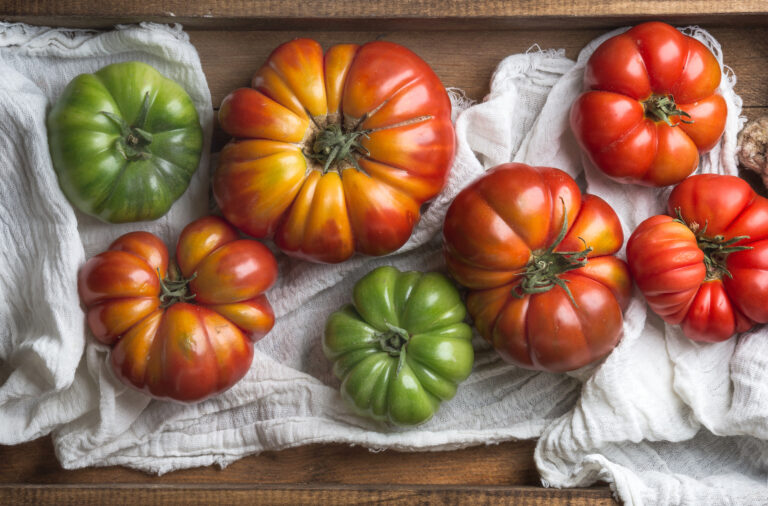
Bring back lively flavor with these best-tasting tomato varieties. Grow heirloom tomatoes varieties in your garden to be used in delicious recipes
Heirloom Tomatoes Varieties
There’s no other way to say this: Tomato flowers are promiscuous. They spread their pollen everywhere, mating with any tomato in the area. It’s no surprise that new varieties arise from these causal affairs, including a completely American original, Mortgage Lifter. The first Mortgage Lifter came from William Estler of Barboursville, West Virginia. He found the tomato growing in his garden in the 1920s and thought enough of it to stabilize its genetic traits. He had a lawyer register the name Mortgage Lifter in 1932. Estler sold thousands of plants from what he believed was an accidental cross between Pritchard and Ponderosa Pink tomatoes, the only two he grew on his farm. One of his employees dubbed the fast-selling plants as “mortgage lifters,” and Estler adopted the name. The original Mortgage Lifter tomato variety weighs from one to three pounds, and is low acid, sweet, and meaty with small seed cavities. And yes, it’s pink.
About the same time Estler was stabilizing his variety Mortgage Lifter, M.C. Byles started his quest for the perfect tomato two counties away in Logan, West Virginia. Not a gardener, he complained to his wife Elizabeth that he disliked store-bought tomatoes. She fired back, “If the tomatoes don’t suit you, then go and invent you one that does.” So, he went to the library and read about breeding tomatoes. He settled on four varieties he liked and cross-pollinated them; German Johnson and Belgium Giant were probably two of the varieties used. Once he had the tomato he wanted, Byles sold plants for $1 each during the Great Depression. After he sold his first six thousand, Byles paid off his home’s mortgage — hence another Mortgage Lifter.
Plump orange ones, green cherry tomatoes, fuzzy yellow salad types, chestnut brown beefsteak tomatoes — these are what the average person thinks of when they hear the words “heirloom vegetables.” Tomatoes have become the stars of the heirloom world, featured on gourmet menus, temptingly stacked in organic grocery stores, and featured as the bestsellers at farmers’ markets. Heirloom tomatoes are everywhere, educating consumers about how succulent, savory, and exciting heirlooms are. Tomatoes are the most widely grown vegetable worldwide, and now heirlooms have become the most sought-after ones for gardens and dinner plates, almost to the point of obsession. That’s because there are so many colors, shapes, and flavors beyond the round, red, hard hybrid tomatoes we’ve been fed for over seventy years. Let’s try some.
In the Kitchen with Doreen
For the best flavor, pick the tomatoes the day you want to use them or harvest them slightly green, eating the tomatoes as they ripen.
When killing freezes threaten, pick all the green tomatoes. Place them in a single layer in cardboard boxes and store in a warm, dry area. Tomatoes will ripen within two to three months, lengthening your harvest. Think homegrown heirlooms for Christmas!
One medium-sized tomato contains half the daily recommended amount of vitamin C and one-third of vitamin A. It also has the same amount of fiber contained in a slice of whole wheat bread.
Use the end-of-season tomato glut to make freezer tomato sauce. Roast the tomatoes with their skins intact along with chunks of onion and peeled garlic cloves in a 350 degree F oven for at least 30 minutes, or until the tomatoes are soft. Cool and then puree in a food processor or blender. Add salt to taste. Italian herbs can be added if the sauce will be used for pasta dishes. Freeze in one quart plastic containers. This freezer sauce will last up to a year.
Never ripen a tomato in direct sunlight, such as on a kitchen windowsill. It loses most of its vitamin C. Use a bread knife or one with a serrated edge to slice tomatoes. It goes through the skin without tearing and produces perfectly thin slices.
Store tomatoes with their stem ends down to keep them longer.
To oven dry tomatoes, cut cherry, grape, or plum ones in half; cut larger ones into 1/4 inch-thick slices. Preheat an oven to 250 degrees F. Line a baking sheet with parchment and place the tomatoes, cut sides up 1/2 to 1 inch apart. Salt and pepper them, adding any chopped herbs you’d like. Bake until no juices run out; about 1 hour for small tomatoes, and up to 4 hours for larger slices. The longer they oven dry, the more intense the flavor becomes. Cool completely and store in an airtight container in the refrigerator up to 3 days or freeze for up to 2 months.

Recipes for Fresh Tomatoes
Cream of Fresh Tomato Soup
Makes 5 to 6 servings
- 3 tablespoons extra-virgin olive oil
- 1-1/2 cups chopped red onions (2 onions)
- 2 carrots, unpeeled, chopped
- 1 tablespoon minced garlic (3 cloves)
- 4 pounds vine-ripened tomatoes, coarsely chopped (5 large tomatoes)
- 1-1/2 teaspoons sugar
- 1 tablespoon tomato paste
- 1/4 cup packed chopped fresh basil leaves
- 3 cups chicken broth
- 1 tablespoon kosher salt
- 2 teaspoons freshly ground pepper
- 3/4 cup heavy whipping cream
- Julienned fresh basil leaves, for garnish
- Croutons
Heat the oil in a large, heavy pot over medium-low heat. Add the onions and carrots and sauté for about 10 minutes, until very tender. Add the garlic and cook for 1 minute. Add the tomatoes, sugar, tomato paste, basil, broth, salt, and pepper and stir well. Bring the soup to a boil, lower the heat, and simmer, uncovered, for 30 to 40 minutes, until the tomatoes are very tender. Add the cream to the soup and process it through a food mill into a bowl, discarding the dry pulp that’s left. Reheat the soup over low heat just until hot and serve with the basil leaves and croutons.
Heirloom Tomato Salad
Makes 4 servings
- 2 cups baby lettuce leaves
- 1 Mortgage Lifter or Brandywine tomato
- 2 Green Zebra tomatoes
- 2 Black Prince tomatoes
- Fresh basil leaves
- 1/2 cup crumbled feta cheese
- Olive oil
- Wine vinegar or balsamic vinegar
Divide the lettuce leaves among 4 salad plates. Slice all the tomatoes thinly and arrange them on top of the lettuce. Overlap the slices and alternate the colors. Toss the basil on top of the tomato slices. Sprinkle each salad with feta cheese. Drizzle with the oil and vinegar.
Fresh Tomato Penne
Makes 4 servings
- 3 cloves garlic, divided
- 3 fresh oregano sprigs or 3/4 teaspoon dried oregano, divided
- 3 fresh rosemary sprigs or 3/4 teaspoon dried rosemary, divided
- 3/4 cup fresh basil leaves, julienned
- 2 pounds firm heirloom tomatoes, such as Pineapple,
- Mortgage Lifter, or Black Prince, cut into chunks
- 8 ounces penne pasta
- Kosher salt
- 1/2 cup freshly grated Asiago cheese
- 1/4 cup freshly grated Parmesan cheese
Mince 2 garlic cloves. Strip the leaves from 2 oregano sprigs and 2 rosemary sprigs, and chop the leaves. In a small bowl, combine the chopped garlic, chopped oregano, chopped rosemary, and basil. Add the remaining garlic clove, oregano sprig, and rosemary sprig to a large pot of boiling water. (If using dried oregano and rosemary, add. teaspoon of each.) Add the pasta and cook al dente. Drain the pasta, but do not rinse. Transfer to a serving dish and add the garlic and herb mixture, tomatoes, Asiago cheese, and Parmesan cheese. Toss to blend. Serve immediately.
Heirloom Tomato Varieties: Small-Fruited & Cherry
Red Currant
These tiny tomatoes — four Red Currants will fit on a dime — are packed with the intense sweet-acid flavor all great tomatoes have. First found growing wild on a Peruvian beach in 1707, Red Current plants are very hardy and tomatoes will withstand light freezes. (65 to 75 Days) Indeterminate.
Green Grape
Spicy, sweet, and juicy, these green cherry tomatoes are addictive, almost like candy, especially when eaten out of hand. A Class III heirloom created by Tom Wagner of Tater Mater Seeds in 1986, this is the only true green cherry tomato available today. It’s a controlled cross between Yellow Pear and Evergreen. Each tomato is about an ounce and grows in clusters of 6 to 12. Plants are tolerant of diseases and produce large crops. (65 to 75 days) Determinate.
Yellow Pear
Low acid and sweet, these 2-ounce pear-shaped cherry tomatoes grow in clusters of 7 to 9 and are perfect for snacking, salads, and as garnish for entrees when halved lengthwise. Vines sprawl everywhere, so make sure plants are caged or grown against fencing where they can climb. This pre-1800s cherry-type tomato produces huge crops all season long. Thomas Jefferson grew Yellow Pear, as did most gardeners but they were used mostly for desserts then. To the Pennsylvania Germans, these little morsels were known as “tomato figs” and were dried, sugared, and preserved. (70 to 80 Days) Indeterminate.
Black Prince
Black Prince’s flesh is brown, juicy, and a sublime combination of sweet, salty, and wine flavors. The small, smooth 2-ounce tomatoes have garnet skins and green shoulders. Originally from Irkutsk, Russia, this heirloom grows well in cooler climates. Plants produce big crops, but they stay small and are suitable for large patio containers. (70 to 80 Days) Indeterminate.
Garden Peach
Yellow, blushed with rose, these fuzzy 2-ounce tomatoes resemble small peaches, and they almost taste like them. The flavor is fruity with a touch of acid; a peachy aroma is evident when a tomato is bit into or cut. Garden Peach stores well when they’re picked green. Kids love this ancient heirloom that was grown over 3,000 years ago in Peru. (75 to 85 Days) Indeterminate.
Purple Calabash
Purplish, pleated fruits, which average 2 to 3 inches in diameter, are seedy but filled with an intense fruity cabernet flavor with a dash of salt. Purple Calabash is extremely tolerant of drought, which further intensifies the tomato’s flavor. Plants produce heavy crops that store well. Purple Calabash is possibly the oldest tomato in existence today. European herbalists grew it in the 1500s to cure madness and stimulate the libido. (80 to 90 days) Indeterminate.
Silvery Fir Tree
As the first homegrown tomato to ripen, their sprightly flavor is to be savored. Heavily dissected, carrot-top foliage on 2-foot-tall plants, as well as its earliness, set apart this Russian heirloom. Silvery Fir Tree bears fruit very early. The first medium red 3-inch tomatoes are ripe 8 weeks after setting out transplants, and the entire crop is produced within a 2 to 3 week period. (55 to 70 Days) Determinate.
Medium Size & Paste
Amish Paste
Its assertive, balanced sweet-acid taste makes Amish Paste excellent fresh or to make tomato paste, sauce, or salsa. Fruits are large, 8- to 12-ounces, meaty and heart-shaped. Amish Paste was discovered in Wisconsin, but originally came from Amish farmers in Pennsylvania. (80 to 90 Days) Indeterminate.
Banana Legs
A rare paste-type tomato, Banana Leg’s fleshy fruits turn yellow with light green stripes that mature to orangeyellow. Its flesh is yellow, dry, sweet, and meaty — perfect for making low-acid sauces, salsas, and fresh relishes like pico de gallo. Fruits are 1 1/2 inches wide and 4 inches long. It’s another Tom Wagner selection. (70 to 75 Days) Determinate.
Evergreen
Even though they look unripe, Evergreen tomatoes are brimming with sweetness and fruity nuances. Tomatoes average 10 ounces, vines are vigorous and productive, plus–big bonus–the plants tolerate hot, humid climates. Evergreen looks gorgeous when served sliced with two or more other colored tomatoes such as black, yellow, and red ones. This old heirloom variety was introduced to modern customers by Glecklers Seedsmen around 1950. It’s a popular market variety, sold in many upscale stores, and also goes by the name Emerald Evergreen. (70 to 80 Days) Indeterminate.
Green Zebra
Green Zebra is the perfect tomato for colorful salads or as a slicing tomato. Fruits ripen to chartreuse with alternating lime zebra-like stripes. Its flesh is emerald colored and rich tasting, sweet with an acid note of an aged Chardonnay. Vines are well branched, provide good foliage cover. A Class III heirloom developed by Tom Wagner in 1983, Green Zebra was chosen by chef Alice Waters to feature on her menu at Chez Panisse in Berkeley, California. Fruits are slightly elongated globes, some slightly ridged at the shoulder, averaging 3 to 5 ounces. (78 Days) Indeterminate.
Nebraska Wedding
Nebraska Wedding has shiny orange skin and flesh, which tastes fruity and meaty. Although the plant is only 3-feet, cage or stake it because it’s heavy producer. Fruits of 3 to 4 inches are set in clusters of 3 to 5 all over the plant. All ripen within a 20-day period. Nebraska Wedding is, ironically, most likely from Iowa. (85 to 100 Days) Determinate.
Schimmeig Stoo
Schimmeig Stoo’s walls are thick and meaty, able to withstand stuffing with chicken or tuna salad. This low-acid tomato is mild in flavor, but it has a decidedly tomato taste, and is the perfect foil for well-seasoned fillings. Fruits weigh 5 to 8 ounces, resemble bell peppers in shape, and have four lobes sparsely filled with seeds. An artistically marbled and striped red, orange, and yellow hollow tomato, Schimmeig Stoo is a Class III heirloom created by Tom Wagner in the 1980s from four heirloom parents. He named the unique tomato to honor his maternal grandfather, J. J. Kaighin, who was born on the Isle of Mann, off the eastern coast of England in the Irish Sea. Kaighin was one of the last native speakers of the nearly dead Manx language, and Tom remembered much of it from his youth. Schimmeig Stoo literally means “striped hollow” in Manx. (70 to 80 Days) Indeterminate.
White Beauty
White Beauty tomatoes are mild, meaty, and sweet due to their high sugar content. Plants produce heavy crops of 8 to 10 ounce creamy white tomatoes. The flesh is also white and the tomato has few seeds. Thought to be extinct until recently, this unusual heirloom was introduced to American gardens between 1850 and 1863. (80 to 85 Days) Indeterminate.
Large Beefsteaks
Brandywine
The Queen of beefsteaks by which all others are measured, this highly flavored tomato is full of sweetness, robust wine notes, and salty nuances. Brandywine is probably an old Amish strain saved from generation to generation. Another theory says that the W. Atlee Burpee Seed Company introduced it in 1886 and called it Turner’s Hybrid. It was not uncommon at that time for seedsmen to rename a variety to create more sales. Large, sprawling plants have leaves shaped like potato foliage. Fruits of 1 to 2 pounds have deep pink skin and red flesh. Other strains of Brandywine are available such as Red Brandywine, Black Brandywine, and Yellow Brandywine, which has an orange skin. (75 to 90 Days) Indeterminate.
Black Krim
Meaty, salty, and smoky, this deep reddish-brown-fleshed tomato has a full-bodied taste worth savoring. Black Krim’s skin is brownish purple. The 10- to 16-ounce fruits need a long, hot summer to produce the deepest colors. In cooler climates, the skin and flesh will be paler with fewer dark tones. Its name comes from the area where it grew for centuries, the Crimean peninsula (Krim) on the Ukrainian Black Sea. (80 to 95 Days) Indeterminate.
Great White
Sweet, almost like ripe melon to the taste, this white beefsteak reminds me of a mixture of fresh pineapple, melon, and guava. Great White is aptly named; huge creamy white tomatoes weigh 14 to 16 ounces. When ripe, they have a yellowish hue on the blossom end. The plants are extremely productive and hardy, featuring a great amount of foliage to protect itself against sunscald. Great White does well in hot climates, as the plants are drought and crack resistant. This heirloom traces back to the Civil War era. (85 Days) Indeterminate.
Mortgage Lifter
Saturated with bold tomato flavor, Mortgage Lifter beefsteak tomatoes deliver a juicy jolt of what a tomato should be in every bite. The plants are highly productive, disease resistant, and continue to set fruit until frost. Large — the fruits can reach 4 pounds — slightly flattened pink-red fruits are meaty and flavorful. (80 days) Indeterminate.
Pineapple
Not only is this huge beefsteak gorgeous — tawny gold swirled and striped with vivid red and pink — it has a big tomato perfume and taste with a fruity finish. It’s my favorite tomato, especially for BLTs. The artistic stripes and swirls infuse the yellow flesh, too, with plenty of color. Fruits weigh about 2 pounds each. The vines grow vigorously and produce plenty of foliage to shade developing fruit from sunscald. (80 to 95 Days) Indeterminate.
Southern Nights
This outstanding heirloom is a rare, old, traditional Russian variety. When sliced, Southern Night’s flesh is blackish red with a very rich, sweet, yet acid flavor. The skin is a dusky chestnut or red, depending on the climate. The hotter it is, the darker the colors. The potato-leaf determinate plants produce large crops of 10-ounce fruits that ripen within a 2-week period. This one grows well in hot, humid climates. (80 to 85 Days) Determinate.
Reprinted with permission from Heirloom Flavor: Yesterday’s Best-Tasting Vegetables, Fruits, and Herbs for Today’s Cook by Doreen G. Howard and published by Cool Springs Press, 2013.






